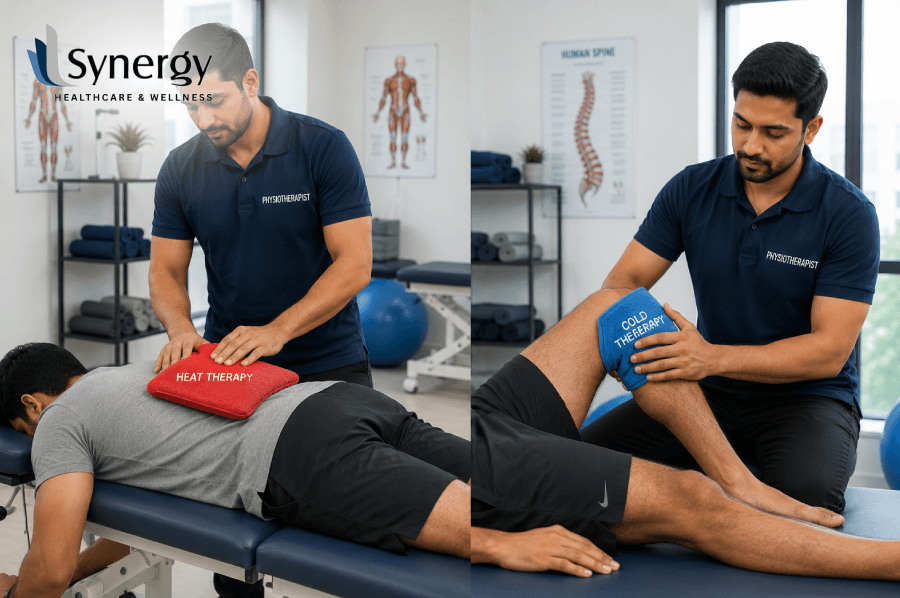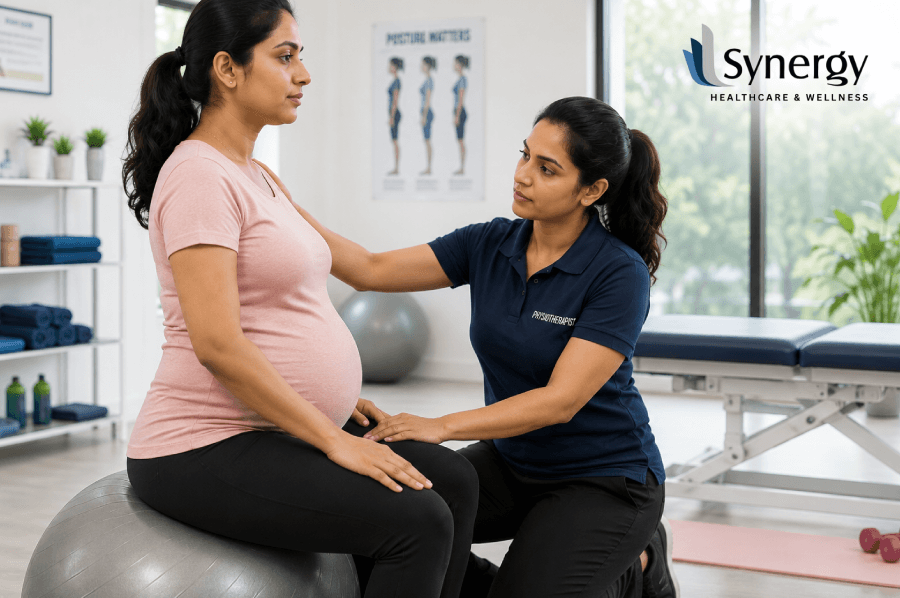

Physiotherapy guides the body through each stage of healing so injuries recover faster, with less pain, stiffness, and weakness than with rest alone. Targeted exercises, manual techniques, and balance training restore strength, movement, and confidence while lowering the risk of future injuries. At Synergy Healthcare and Wellness Clinic in Chennai, structured, individualised rehab helps people return safely to work, sport, and daily life.
Let’s Begin
Injury changes life very quickly. Walking to work becomes a struggle, sport has to stop, and even simple tasks such as climbing stairs can feel impossible. At that moment, the importance of physiotherapy becomes very clear.
Good physiotherapy does much more than ease pain. It helps your body heal in the right way, shortens the time away from normal activity, and reduces the chances of the same problem returning. When treatment is planned and supervised by trained physiotherapists, recovery is usually faster and safer than with rest alone.
In this guide, we look at how physiotherapy speeds up recovery from injuries, when to start, and what you can expect from a structured rehabilitation plan at Synergy Physiotherapy and Sports Injury Clinic in Chennai.
What Actually Happens To Your Body After An Injury
Whether you sprain an ankle on a wet road in Chennai, feel a sharp pull in your shoulder while lifting, or tear a knee ligament during sport, your body goes through the same broad stages of healing.
- Inflammation
- The area becomes painful, warm, swollen, and stiff.
- This is the body’s natural way of starting repair.
- The area becomes painful, warm, swollen, and stiff.
- Repair
- New tissue begins to form around the injured structure.
- Muscles, ligaments, tendons, and bone all heal at different speeds.
- New tissue begins to form around the injured structure.
- Remodelling
- The new tissue slowly adapts to daily loads and movements.
- Strength, balance, and confidence need to be rebuilt.
- The new tissue slowly adapts to daily loads and movements.
If you simply rest and wait, some healing occurs on its own. The problem is that the new tissue may be weak, stiff, or poorly aligned. Muscles around the joint can waste away, and you may pick up unhealthy movement patterns to avoid pain. That is why physiotherapy is so important in the recovery journey.
What Physiotherapy Is And Why It Matters In Injury Recovery
Physiotherapy is a clinical profession that uses movement, manual techniques, exercise, and education to restore function after injury, illness, or surgery. In the context of injuries, the aim is clear.
- Protect the injured area while it heals.
- Ease pain and swelling.
- Restore flexible, controlled movement.
- Rebuild strength and endurance.
- Help the person return to work, sport, and daily life with confidence.
The importance of physiotherapy lies in the fact that it guides the body through each stage of healing with purpose. Instead of random rest and occasional activity, you follow a planned path. That path is adapted as your body responds.
At Synergy, this path is shaped after a detailed assessment. The physiotherapist looks at the injured tissue, but also at posture, muscle balance, joint stiffness, and lifestyle demands. A runner, a teacher, and an older person recovering after a fall may all have the same type of ankle injury, yet each needs a different approach.
How Physiotherapy Helps You Recover From Injuries Faster
There is no magic shortcut that can erase healing time completely. However, well-timed, well-chosen physiotherapy can shorten recovery and improve the quality of the result.
Reduces Pain Without Relying Only On Medicines
Pain after injury has both physical and emotional sides. Gentle manual techniques, specific exercises, taping, and electrotherapy, where appropriate, can calm irritated structures and settle protective muscle spasm.
When pain is under better control, you can move more freely. Better movement then helps circulation and healing. This cycle is much more helpful than a pattern of pain, fear, and total inactivity.
Medicines prescribed by a doctor can still have an important role, especially in the early phase. Physiotherapy supports them by addressing the underlying mechanical causes of pain instead of masking them.
Protects Healing Tissue While Restoring Movement
One of the most delicate parts of rehabilitation is finding the right balance between protection and activity. Too much rest leads to stiffness and weakness. Too much load too early can irritate the injury or even cause further damage.
Physiotherapists are trained to judge which movements are safe at each stage. For example:
- After an ankle sprain, early gentle weight bearing and guided movements can prevent stiffness and help ligaments heal in a better position.
- After a shoulder injury, the arm may first be supported, then guided through a careful range of motion so that the joint does not become frozen.
By progressing movement step by step, physiotherapy allows you to move earlier without putting the injured structure at risk. This is one of the main reasons people who follow a supervised plan often feel they recover faster than those who manage alone.
Maintains Muscle Strength And Joint Flexibility
Muscles weaken surprisingly quickly when a limb is rested or placed in a sling or cast. Joints stiffen if they remain still for long periods. These changes can slow recovery even after the original injury has healed.
Physiotherapy addresses this through:
- Isometric exercises that can be done even when the joint itself must rest.
- Gentle stretches to keep soft tissues from tightening.
- Gradual strengthening programmes that match your stage of healing.
Keeping muscles active, within safe limits, supports the joint and helps you regain normal movement more quickly once the main healing phase has passed.
Improves Balance, Coordination, And Confidence
After an injury, the body often “forgets” how to move in a smooth and automatic way. You may walk awkwardly, favour one leg, or hesitate to use the injured arm. This hesitation can persist long after the tissue has healed.
Physiotherapists use balance training, gait retraining, and sport-specific drills to restore coordination. For example:
- Standing on an unsteady surface after an ankle sprain to improve joint awareness.
- Step drills after a knee ligament injury to regain trust in the leg.
- Throwing and catching tasks after a shoulder problem.
As coordination improves, so does confidence. When you trust your body again, you naturally move more, and this helps maintain fitness and strength.
Reduces The Risk Of Future Injuries
A fast recovery is helpful only if it is also durable. An important part of physiotherapy is finding out why the injury occurred in the first place.
Common contributing factors include:
- Weak muscles around a joint.
- Poor joint control or balance.
- Unhelpful posture or movement habits at work.
- Sudden increases in training intensity.
- Inappropriate footwear or equipment.
By addressing these factors through tailored exercises, advice on daily activities, and sometimes simple changes to habits, physiotherapy lowers the chance of the same injury returning. That long-term protection is a key part of the importance of physiotherapy in modern life.
When Should You Start Physiotherapy After An Injury
Many people are unsure about the right time to see a physiotherapist. They worry that it is “too early” or that they should wait for complete pain relief. In most cases, an early assessment is helpful.
You should seek medical attention urgently if there is severe pain, obvious deformity, deep cuts, head injury, or inability to bear weight. Once serious problems have been ruled out or treated, physiotherapy can usually begin quite soon.
Early physiotherapy may include:
- Advice on safe positions and movements.
- Simple home measures for swelling and pain control.
- Very gentle range of motion exercises within a safe limit.
Waiting for weeks without guidance often leads to extra stiffness and weakness. A short initial consultation can prevent this, even if the main strengthening work is planned for a little later.
At Synergy’s centres in Chennai, many patients are referred by orthopaedic specialists soon after injury or surgery. Others come directly when they notice that pain or stiffness is not settling as expected. In both situations, the aim is to assess early and tailor the plan so that recovery is efficient rather than slow and uncertain.
Common Injuries Where Physiotherapy Speeds Recovery
Physiotherapy is useful in a wide range of conditions. The following examples illustrate how it can help recovery proceed more smoothly and often more quickly.
Ankle Sprains
A twisted ankle from a misstep on the pavement or a sports field is very common. Without structured care, swelling and pain may reduce, yet the ankle can remain weak and prone to repeated sprains.
Physiotherapy for ankle sprain often includes:
- Swelling control techniques and gentle movement in the early days.
- Progressive weight-bearing and walking retraining.
- Strengthening of the calf and muscles around the ankle.
- Balance and agility exercises to restore control.
When this process is followed, people usually return to walking, running, or sports with more confidence and a lower chance of future sprain.
Knee Ligament Injuries And ACL Problems
Knee injuries are common in sports and even during ordinary daily activities such as using stairs. The anterior cruciate ligament, or ACL, is particularly vulnerable in twisting movements and sudden changes of direction.
Whether treated surgically or managed without surgery, ACL injuries need a detailed rehabilitation plan. Physiotherapy focuses on:
- Recovering knee bend and straightening.
- Strengthening quadriceps, hamstrings, and hip muscles.
- Improving balance and single-leg control.
- Gradual reintroduction of running, turning, and sport-specific drills.
Without such a programme, the knee may feel unstable for a long time, and the risk of further damage to cartilage or meniscus remains high. With proper physiotherapy, many people return to their chosen activities with good function and confidence.
Shoulder Injuries
Shoulder pain can result from lifting, falls, sporting activities, or long hours at a desk with poor posture. Problems might involve rotator cuff tendons, the joint capsule, or the muscles that support the shoulder blade.
Physiotherapy addresses:
- Stiffness that can lead to frozen shoulder if ignored.
- Weakness in the rotator cuff and supporting muscles.
- Postural habits that overload the shoulder.
Treatment may include joint mobilisation, soft tissue techniques, posture correction, and progressive strengthening. When this is started early, the shoulder is less likely to stiffen severely, and day-to-day tasks such as dressing, reaching, or carrying become easier sooner.
Fractures And Postoperative Recovery
After a fracture or orthopaedic operation, there is often a period of immobilisation. Once the plaster, brace, or sling is removed, the limb can feel strange, stiff, and weak.
Physiotherapy in this phase is essential. It helps to:
- Restore joint range of motion safely.
- Rebuild muscle bulk and strength.
- Correct altered walking patterns.
- Reduce swelling that lingers around the joint.
In Chennai, many patients at Synergy come to physiotherapy after knee replacements, ligament reconstructions, shoulder stabilisation, or fracture repairs. A clear, progressive plan means that time in the hospital and time in the clinic work together rather than as separate stages.
Bringing it all together
Injury can feel like a sudden stop in the middle of a busy life. The real importance of physiotherapy lies in helping you move forward again in a planned and confident way. Carefully chosen exercises, hands-on techniques, and practical advice work together to:
- Ease pain.
- Protect healing tissue.
- Restore strength, flexibility, and balance.
- Reduce the chance of future injury.
For people in Chennai who are dealing with sprains, strains, joint problems, or recovery after surgery, professional physiotherapy offers a direct route back to daily life.
If you have recently been injured or feel that recovery has slowed, a structured assessment at Synergy Healthcare and Wellness Clinic can be a valuable next step. This blog is for general information and does not replace a personal consultation, yet it highlights one clear message. When it comes to recovering from injuries fast, physiotherapy is not an optional extra. It is a central part of safe, effective healing.
What To Expect From Physiotherapy At Synergy Healthcare and Wellness Clinic In Chennai
Consultation
Your first visit begins with a detailed consultation. The physiotherapist listens carefully to how the injury occurred, asks about your work, sport, and home responsibilities, and examines movement, strength, balance, and posture. If there are any warning signs that need medical or surgical review, these are identified early. You then receive a clear explanation of the diagnosis, the healing process, and realistic goals such as walking without pain, returning to yoga or football, or lifting your child comfortably.
Targeted physiotherapy
Once the plan is agreed upon, treatment focuses on the areas that matter most for your injury. Sessions may include gentle joint and soft-tissue techniques to ease stiffness, taping or supports as needed, and specific exercises to improve flexibility, strength, balance, and coordination. You also receive advice on day-to-day activities, such as how to sit at work or how to position the limb while sleeping. Throughout, the physiotherapist checks your technique, corrects unsafe patterns, and adapts treatment as your body responds.
Rehabilitation phase
As pain and swelling settle, the emphasis shifts to restoring normal movement and function. You follow a structured rehabilitation phase that helps you regain confidence in using the injured area for everyday tasks such as climbing stairs, walking longer distances, or reaching overhead. A home exercise programme is provided with simple instructions and an appropriate number of repetitions, designed to fit into your routine. Short, regular practice at home supports the work done in the clinic and prevents stiffness or weakness from returning.
Strengthening programme (if preferred)
For patients who wish to go further, particularly those returning to sport or physically demanding work, a more advanced strengthening programme can be added. This may include higher-level balance work, endurance training, and sport- or job-specific drills such as directional changes, lifting practice, or agility tasks. The aim is not only to achieve full recovery from the current injury, but also to build resilience so that the joint or muscle is less likely to fail again. Before discharge, your physiotherapist reviews progress, explains how to maintain strength and flexibility, and advises when to seek help if symptoms return.
FAQ’s
Is physiotherapy always necessary after an injury?
Mild injuries sometimes settle with rest and simple care. However, if pain, swelling, or stiffness interfere with daily activities, or if you have repeated injuries in the same area, physiotherapy is very helpful. An early assessment can prevent a small problem from becoming a long-term limitation.
Can physiotherapy really make injuries heal faster?
Physiotherapy does not accelerate the basic biology of tissue repair, yet it supports the process so that it progresses smoothly. By reducing unnecessary stiffness, protecting the injury from further strain, maintaining muscle strength, and restoring normal movement patterns, physiotherapy often shortens the time it takes to return to comfortable function.
Is it painful to do physiotherapy?
Some discomfort can occur when stiff joints are moved or weak muscles begin to work again. Your physiotherapist will guide you so that exercises stay within a sensible level of strain. Pain that lingers strongly after sessions is not desirable and should be discussed so that the plan can be adjusted.
How long will I need physiotherapy?
The length of treatment depends on the type and severity of injury, your general health, and your goals. A simple sprain may need only a few weeks of guidance. Recovery after major surgery can take several months. At Synergy, your physiotherapist will review progress regularly and give you a clear idea of expected timelines.

Dr. Suresh Franklin, MPT
✓ 15+ Years of ExperienceMeet Dr. Suresh Franklin, MPT – the expert behind Synergy Physio Care's clinical approach. With extensive experience in sports rehabilitation, athlete recovery, and performance care, he brings trusted expertise to every piece of content we publish. From injury management to movement-based recovery, his review helps ensure our blogs are practical, accurate, and patient-focused. At Synergy, we combine clinical knowledge with real-world physiotherapy experience to guide every recovery journey.