
Does Physiotherapy Help Weight Loss? Key Facts You Must Know

Weight loss advice is everywhere, yet many people who genuinely try to be active find that pain, stiffness, or breathlessness stop them long before motivation does. This is where physiotherapy becomes more than a treatment for injury. In the right hands, it turns into a practical, medically guided way to support safe and sustainable weight loss. This blog explains how does physiotherapy help weight loss, what the evidence shows, and when a structured programme with a physiotherapist in Chennai might be worth considering. Key facts at a glance How Weight Loss Really Works Weight loss is always described in complex terms, but the underlying idea is simple. The body stores excess energy as fat. To use those stores, you must create an energy deficit, usually through a combination of eating fewer calories and moving more. There are two important points that are often forgotten. First, the body does not respond well to extreme changes. Crash diets and sudden bursts of very hard exercise may cause short-term losses, but they are difficult to maintain. Many people regain weight once they return to former habits, and some injure themselves when they attempt too much exercise too soon. Second, movement is not only a matter of willpower. If your knees hurt with every step or you become breathless after a few minutes, it is not realistic to expect you to walk briskly for half an hour every day. The same is true if you have long-standing back pain, shoulder impingement, or post-surgical weakness. The intention may be there, but the body is not ready for that level of demand. This gap between good intentions and what the body can tolerate is exactly where physiotherapy belongs. How Physiotherapy Supports Weight Loss Physiotherapy does not melt fat by itself. Instead, it gives you the tools, confidence, and physical capacity to move more often and more safely, so that a healthier lifestyle becomes realistic, not theoretical. 1. Reducing Pain And Improving Movement Many people who carry extra weight develop joint pain, especially around the knees, hips, and lower back. Extra load on the joints, combined with long hours of sitting and weak supporting muscles, can lead to cartilage wear, tendon irritation, and stiffness. A physiotherapist can: As pain settles and joint control improves, daily tasks become easier. A patient who could only walk for five minutes without discomfort may progress to fifteen or twenty minutes. Over weeks, this difference in daily activity begins to matter. 2. Restoring Strength And Fitness Safely General advice about exercise often assumes that everyone can simply start running or join a high-intensity class. Patients with osteoarthritis, disc problems, cardiac disease, or long-standing sedentary habits usually cannot. In a physiotherapy guided programme, the starting point is very different. Your physiotherapist will: For one person, this may mean water-based exercise and cycling to reduce impact on the joints. For another, it may mean careful interval walking on flat ground, interspersed with rest, so that breathlessness is controlled. As your body adapts, the intensity and duration are gradually increased. 3. Personalised Exercise Prescription International guidelines for adults recommend at least 150 minutes of moderate aerobic activity a week for general health, and up to 300 minutes a week or more for weight management and preventing regain. In practice, this can be achieved in many ways. For example: A physiotherapist can translate these abstract numbers into a weekly plan that suits your joints, your schedule, and your medical background. Sessions usually include: Strength training deserves special attention. Building muscle mass not only helps with posture and joint support. It also raises daily energy use, which supports long-term weight control. 4. Supporting Behaviour Change And Consistency From a distance, weight loss looks like a purely physical matter. Up close, it is very much a behavioural one. Many people know they should move more, yet daily pressures, low mood or past negative experiences with exercise keep getting in the way. Good physiotherapy recognises this human side. During follow-up sessions, your therapist will: This combination of clinical knowledge and practical coaching makes it more likely that you will keep going long enough to see results. 5. Working Alongside Nutrition And Medical Care No amount of exercise will overcome a consistently very high calorie intake. When weight loss is a clear goal, physiotherapy should form part of a broader plan that also considers food choices, sleep patterns, and stress. Many patients benefit from: Who Should Consider Physiotherapy-Guided Weight Loss Not everyone who wishes to lose a few kilograms needs to see a physiotherapist. Some groups, though, are especially likely to benefit from this structured approach. 1. People With Knee, Hip, Or Back Pain Extra body weight places a constant load on the lower joints and on the spine. Pain can make everyday walking and stair climbing difficult, which in turn reduces activity and makes weight control harder. A physiotherapist can break this cycle by easing pain, improving joint mechanics, and gradually restoring confidence in movement. 2. Patients Preparing For Or Recovering From Surgery Surgeons often advise patients to lose weight before procedures such as knee replacement, hip replacement, or certain abdominal operations. After surgery, the same patients need careful rehabilitation to regain function without damaging the operated area. Physiotherapy plays a central role in both stages. A pre-operative programme can strengthen muscles and improve fitness so that the operation and recovery are safer. A post-operative programme can help patients return to walking and functional tasks, while also addressing long-term weight management. 3. People With Cardiac Or Respiratory Conditions For patients with coronary artery disease, heart failure, chronic obstructive pulmonary disease, or long-standing asthma, unsupervised vigorous exercise may carry risks. Nevertheless, these patients often need to lose weight to improve their long-term outlook. In such cases, a physiotherapist experienced in cardiac or pulmonary rehabilitation can guide carefully stepped activity. Heart rate, perceived exertion, and symptoms are monitored, and the programme is adapted as fitness improves. 4. Older Adults And Those Fearful Of Movement Many older people worry that exercise
Why Physiotherapy for Professionals is a Game-Changer for Wellness

A full working week can look successful on paper and exhausting on the body. Early starts, late evenings, constant screen time, hurried meals, and long commutes all begin to leave a trace. Many people in established careers describe a similar list of complaints. A tight neck by mid-morning. A back that aches on the drive home. Heavy legs after standing all day. Pins and needles in the hands after a long session on the laptop. These problems rarely appear suddenly. They creep in quietly, and they are easy to dismiss as an ordinary part of professional life. That is where real trouble starts. Mild stiffness slowly becomes chronic pain. An occasional twinge turns into a loss of confidence in the body. Exercise and hobbies are reduced or stopped. Sleep is disturbed. The result is a slow decline in overall wellness. Physiotherapy for professionals was created for exactly this pattern. It is a practical way to understand how work is affecting the body, to correct what has gone off track, and to protect health for the long term. How Professional Life Strains The Body Every profession has its own physical demands. Some keep you at a computer for hours. Others expect long periods on their feet. Many roles now mix travel, phone calls and screen work without a fixed routine. Long Hours At A Desk Office-based staff, IT and finance professionals, designers and students may sit for most of the day. Typical features are familiar. Over time, this pattern can lead to neck pain, headaches, aching between the shoulder blades, low back pain, and tingling or heaviness in the arms and hands. Many people also notice that their posture in photographs has shifted. The upper back looks rounded, and the head seems to sit in front of the body rather than above it. Work That Demands Standing, Walking and Lifting Healthcare staff, teachers, retail and hospitality workers, factory staff, and many technical professionals spend full days on their feet. They may walk long distances on hard surfaces, bend to lift equipment, or stand in one place for extended periods. This brings its own set of problems. Hybrid And Travelling Roles Managers, sales representatives, and consultants often work in a different place each day. They may spend hours in cars or on public transport. They use laptops in hotel rooms, cafes or client offices. They often carry bags on one shoulder and sleep on unfamiliar beds. The result is a moving target of discomfort. One week, the neck is stiff. The next week, the lower back complains. Preparing for important meetings becomes harder when the body cannot be trusted to cooperate. The common theme in all of these situations is simple. The job asks the body to repeat certain positions and movements far more often than nature intended. Physiotherapy for professionals focuses on that mismatch and shows how to correct it. What Physiotherapy Really Offers Professionals Physiotherapy is sometimes seen as something that belongs only in hospital wards, sports arenas, or after accidents. For professionals, it has a wider role. It sits at the point where work, movement, and health meet. Instead of treating pain as an isolated problem, the physiotherapist asks three questions. Thoughtful Assessment, Not A Quick Look A good assessment goes well beyond a brief examination of the painful area. It usually includes: For example, someone who works at a computer may be asked to sit as they usually do and to type for a short period. A teacher might be observed standing as if they were addressing a class. These small details help to reveal where strain is gathering. Treatment That Tackles Causes, Not Just Pain Once the pattern is understood, hands-on work and exercise can be chosen with care. A typical plan may include: The goal is a body that moves more freely and copes better with real life, not a brief period of relief that fades as soon as the next busy week arrives. Why These Changes Affect Wellness In A Meaningful Way Wellness is often reduced to ideas like “eating better” or “finding balance”. Those elements matter, but for professionals, the body’s ability to cope with daily work is just as important. Physiotherapy for professionals can shift that ability in several key areas. Less Background Pain, More Usable Energy Persistent pain behaves like a constant extra task for the brain. It uses attention and energy even when it sits quietly in the background. When pain is reduced and movement becomes easier, professionals often describe a different quality of day. They can focus for longer. Meetings feel more manageable. The drive home is less draining. There is more energy left for family, study, or leisure. It is not simply that the pain is lower. The whole day feels less like a battle with the body. Better Sleep And Recovery Neck and back problems often appear at night as difficulty finding a comfortable position. Leg and foot problems can cause aching that disturbs sleep. By easing these issues, physiotherapy gives the body a chance to recover properly between working days. Resting muscles perform better. Mood is steadier. Decision-making improves. Confidence In The Body Many professionals quietly fear certain movements. They worry that lifting a suitcase, playing with their children on the floor, or sitting through a long journey might “set off” their pain. This fear narrows what they feel able to do. Graded strength and movement training, planned by a physiotherapist, rebuilds trust. People learn that their back or neck can handle a carefully increased load when guided in the right way. That confidence is a major part of genuine wellness. Every Day Ways Physiotherapy Supports People At Work Physiotherapy does not live only in the clinic. One of its strengths is the way it can be translated into simple actions that professionals can use during the working day. Short Movement Routines That Fit Into A Schedule Professionals rarely have long stretches of spare time. A physiotherapist understands this and designs small, precise routines. Examples include:
Morning Physiotherapy Exercises To Start Your Day Pain Free

When is morning pain a sign to seek help? If you have the same doubt, here’s the answer: Exercise should leave you feeling looser and more confident within a few weeks. It is sensible to book an assessment with a physiotherapist or doctor if: Early assessment can identify whether the problem is mainly muscular, joint-related, nerve-related or linked to an underlying medical condition. Treatment may include tailored exercise, manual therapy, posture training and advice on activity levels. Let’s Begin Waking up with a stiff neck or aching back can make even a simple morning feel heavier than it should. A short set of well-planned morning physiotherapy exercises can loosen your joints, warm your muscles and help your nervous system settle, so you step into the day with more comfort and confidence. This guide has been developed for adults who want a safe, gentle routine that can be done at home, without special equipment. It reflects how our physiotherapists at Synergy in Chennai often structure early morning programmes for people with stiffness and recurring aches. Why Mornings Often Feel Stiff And Sore During sleep, joints are still for several hours. Fluid inside the joints does not circulate as freely, muscles cool down, and the body tends to rest in one or two habitual positions. If you already have a sensitive back, arthritic joints or tight muscles from long desk hours, it is common to feel: Inflammatory conditions, such as certain types of arthritis, can also flare in the early hours. The good news is that for many people, gentle movement that is guided by physiotherapy principles can help oil the joints, improve circulation and calm pain signals. When A Morning Routine Is Safe – And When To Be Cautious Most healthy adults can follow a simple stretching and mobility routine. However, physiotherapists do look for warning signs before suggesting exercises. Speak to a doctor or physiotherapist first if you: If any of these apply, you still may benefit from a routine, but it should be designed and supervised for your particular condition. For everyone else, the rule is simple. Gentle stretch or mild pulling is acceptable. Sharp, catching or increasing pain is a sign to ease off or skip that movement. How To Use These Morning Physiotherapy Exercises A few practical guidelines before you begin: You can perform these exercises once each morning. On days when you wake up especially stiff, you may repeat the shorter routine later in the day as well. Seven Morning Physiotherapy Exercises To Ease Stiffness 1. Gentle Diaphragmatic Breathing And Body Scan (1 To 2 Minutes) This first step settles your breathing and helps you notice stiff areas before you move them. How to do it Helps with 2. Knee Hugs For Lower Back And Hip Stiffness This movement mobilises the lower spine and hips in a comfortable, supported position. How to do it Perform two repetitions on each side, and two repetitions with both knees together if that feels pleasant. Helps with 3. Cat–Camel Spinal Mobilisation Often used in physiotherapy for spinal mobility, this exercise gently moves the back through flexion and extension. How to do it Perform 8 to 10 cycles. Helps with 4. Child’s Pose And Side Stretch Child’s pose lengthens the spine and hips while letting the nervous system relax. The side variation adds a useful stretch for the lower ribs and waist. How to do it Hold the central position for 20 to 30 seconds, and the side stretches for 20 seconds each. Helps with If kneeling is uncomfortable, your physiotherapist can show you chair-based alternatives. 5. Pelvic Tilts For Lower Back Control Pelvic tilts strengthen deep support muscles around the spine and help you control your posture during the day. How to do it Perform 10 to 12 repetitions. Helps with Avoid holding your breath. If your thighs or buttocks grip strongly, try to relax them and let the deep muscles around your tummy work instead. 6. Seated Spinal Twist For Mid-Back Mobility This exercise is easy to do, even if you are short on time and already sitting on the edge of the bed. How to do it Perform three repetitions on each side. Helps with Keep the movement smooth. You should feel a comfortable stretch, not strain. 7. Neck Stretches And Ankle Pumps For Circulation Finishing with neck stretches and ankle movement helps ease tension and boost blood flow before you stand up. Neck side stretch You may rest your hand lightly on the side of your head to guide the movement, but avoid pulling. Ankle pumps Helps with Two Easy Morning Routines You Can Follow You do not need to perform every exercise every day. Here are two sample programmes you can adapt. A 5-Minute Routine For Busy Mornings Ideal when you are rushing, yet want to avoid starting the day in pain. This short series is enough to loosen most joints and settle your breathing. A 10-Minute Routine For Very Stiff Mornings Use this on days when your back or joints feel especially heavy and sore. Move slowly and keep your attention on how your body responds. If any movement consistently aggravates pain, it may need to be modified or replaced by your physiotherapist. How Synergy Healthcare and Wellness Clinic In Chennai Can Support You At Synergy Healthcare and Wellness Clinic in Chennai, we see many people whose first complaint is, “I feel terribly stiff in the mornings.” Often, a carefully graded morning routine is one part of a wider plan that may also include specific strengthening, ergonomic changes at work and advice about sleep positions. If you live in or around Anna Nagar, T Nagar, Adyar or neighbouring areas, a physiotherapist can: You can begin with the home routine from this guide and then bring your questions to an appointment, where the exercises can be fine-tuned to your body. Bringing it together A short, thoughtful set of morning physiotherapy exercises can change how your day begins. By easing stiffness, improving circulation and helping your
The Importance of Physiotherapy in Recovering from Injuries Fast

Physiotherapy guides the body through each stage of healing so injuries recover faster, with less pain, stiffness, and weakness than with rest alone. Targeted exercises, manual techniques, and balance training restore strength, movement, and confidence while lowering the risk of future injuries. At Synergy Healthcare and Wellness Clinic in Chennai, structured, individualised rehab helps people return safely to work, sport, and daily life. Let’s Begin Injury changes life very quickly. Walking to work becomes a struggle, sport has to stop, and even simple tasks such as climbing stairs can feel impossible. At that moment, the importance of physiotherapy becomes very clear. Good physiotherapy does much more than ease pain. It helps your body heal in the right way, shortens the time away from normal activity, and reduces the chances of the same problem returning. When treatment is planned and supervised by trained physiotherapists, recovery is usually faster and safer than with rest alone. In this guide, we look at how physiotherapy speeds up recovery from injuries, when to start, and what you can expect from a structured rehabilitation plan at Synergy Physiotherapy and Sports Injury Clinic in Chennai. What Actually Happens To Your Body After An Injury Whether you sprain an ankle on a wet road in Chennai, feel a sharp pull in your shoulder while lifting, or tear a knee ligament during sport, your body goes through the same broad stages of healing. If you simply rest and wait, some healing occurs on its own. The problem is that the new tissue may be weak, stiff, or poorly aligned. Muscles around the joint can waste away, and you may pick up unhealthy movement patterns to avoid pain. That is why physiotherapy is so important in the recovery journey. What Physiotherapy Is And Why It Matters In Injury Recovery Physiotherapy is a clinical profession that uses movement, manual techniques, exercise, and education to restore function after injury, illness, or surgery. In the context of injuries, the aim is clear. The importance of physiotherapy lies in the fact that it guides the body through each stage of healing with purpose. Instead of random rest and occasional activity, you follow a planned path. That path is adapted as your body responds. At Synergy, this path is shaped after a detailed assessment. The physiotherapist looks at the injured tissue, but also at posture, muscle balance, joint stiffness, and lifestyle demands. A runner, a teacher, and an older person recovering after a fall may all have the same type of ankle injury, yet each needs a different approach. How Physiotherapy Helps You Recover From Injuries Faster There is no magic shortcut that can erase healing time completely. However, well-timed, well-chosen physiotherapy can shorten recovery and improve the quality of the result. Reduces Pain Without Relying Only On Medicines Pain after injury has both physical and emotional sides. Gentle manual techniques, specific exercises, taping, and electrotherapy, where appropriate, can calm irritated structures and settle protective muscle spasm. When pain is under better control, you can move more freely. Better movement then helps circulation and healing. This cycle is much more helpful than a pattern of pain, fear, and total inactivity. Medicines prescribed by a doctor can still have an important role, especially in the early phase. Physiotherapy supports them by addressing the underlying mechanical causes of pain instead of masking them. Protects Healing Tissue While Restoring Movement One of the most delicate parts of rehabilitation is finding the right balance between protection and activity. Too much rest leads to stiffness and weakness. Too much load too early can irritate the injury or even cause further damage. Physiotherapists are trained to judge which movements are safe at each stage. For example: By progressing movement step by step, physiotherapy allows you to move earlier without putting the injured structure at risk. This is one of the main reasons people who follow a supervised plan often feel they recover faster than those who manage alone. Maintains Muscle Strength And Joint Flexibility Muscles weaken surprisingly quickly when a limb is rested or placed in a sling or cast. Joints stiffen if they remain still for long periods. These changes can slow recovery even after the original injury has healed. Physiotherapy addresses this through: Keeping muscles active, within safe limits, supports the joint and helps you regain normal movement more quickly once the main healing phase has passed. Improves Balance, Coordination, And Confidence After an injury, the body often “forgets” how to move in a smooth and automatic way. You may walk awkwardly, favour one leg, or hesitate to use the injured arm. This hesitation can persist long after the tissue has healed. Physiotherapists use balance training, gait retraining, and sport-specific drills to restore coordination. For example: As coordination improves, so does confidence. When you trust your body again, you naturally move more, and this helps maintain fitness and strength. Reduces The Risk Of Future Injuries A fast recovery is helpful only if it is also durable. An important part of physiotherapy is finding out why the injury occurred in the first place. Common contributing factors include: By addressing these factors through tailored exercises, advice on daily activities, and sometimes simple changes to habits, physiotherapy lowers the chance of the same injury returning. That long-term protection is a key part of the importance of physiotherapy in modern life. When Should You Start Physiotherapy After An Injury Many people are unsure about the right time to see a physiotherapist. They worry that it is “too early” or that they should wait for complete pain relief. In most cases, an early assessment is helpful. You should seek medical attention urgently if there is severe pain, obvious deformity, deep cuts, head injury, or inability to bear weight. Once serious problems have been ruled out or treated, physiotherapy can usually begin quite soon. Early physiotherapy may include: Waiting for weeks without guidance often leads to extra stiffness and weakness. A short initial consultation can prevent this, even if the main strengthening work is
Daily Physiotherapy Stretches for Stress Relief and Strength

A short daily routine of daily physiotherapy stretches can ease stress, release tension in common problem areas and improve posture. By moving the neck, spine, hips and legs through controlled ranges, you support joint strength and calm the nervous system. The blog explains a practical 10-minute sequence, safer variations and when to seek individual assessment from a physiotherapist in Chennai. Let’s Begin Modern life asks a great deal of the body. Long hours at a desk, time spent in traffic and constant digital noise all place the nervous system under strain. The result is often familiar: a tight neck, stiff shoulders, a dull ache in the lower back and a sense that the body never quite relaxes. A short daily stretching routine, designed with physiotherapy principles in mind, can help to break that pattern. Gentle, regular stretches calm the nervous system, ease muscle tension and keep key muscle groups strong enough to support you through the day. This blog sets out a practical daily routine you can follow at home. It is suitable for most adults who wish to reduce stress, feel more comfortable in their bodies and maintain a basic level of strength. How Stress Affects Your Body When you feel under pressure, your body prepares for action through the stress response. Muscles tighten, breathing becomes shallow, and the heart beats faster. This response is useful in the short term. When it continues for many hours every day, it creates problems. Common physical effects of ongoing stress include: Over time, the body may begin to compensate. Some muscles work too hard while others switch off. Joints can then become overloaded, which increases the risk of pain, strain and injury. A structured programme of daily physiotherapy stretches helps to interrupt this cycle. The aim is not extreme flexibility. The goal is calm, comfortable movement and steady support for the joints that work hardest for you. Why A Daily Physiotherapy Stretching Routine Works A well-chosen set of stretches offers several benefits at once. 1. Calms the nervous system Slow, controlled movement combined with steady breathing sends a clear signal of safety to the brain. This reduces muscle guarding, which is the subconscious tightening that often accompanies stress and pain. 2. Releases common tension areas Most people under stress tighten the same regions: neck, shoulders, chest, lower back and hips. Stretching these specific areas improves circulation, increases tissue temperature and allows muscles to lengthen to a comfortable resting length. 3. Supports strength and joint control Holding a stretch with good alignment lightly activates stabilising muscles. Over time, this improves endurance and helps key muscle groups support the spine, hips and shoulders. The routine below includes small elements of strength work within each position. 4. Improves posture and body awareness When joints move regularly through a healthy range, it becomes easier to sit, stand and walk with less effort. You begin to notice early signs of tightness and can respond before they build into pain. 5. Lifts mood and energy Gentle physical activity is known to support the release of feel-good chemicals in the brain. Many people report feeling clearer, calmer and more alert after a short stretching session. How To Use This Routine Safely Most healthy adults can perform these stretches. However, you should speak to a physiotherapist or doctor before starting if you: General safety guidelines: If you are unsure whether a particular stretch is appropriate for your condition, a physiotherapist can assess you and adapt the routine. Your 10-Minute Daily Physiotherapy Stretch Routine If you have ten minutes, the following sequence provides a simple full-body routine. You can perform it once a day, or twice on busier days, for example, morning and evening. A quick overview: You do not need special equipment, only a mat or firm surface and a clear wall or doorway. 1. Diaphragmatic breathing with shoulder drop Targets: Breathing pattern, upper shoulder tensionHelps with: Settling the nervous system before you stretch Keep the jaw relaxed and the neck long. This sets the tone for the rest of the routine. 2. Neck side stretch and rotation Targets: Side of the neck and upper shoulder musclesHelps with: Desk-related neck tension and stress headaches Avoid lifting the shoulder towards the ear. Keep both shoulders relaxed. 3. Upper shoulder and side of neck stretch Targets: Upper trapezius and levator scapulae musclesHelps with: Shoulder tightness from stress and poor posture The pressure from the upper hand should be very light. You are guiding, not forcing, the movement. 4. Chest doorway stretch Targets: Chest muscles and front of the shouldersHelps with: Rounded posture, upper back strain and shallow breathing If you feel any tingling or numbness in the arms, reduce the depth of the stretch or lower the arm position. 5. Seated thoracic rotation Targets: Middle and upper backHelps with: Stiffness from prolonged sitting and improves rotation Move smoothly without jerking. Focus on the ribs and chest turning, not just the neck. 6. Cat and camel Targets: Spine mobility and deep spinal musclesHelps with: Lower and mid-back stiffness Keep the movement comfortable and avoid forcing the range. The focus is on smooth, controlled motion. 7. Child’s pose Targets: Lower back, hips and shouldersHelps with: General relaxation and spinal decompression If it is difficult to sit back fully, place a folded blanket between your calves and thighs for support. 8. Half-kneeling hip flexor stretch Targets: Front of the hip and thighHelps with: Hip tightness from sitting and supports upright posture Avoid arching the lower back. The sensation should be at the front of the hip, not in the back. 9. Hamstring stretch Targets: Back of the thighHelps with: Lower back strain and leg stiffness Option seated: Option lying: Only move to a level of stretch that allows easy breathing and relaxed shoulders. 10. Calf stretch against the wall Targets: Calf musclesHelps with: Walking comfort and ankle mobility Keep the back foot pointing straight ahead rather than turning outwards. Short Variations For Morning, Workday And Evening On some days, you may not complete the
Why Physiotherapy Is the First Choice for Pain Relief in Chennai

When pain begins to restrict movement, affect sleep, or intrude into daily life, it is natural to look for relief swiftly. Many reach for medications or quick fixes. Yet, for lasting benefit and fewer side effects, Physiotherapy For Pain Relief stands out as a premier option. In a city like Chennai, where urban life, traffic, sedentary jobs, and ageing structures converge, physiotherapy offers a path toward recovery that is both effective and humane. Understanding Pain: More Than Just a Symptom Pain is not merely a signal of injury; it is a multifaceted experience involving tissues, nerves, behaviour, and psychology. Chronic pain often sets up a vicious cycle: discomfort leads to guarding or reduced movement, which weakens muscles and stiffens joints, increasing pain in turn. Physiotherapy addresses this cycle rather than just masking symptoms. Many forms of pain are musculoskeletal or neuromuscular in origin: back pain, neck pain, joint stiffness, arthritis, tendon problems, and postural strain. These are precisely the types of issues physiotherapists specialise in treating. By assessing posture, movement patterns, muscle imbalances, joint restriction, and nerve sensitivity, physiotherapists can identify root contributors to pain, not just the superficial “hurt spot.” Thus, physiotherapy has the potential to correct underlying dysfunctions and prevent recurrence. Core Benefits of Physiotherapy for Pain Relief Below are the principal advantages that make physiotherapy a preferred option for pain management. 1. Non-invasive, low-risk treatment Physiotherapy is a non-surgical, drug-sparing intervention. It avoids many risks associated with long-term medication (such as gastrointestinal, renal, or cardiovascular side effects) and complications of surgery. 2. Pain modulation through movement and techniques Gentle mobilisation, stretching, manipulations, or soft tissue techniques help reduce stiffness, improve joint glide, and relax overactive muscles. These manual and movement-based methods stimulate blood flow, reduce inflammation, and interrupt pain signals. Electrotherapies (such as ultrasound, TENS, and laser) may be used adjunctively to reduce pain and promote healing in some cases. 3. Structured exercise to build strength, flexibility, and stability A physiotherapist prescribes a tailored exercise plan targeting weak, tight, or imbalanced muscles. Over time, this enhances joint support, restores movement, and reduces mechanical stress that leads to pain. 4. Retraining the nervous system in chronic pain With long-standing pain, the nervous system can become hypersensitive, interpreting even mild stimuli as harmful. Physiotherapists use “graded exposure,” desensitisation techniques, and neuromuscular reeducation to calm this sensitivity. Through controlled movement and progressive loading, patients reclaim confidence and reduce fear-avoidant behaviours. 5. Preservation of function and prevention of recurrence Rather than just quelling pain when it appears, physiotherapy aims to maintain mobility, strength, and posture to prevent future flare-ups. In the context of Chennai’s climate, commuting, and lifestyle, regular physiotherapy adjustments may help with ergonomic alignment, postural awareness, and daily activity adaptation. 6. Holistic benefits: mood, sleep, and quality of life Pain often causes or worsens anxiety, depression, or sleep disturbances. As pain reduces and function improves, mood and sleep follow suit. Many patients report greater well-being, energy, and capacity to engage in meaningful daily life. This holistic uplift is often underappreciated but is central to sustainable recovery. Common Pain Conditions in Chennai That Respond Well to Physiotherapy Here are a few examples of pain problems often encountered locally and how physiotherapy helps: 1. Lower back pain/sciatica One of the most frequent complaints. Physiotherapy combines spinal mobilisation, core stabilisation exercises, decompressing techniques, and neural mobilisation (nerve glides) to reduce nerve irritation and restore function. In Chennai, many lower back problems stem from prolonged sitting, lack of exercise, or poor seating ergonomics; a physiotherapist can correct posture, recommend ergonomic adjustments, and guide exercises suited to local constraints (e.g., cramped workspaces). 2. Neck pain / cervical discomfort From smartphone usage to desk jobs, many present with neck stiffness or radiculopathy. Physiotherapy uses traction, soft tissue release, postural reeducation, and stabilisation exercises to reduce compression and restore mobility. 3. Knee pain/osteoarthritis Strengthening the muscles around the knee, improving the flexibility of surrounding structures, and correcting gait mechanics are powerful non-surgical strategies to relieve pain, delay degeneration, and reduce stress on joint surfaces. 4. Shoulder pain / frozen shoulder (adhesive capsulitis) Early mobilisation, controlled stretching, and joint techniques can prevent long-term restriction. Studies show that movement guided by physiotherapy leads to better outcomes in range and pain when compared to immobilisation. 5. Post-surgery rehabilitation/injuries After orthopaedic surgeries (like joint replacement or ligament repair), physiotherapy is indispensable to restore strength, mobility, stability, and safe function. Without it, outcomes are poorer. What to Expect in a Physiotherapy Programme in Chennai A well-structured physiotherapy programme typically unfolds in stages; the patient is guided closely throughout. Overcoming Common Misconceptions Why Trust Synergy? At Synergy, our reputation as a trusted pain relief and physiotherapy centre in Chennai is built on substance and consistent results. Clinical Expertise: Our therapists are qualified and experienced in musculoskeletal, neurological, and pain management rehabilitation. Each case is handled with professional precision and personal attention. Evidence-Based Practice: Every treatment follows tested, research-backed methods. Programmes are individually designed to address the root cause rather than only the symptoms. Whole-Person Care: We treat movement, mind, and lifestyle as connected parts of recovery. Education, awareness, and mental wellness are integrated into every stage of care. Modern and Responsible Treatment: We use advanced physiotherapy equipment and modalities where they are genuinely beneficial, under disciplined clinical supervision. Accountability and Follow-Up: Progress is measured, reviewed, and refined through clear feedback systems. Our patients remain supported well beyond the treatment phase. Education and Empowerment: We help each patient understand their condition, build confidence in movement, and maintain long-term self-management. Final Thoughts Pain often sends a warning signal, but how it is addressed determines whether it becomes a chronic adversary. Physiotherapy offers a coherent, holistic, scientifically grounded path — one that treats the person, not just the symptom. In Chennai, where the tensions of urban life, weather, and work habits add strain, physiotherapy is more than a fallback — it should be the first thoughtful choice. When pain arises, seeking physiotherapy early offers better outcomes, fewer complications, lower cost burden, and a return
Physiotherapy for Office Workers: Beating Back and Neck Strain

Feeling stiff after another long day at your desk? Find out how physiotherapy for office workers can restore balance, ease tension, and keep your spine strong throughout the workday. Let’s Begin If you spend most of your workday at a desk, you’ve probably felt that familiar stiffness in your neck or tightness in your back. You’re not alone. Long hours of sitting, staring at screens, and poor posture can quietly wear down the body. What starts as mild discomfort can eventually turn into chronic pain or muscle imbalance. This blog will help you understand why office work strains the body, how physiotherapy can help, and what simple exercises and habits can keep you moving comfortably throughout the day. Why Office Work Strains the Back and Neck 1. Staying Still for Too Long Sitting in one position for hours limits blood flow and tires your muscles. Over time, this leads to stiffness, fatigue, and small injuries that accumulate day after day. 2. Forward Head and Rounded Shoulders If your head leans forward toward the screen and your shoulders round, you’re putting extra pressure on the spine and neck muscles. This posture is one of the most common causes of upper back and neck tension among office workers. 3. Poor Ergonomic Setup If your chair, desk, or monitor isn’t adjusted correctly, your body is constantly compensating. Reaching for the mouse, leaning to one side, or working without lumbar support can gradually cause pain and imbalance. 4. Weak Support Muscles Sitting too much weakens the core and postural stabilisers — the muscles that hold your spine in alignment. Once they lose endurance, the neck and back have to work harder to keep you upright. How Physiotherapy Makes a Difference Physiotherapy focuses on restoring movement, correcting posture, and strengthening weak muscles. It isn’t just about treating pain — it’s about teaching your body to move and support itself more efficiently. Research consistently shows that: What to Expect from a Physiotherapy Programme A physiotherapist will tailor a plan that suits your needs, but most programmes include: Assessment: They’ll start by checking your posture, mobility, and muscle balance. This helps identify where strain and weakness originate. Education: You’ll learn how to recognise harmful postures, take effective breaks, and make small adjustments during your workday. Ergonomic Advice: Simple tweaks to your chair height, desk position, and monitor level can make a big difference. The goal is to reduce strain and support natural alignment. Targeted Exercises: You might work on: Progress Tracking: Your plan will evolve as you get stronger. Regular check-ins ensure you’re improving safely and steadily. Easy Desk Exercises You Can Try Here are a few physiotherapy-approved exercises you can do right at your desk. Move slowly and stay within a comfortable range. Exercise How to Do It Reps / Frequency Chin Tucks Sit tall. Gently pull your chin back as if making a double chin. Hold for 5–8 seconds. 10–15 reps, twice daily Side Neck Stretch Tilt your head toward one shoulder and hold. 3–5 reps each side, twice daily Scapular Squeeze Pull your shoulder blades together and down. Hold for 5 seconds. 10–15 reps, 2–3 sets Wall Angels Stand with your back and arms against the wall. Slide arms up and down slowly. 8–12 reps, once daily Seated Cat–Cow Alternate between arching and rounding your spine. 10–15 reps every hour Thoracic Extension Lean back over the chair’s backrest with your hands behind your head. 10 reps, 2–3 sets Hip Flexor Stretch Step one leg back, keep the torso upright, and stretch the front of the hip. Hold 30 seconds on each side Tips: Habits That Protect Your Spine Physiotherapy goes beyond exercise. Building new habits into your day is what truly prevents pain. When to See a Physiotherapist If your pain: …it’s time to get professional help. A physiotherapist can assess deeper issues, guide your exercises safely, and use manual techniques or other treatments to speed recovery. What You Can Expect Over Time With steady effort: Consistency matters more than perfection. Even small, regular changes make a lasting difference. Guided Care for a Stronger, Healthier You At Synergy, we believe recovery is a journey best guided by expertise and care. Every client begins with a detailed consultation led by senior doctors who assess the root cause of pain or dysfunction. Based on this evaluation, our physiotherapists design a personalised treatment plan that restores movement and reduces discomfort. Once pain is managed, we guide you through a focused rehabilitation phase to rebuild stability and function. For those who wish to continue, we offer advanced strengthening programmes that enhance long-term resilience and performance. Our goal is simple — to help you move better, feel stronger, and return to life with confidence. Takeaway [Physiotherapy for Office Workers] Back and neck strain don’t have to be part of office life. With the right exercises, ergonomic setup, and guidance from a physiotherapist, you can work comfortably and protect your spine for the long term. Start with one or two exercises today, take regular breaks, and pay attention to how your body feels. Small actions, repeated often, add up to real results. FAQs 1. Why do I get neck or back pain even though I’m just sitting all day?Sitting for long hours tires your postural muscles and limits blood flow. Over time, small strains build up in the spine and supporting muscles, leading to stiffness or pain. 2. Can poor posture really cause long-term problems?Yes. Slouching or leaning forward repeatedly can weaken key stabilising muscles and place extra pressure on the spine, which may cause chronic discomfort or even disc-related issues. 3. How can physiotherapy help with office-related pain?Physiotherapists identify the root cause of your discomfort, correct posture, and teach specific exercises to strengthen weak muscles. They also guide ergonomic changes that prevent symptoms from returning. 4. Do I need a referral to see a physiotherapist?In most cases, no. You can book a consultation directly. However, if your pain involves numbness, tingling, or severe restriction, it’s best to consult
How Long Does Physiotherapy Take to Show Results?
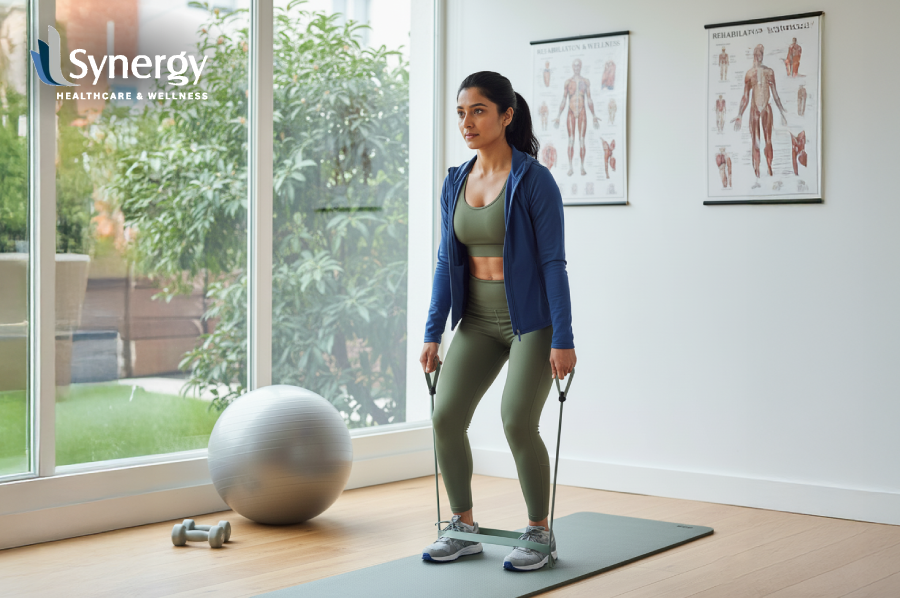
One of the first things most people want to know is, “How long does physiotherapy take to work?” It’s a fair question, but there isn’t a single answer that fits everyone. The pace of recovery depends on several factors; some within your control, and others built into the body’s natural healing process. Still, there are patterns and timelines that can help you set realistic expectations. Why It’s Hard to Give a Simple Answer Everybody heals differently. Some of the main factors that affect how quickly you notice results include: Because of all these variables, most physiotherapists prefer to talk in ranges rather than fixed numbers of weeks. Early Signs: What You Might Notice First Many people begin to see small but encouraging changes within the first few sessions. You might notice: These early gains can seem minor, but they’re important—they show your body is responding and healing has begun. Typical Recovery Timelines [How Long Does Physiotherapy Take] Here’s a general idea of how long different tissues take to heal when you’re doing regular physiotherapy and following guidance at home: Type of Injury Typical Healing Time Notes Muscle strain 2–4 weeks Muscles have good blood flow, so they repair fairly quickly. Tendon injury 4–6 weeks Slower healing because of lower blood supply. Bone fracture 6–8 weeks Therapy usually starts once the bone is stable. Ligament or cartilage injury 10–12 weeks or more These tissues heal slowly and may need more support. Post-surgical rehabilitation 3–6 months or longer Depends on the type of surgery and overall condition. Chronic or degenerative issues Several weeks to months Managed progressively to improve function and reduce pain. Healing is rarely a straight line. Some weeks bring visible progress; others feel slower. That’s normal. How Many Sessions Until You Notice Results? In most cases, noticeable progress appears between five and twelve sessions, especially when therapy is consistent and the program is gradually intensified. That doesn’t mean you’ll be completely recovered in that time, but you’ll likely start feeling stronger, looser, and more capable. If you’ve been diligent and still feel no change after several weeks, it’s worth discussing this with your physiotherapist. Sometimes, a small adjustment to your plan can restart progress. The Stages of Physiotherapy It helps to think of therapy as a series of overlapping stages rather than a straight path: Your physiotherapist will adjust your program at each stage, depending on how your body responds. Why Some People Take Longer Recovery doesn’t always move at the same speed for everyone. Some common reasons for slower progress include: If you feel stuck, don’t get discouraged. Talk to your therapist—they can reassess, change techniques, or refer you for further evaluation if needed. How to Help Your Body Heal Faster You can play an active role in your recovery. Here are practical ways to support the process: When to Expect Noticeable Change Most people start to feel some improvement between two and four weeks of consistent therapy. Pain may ease, stiffness may lessen, or strength may begin to return. Remember, “feeling better” doesn’t mean you’re finished—it means you’re on the right track. If you’ve been attending sessions for a few weeks without any improvement, bring it up. A simple reassessment or modification in exercises can often reignite progress. Synergy Physiotherapy – Helping You Move Better, Live Better At Synergy, we believe recovery starts with understanding. Our team works closely with you to find the cause of pain, restore balance, and build lasting strength. Every treatment plan is personal and guided by experience, not routine. We focus on progress you can feel—in the way you move, work, and live. Whether you’re healing from an injury or improving everyday mobility, we’re here to help you get back to your routine. Key Takeaways FAQs 1. How soon will I start feeling better after physiotherapy?Many people notice small changes—less pain or better movement—within the first few sessions. Most experience clear progress between the fifth and twelfth session, depending on the condition and consistency of treatment. 2. How often should I attend physiotherapy sessions?Most recovery plans begin with two to three sessions per week. As you improve, your therapist may reduce frequency and focus more on home exercises and independent strength work. 3. What happens if I miss sessions?Skipping appointments can slow your progress and disrupt your body’s adaptation to treatment. Staying consistent helps results build over time. 4. Can I do my regular workouts during physiotherapy?It depends on your injury. In most cases, your physiotherapist will modify your routine to keep you active without aggravating the affected area. 5. Why do some people recover faster than others?Healing speed depends on injury type, general health, age, and how closely you follow your treatment plan and home exercises.
Physiotherapy Exercises You Can Safely Do at Home

Physiotherapy exercises at home helps restore movement, reduce pain, and build strength after injury or illness. While clinical sessions are important, consistent home exercise is equally vital for achieving a lasting recovery. Why are Home Exercises Important? Progress in physiotherapy depends on repetition. Regular movement helps muscles and joints regain function, supports balance, and prevents stiffness. A simple home routine builds independence and reinforces the benefits of treatment. Staying Safe at Home Before you begin, follow these essential safety steps: Gentle Warm-Up Before beginning strengthening work, warm up the body with gentle movement. Physiotherapy Exercises at Home You Can Safely Do Core and Back Strength Lower Body Strength and Mobility Upper Body and Shoulder Mobility Balance and Coordination Sample Daily Routine (10–15 minutes) When to Stop or Modify Pause and consult a physiotherapist if you experience: Staying Motivated: Make exercise part of your routine—try ankle circles while watching television or shoulder squeezes at your desk. Track small improvements and celebrate steady progress. When to Seek Professional Help: Consult a physiotherapist if pain worsens, progress stalls, or new symptoms arise. Regular check-ins help ensure correct form and suitable progression. Restoring Movement, Rebuilding Confidence Synergy Physio is founded on the belief that effective rehabilitation comes from knowledge, precision, and partnership. Our practice integrates advanced physiotherapy techniques with personalised care to support recovery, mobility, and long-term wellbeing. Each treatment plan is developed through careful assessment, evidence-based methods, and clear communication between therapist and patient. We address the cause of discomfort, not only the symptoms, to help individuals regain strength, stability, and confidence in daily life. At Synergy Physio, every session is guided by the same purpose—to restore movement, promote healing, and enhance quality of life through trusted professional care. Summing Up Home physiotherapy, when approached with care and consistency, can be one of the most effective ways to maintain strength, restore mobility, and prevent further injury. Every movement, however small, supports the body’s natural ability to recover and adapt. The key lies in steady effort, correct technique, and attention to how the body responds. Follow your therapist’s guidance, progress gradually, and prioritise comfort over intensity. With time, regular practice builds not only physical strength but also confidence in everyday movement. Through patience and mindful repetition, the benefits of physiotherapy extend beyond recovery—helping you move with greater ease, stability, and independence each day. FAQs 1. Can I start physiotherapy exercises at home without seeing a therapist?It is best to begin after a professional assessment. A physiotherapist can identify which exercises suit your condition and which movements should be avoided. Starting independently may risk strain or delayed recovery if an underlying issue is overlooked. 2. How often should I do home physiotherapy exercises?Consistency matters more than duration. Most routines are effective when done once or twice daily for 10–20 minutes. Follow the schedule recommended by your therapist, and increase gradually as strength improves. 3. What if I feel pain while exercising?Mild muscle fatigue is normal, but sharp, radiating, or worsening pain is not. Stop the exercise immediately and consult your physiotherapist before continuing. Pain is the body’s way of signalling improper movement or overexertion. 4. Do I need special equipment for home exercises?Most basic exercises require little or no equipment. A yoga mat, resistance band, or small weights such as water bottles can help with specific routines. Focus first on posture and control rather than accessories. 5. Can older adults safely do these exercises?Yes, with proper guidance. Gentle movements for balance, flexibility, and strength are highly beneficial for older adults. Exercises should be modified to suit ability, and safety measures such as chair support can be added
5 Daily Habits That Can Reduce Back & Neck Pain

Back and neck pain are among the most common physical complaints worldwide. Though they can seem unavoidable, most everyday discomfort arises from habits that quietly build tension in the muscles and joints. The good news is that these same habits can be adjusted. Small, steady changes in how people move, sit, and rest can ease existing pain and prevent future episodes.