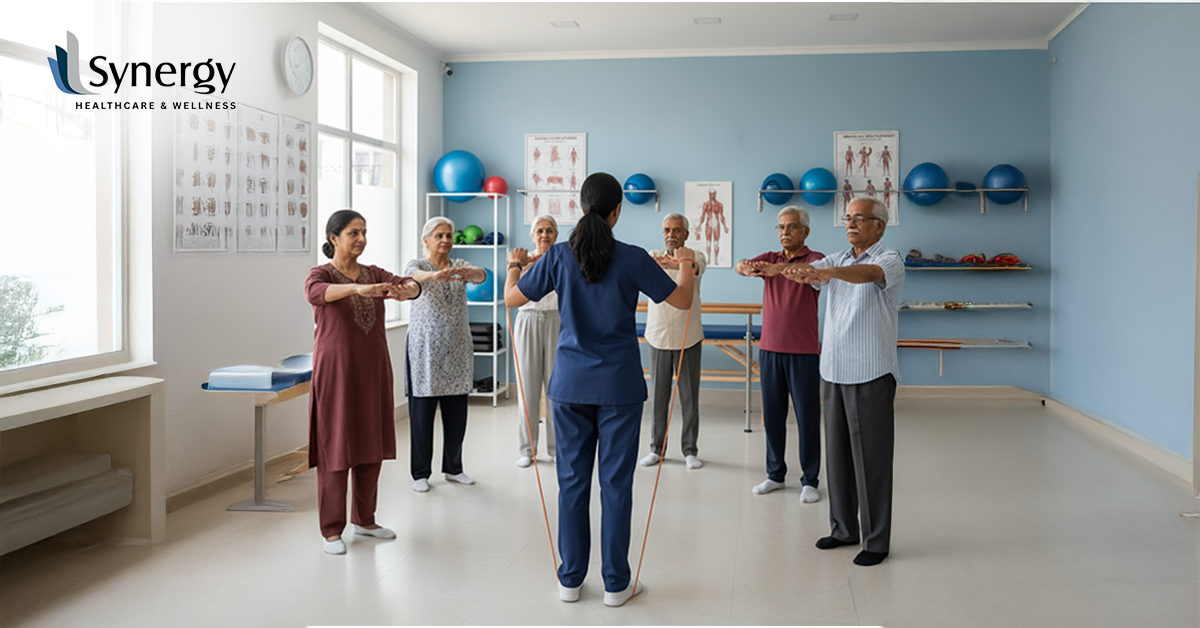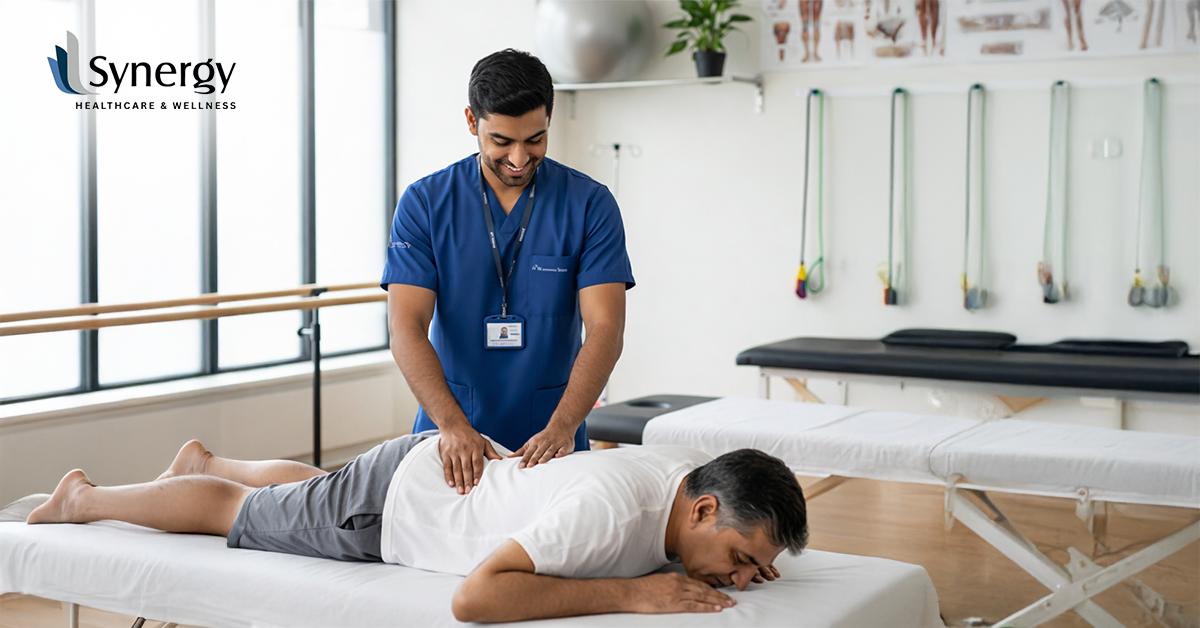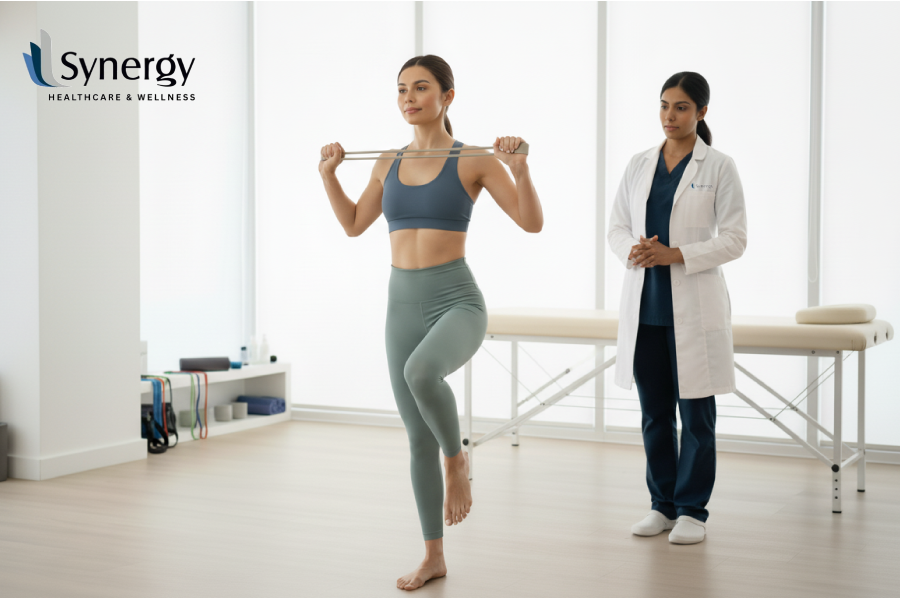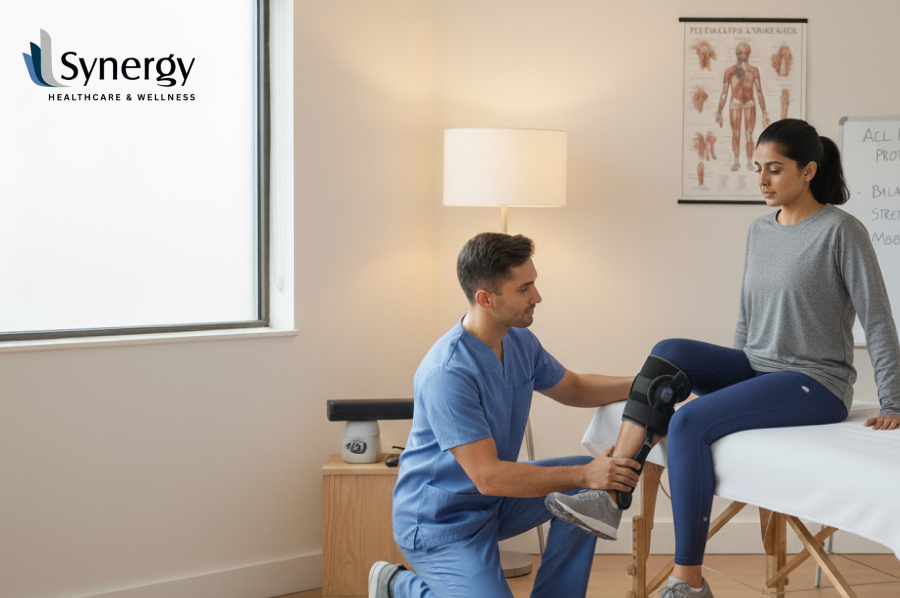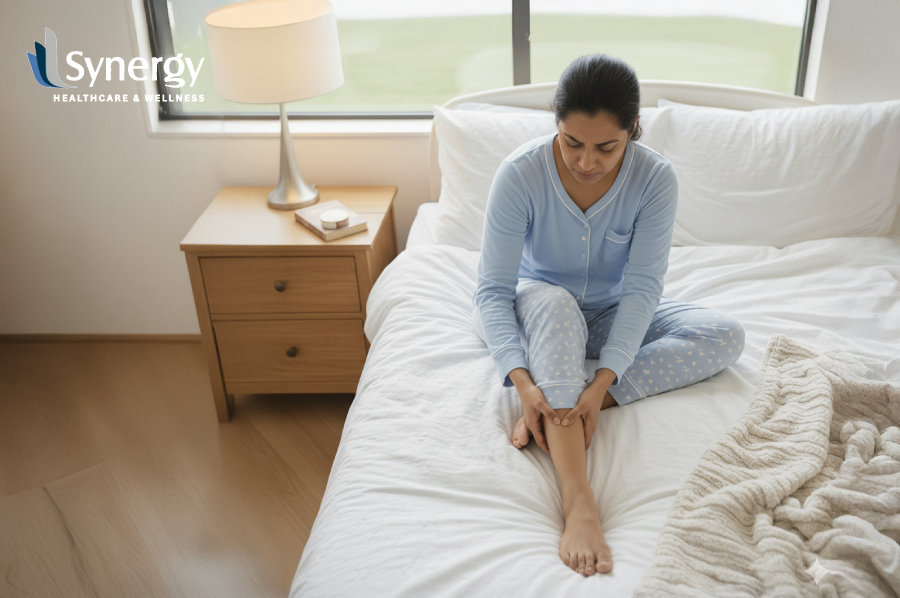

When is morning pain a sign to seek help? If you have the same doubt, here’s the answer: Exercise should leave you feeling looser and more confident within a few weeks. It is sensible to book an assessment with a physiotherapist or doctor if:
- Morning stiffness lasts longer than an hour on most days
- Pain wakes you at night and does not settle with simple changes
- You notice increasing difficulty getting out of bed or climbing stairs
- You rely on pain tablets every morning with little relief
- Your pain is linked to a fall, accident or sudden injury
Early assessment can identify whether the problem is mainly muscular, joint-related, nerve-related or linked to an underlying medical condition. Treatment may include tailored exercise, manual therapy, posture training and advice on activity levels.
Let’s Begin
Waking up with a stiff neck or aching back can make even a simple morning feel heavier than it should. A short set of well-planned morning physiotherapy exercises can loosen your joints, warm your muscles and help your nervous system settle, so you step into the day with more comfort and confidence.
This guide has been developed for adults who want a safe, gentle routine that can be done at home, without special equipment. It reflects how our physiotherapists at Synergy in Chennai often structure early morning programmes for people with stiffness and recurring aches.
Why Mornings Often Feel Stiff And Sore
During sleep, joints are still for several hours. Fluid inside the joints does not circulate as freely, muscles cool down, and the body tends to rest in one or two habitual positions. If you already have a sensitive back, arthritic joints or tight muscles from long desk hours, it is common to feel:
- Stiffness in the lower back when you first stand up
- Tightness across the shoulders and neck
- Heavy or aching knees and ankles with the first few steps
Inflammatory conditions, such as certain types of arthritis, can also flare in the early hours. The good news is that for many people, gentle movement that is guided by physiotherapy principles can help oil the joints, improve circulation and calm pain signals.
When A Morning Routine Is Safe – And When To Be Cautious
Most healthy adults can follow a simple stretching and mobility routine. However, physiotherapists do look for warning signs before suggesting exercises.
Speak to a doctor or physiotherapist first if you:
- Have you had recent surgery on your spine, hip, knee, shoulder or other major joint
- Have severe pain that does not ease when you rest
- Notice numbness, tingling or weakness in your arms or legs
- Have a history of significant falls, fractures or osteoporosis
- Experience chest pain, breathlessness or dizziness with mild activity
- Have unexplained weight loss, fever or night sweats together with back pain
If any of these apply, you still may benefit from a routine, but it should be designed and supervised for your particular condition.
For everyone else, the rule is simple. Gentle stretch or mild pulling is acceptable. Sharp, catching or increasing pain is a sign to ease off or skip that movement.
How To Use These Morning Physiotherapy Exercises
A few practical guidelines before you begin:
- Choose a firm mattress or yoga mat, not a soft sofa
- Wear clothing that allows free movement
- Move slowly and breathe steadily
- Keep a mild stretch for 10 to 20 seconds unless stated otherwise
- Work within a comfortable range, never forcing your joints
You can perform these exercises once each morning. On days when you wake up especially stiff, you may repeat the shorter routine later in the day as well.
Seven Morning Physiotherapy Exercises To Ease Stiffness
1. Gentle Diaphragmatic Breathing And Body Scan (1 To 2 Minutes)
This first step settles your breathing and helps you notice stiff areas before you move them.
How to do it
- Lie on your back with your knees bent and feet flat on the bed or mat.
- Place one hand on your chest and one on your abdomen.
- Breathe in slowly through your nose. Let your tummy rise slightly under your lower hand.
- Breathe out gently through pursed lips, allowing your tummy to fall.
- Continue for 8 to 10 breaths, scanning your body from head to toe and noticing where you feel tight.
Helps with
- Calming morning tension and anxiety
- Preparing the spine and ribs for movement
- Improving oxygen flow before you start the rest of the routine
2. Knee Hugs For Lower Back And Hip Stiffness
This movement mobilises the lower spine and hips in a comfortable, supported position.
How to do it
- Stay on your back with your knees bent.
- Gently bring one knee towards your chest and hold it with both hands just below the knee.
- Draw the knee in until you feel a light stretch in the lower back or buttocks.
- Hold for 10 to 15 seconds while breathing steadily.
- Release slowly and change sides.
- If comfortable, hug both knees to your chest together and hold.
Perform two repetitions on each side, and two repetitions with both knees together if that feels pleasant.
Helps with
- Morning lower back stiffness
- Mild hip and buttock tightness
- Preparing the spine for sitting and standing
3. Cat–Camel Spinal Mobilisation
Often used in physiotherapy for spinal mobility, this exercise gently moves the back through flexion and extension.
How to do it
- Move to a hands and knees position on the mat, with hands under shoulders and knees under hips.
- As you breathe out, slowly round your back upwards, tucking your tailbone and letting your head drop slightly, like a stretching cat.
- As you breathe in, gently arch your back in the opposite direction, lifting your chest and tailbone while keeping your neck long, like a camel hump.
- Move in a smooth, controlled rhythm without forcing end positions.
Perform 8 to 10 cycles.
Helps with
- Stiffness along the whole spine
- Gentle mobilisation without loading the joints heavily
- Preparing for bending to wash your face, dress and lift light objects
4. Child’s Pose And Side Stretch
Child’s pose lengthens the spine and hips while letting the nervous system relax. The side variation adds a useful stretch for the lower ribs and waist.
How to do it
- From hands and knees, sit back towards your heels with your knees comfortably apart.
- Walk your hands forward so your arms are extended and your forehead moves towards the mat or a pillow.
- Breathe slowly and feel your back widen with each breath.
- To add a side stretch, walk both hands a little to the right and hold for 20 seconds, then walk to the left side and hold again.
Hold the central position for 20 to 30 seconds, and the side stretches for 20 seconds each.
Helps with
- Tightness around the lower back and between the shoulder blades
- Gentle hip and thigh stretch
- Settling the mind before a busy day
If kneeling is uncomfortable, your physiotherapist can show you chair-based alternatives.
5. Pelvic Tilts For Lower Back Control
Pelvic tilts strengthen deep support muscles around the spine and help you control your posture during the day.
How to do it
- Lie on your back once more with your knees bent and feet flat.
- Imagine your pelvis is a bowl of water. Gently tip the bowl to flatten your lower back against the bed or mat by tightening your lower abdominal muscles.
- Hold this flattened position for 5 seconds, keeping the buttocks relaxed if possible.
- Slowly release back to the starting position.
Perform 10 to 12 repetitions.
Helps with
- Supporting an achy lower back
- Teaching awareness of neutral spine
- Preparing the core for standing and walking
Avoid holding your breath. If your thighs or buttocks grip strongly, try to relax them and let the deep muscles around your tummy work instead.
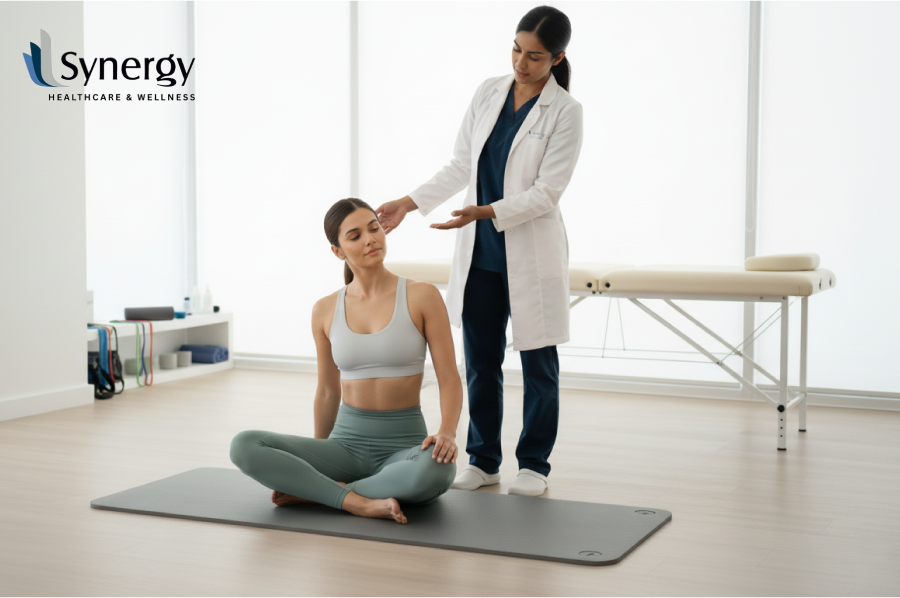
6. Seated Spinal Twist For Mid-Back Mobility
This exercise is easy to do, even if you are short on time and already sitting on the edge of the bed.
How to do it
- Sit upright on the bed or a chair, feet flat on the floor and knees hip-width apart.
- Place your right hand on the outside of your left thigh.
- Gently turn your ribs and shoulders towards the left while keeping your hips facing forward.
- Hold for 10 to 15 seconds and breathe calmly.
- Return to the centre and repeat to the other side.
Perform three repetitions on each side.
Helps with
- Stiffness in the middle and upper back
- Rotational movement needed for looking over your shoulder, driving and reaching
- Encouraging a more upright sitting posture
Keep the movement smooth. You should feel a comfortable stretch, not strain.
7. Neck Stretches And Ankle Pumps For Circulation
Finishing with neck stretches and ankle movement helps ease tension and boost blood flow before you stand up.
Neck side stretch
- Sit tall, either on the bed or a chair.
- Gently tilt your right ear towards your right shoulder until you feel a mild stretch along the left side of your neck.
- Hold for 10 to 15 seconds, then change sides.
- Repeat 2 or 3 times each way.
You may rest your hand lightly on the side of your head to guide the movement, but avoid pulling.
Ankle pumps
- Either remain seated or lie back with your legs straight.
- Point your toes away from you, then draw them up towards your nose.
- Move smoothly through this range 15 to 20 times on each side, or together.
Helps with
- Neck and shoulder tightness from poor pillow support or stress
- Calf and ankle stiffness
- Circulation in the lower legs, especially if you will sit or stand for long periods
Two Easy Morning Routines You Can Follow
You do not need to perform every exercise every day. Here are two sample programmes you can adapt.
A 5-Minute Routine For Busy Mornings
Ideal when you are rushing, yet want to avoid starting the day in pain.
- Diaphragmatic breathing and body scan – 1 minute
- Knee hugs – 1 minute
- Cat–camel spinal mobilisation – 1 to 2 minutes
- Neck side stretches and ankle pumps – 1 to 2 minutes
This short series is enough to loosen most joints and settle your breathing.
A 10-Minute Routine For Very Stiff Mornings
Use this on days when your back or joints feel especially heavy and sore.
- Diaphragmatic breathing and body scan – 1 to 2 minutes
- Knee hugs – 2 minutes
- Cat–camel spinal mobilisation – 2 minutes
- Child’s pose with side stretch – 2 minutes
- Pelvic tilts – 2 minutes
- Seated spinal twists and neck stretches – 2 minutes
Move slowly and keep your attention on how your body responds. If any movement consistently aggravates pain, it may need to be modified or replaced by your physiotherapist.
How Synergy Healthcare and Wellness Clinic In Chennai Can Support You
At Synergy Healthcare and Wellness Clinic in Chennai, we see many people whose first complaint is, “I feel terribly stiff in the mornings.” Often, a carefully graded morning routine is one part of a wider plan that may also include specific strengthening, ergonomic changes at work and advice about sleep positions.
If you live in or around Anna Nagar, T Nagar, Adyar or neighbouring areas, a physiotherapist can:
- Assess which joints and muscles are truly driving your morning pain
- Check for warning signs that require medical tests or imaging
- Adapt the exercises above to match your spine, hips, knees or shoulders
- Progress your routine as your strength and confidence improve
You can begin with the home routine from this guide and then bring your questions to an appointment, where the exercises can be fine-tuned to your body.
Bringing it together
A short, thoughtful set of morning physiotherapy exercises can change how your day begins. By easing stiffness, improving circulation and helping your body feel supported, you are more likely to manage work, family and travel with less discomfort.
Start with the simple routine, listen carefully to your body and adjust as needed. If you are in Chennai and your mornings are regularly painful, a session with a physiotherapist at Synergy Healthcare and Wellness Clinic can help you understand why and build a programme that genuinely matches your life and your goals.
FAQ’s
How long should my morning physiotherapy routine take?
For most adults, 5 to 10 minutes is enough to reduce stiffness and prepare for daily tasks. On demanding days, you may repeat a shorter version in the afternoon or evening.
Is stretching in bed enough, or should I stand up?
Several movements can be performed lying down, which is useful when pain is high. As your tolerance improves, it is usually better to include some exercises in sitting and on hands and knees, because these positions are closer to real-life activities.
Can I do these exercises if I have arthritis?
Many people with osteoarthritis or mild inflammatory arthritis benefit from gentle morning exercises, provided they stay within a comfortable range. It is wise to discuss your routine with a physiotherapist, especially if you have significant joint damage or are unsure which movements are safe for you.
What if my pain increases after the routine?
A mild increase in stiffness that settles within half an hour is often acceptable as your body adapts. If pain becomes sharper, radiates down an arm or leg, or lingers for several hours, stop that exercise and consult a professional.
Will this routine replace other forms of treatment?
Morning physiotherapy exercises are one helpful tool. They do not usually replace medical review, prescribed medication or a full rehabilitation programme, especially for long-standing back or neck problems. Think of them as a foundation on which more specific treatment can be built.