Short Summary:
Targeted nerve mobilisation exercises are a very effective and non-surgical way to ease radiating pain caused by nerve entrapment. These methods help to reduce swelling and get movement back in cases of sciatica and neck pain by gently guiding nerves along their normal paths. Find out how Synergy uses clinical neurodynamic techniques to help patients get their lives back without any neurological pain.
What Does Neurodynamics Mean in Pain Recovery?
When we think of physical therapy, two things that come to mind are making joints stronger and stretching muscles. But the nervous system, which is a huge network of “electrical wiring” that runs from the brain to the toes, needs its own kind of movement. Nerves don’t like to be pulled; they like to move or slide along their protective coverings. When a nerve becomes compressed or “stuck” due to a herniated disc or muscle tightness, it leads to the sharp, shooting, or tingling sensations known as sciatica or cervicobrachial pain.
In clinical practice, nerve mobilisation exercises (also known as nerve gliding or flossing) are used to restore this natural sliding motion. Mobilisation techniques use a “teeter-totter” movement to move the nerve without adding tension, which is different from traditional stretching, which can make an already inflamed nerve feel worse. This process improves local blood flow, reduces intraneural oedema (swelling), and desensitises the nervous system. At Synergy, we prioritise these neurodynamic techniques to bridge the gap between acute pain and functional recovery, ensuring that your “wiring” is as healthy as your “hardware.”
The Science of Nerve Gliding: Why It Works
Nerves are designed to be mobile. For instance, the sciatic nerve must slide up to 2 centimetres during a simple movement like bending your leg. But when this is stopped, the nerve doesn’t get enough oxygen, which sends the pain message.
Benefits of Mechanics
- Fewer adhesions: Mobilisation helps to free up small “tethers” or scar tissue that may be pushing the nerve against a bone or muscle.
- Fluid Exchange: The wave motion helps to flush out the nerve’s inflammatory waste products and bring in fresh blood that is full of nutrients.
Neurological Benefits
- Desensitisation: The brain realises that the subtle, steady wave is not dangerous, which makes it easier to handle pain.
- Improved conduction: When the glide is restored, the nerve sends impulses more quickly, which helps reduce the numbness or heaviness in the limbs.
Nerve Mobilisation Exercises for Sciatica (Lower Body)
Sciatica occurs when the sciatic nerve is irritated in the lower back or gluteal region. These exercises should be performed slowly and never into a range of sharp pain.
1. The Sciatic Nerve “Floss” (Seated)
- How: Sit on a chair with a slumped posture. Tuck your chin to your chest. Slowly straighten one leg while simultaneously looking up at the ceiling. Then, bend your knee while looking back down at your chest.
- Why: This “glides” the nerve toward the head and then toward the feet without overstretching it.
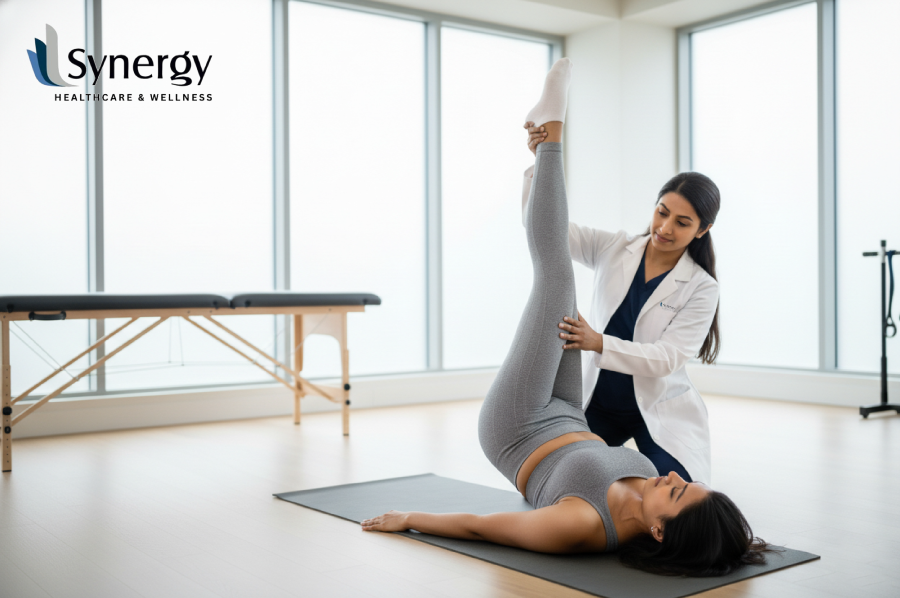
2. The Supine Hamstring Glide
- How: Lie on your back, holding the back of your thigh. Straighten your knee until you feel a mild tension, then flex and extend your ankle (pointing toes up and down).
- Benefit: Specifically targets the tibial branch of the sciatic nerve.
Exercises to Free Up Nerves for Neck And Arm Pain (Upper Body)
When the brachial plexus or nerves like the Median or Ulnar nerves are pinched, neck pain usually means arm pain.
1. Glide of the Median Nerve
- How: Stand with one arm out to the side and your palm facing forward. While turning your head away from your arm, bend your wrist toward your forearm. Then, turn your head toward your arm and move your wrist back.
- Focus: This is highly effective for pain radiating into the thumb and first two fingers.
2. The Ulnar Nerve “Mask”
- How: Bring your hand up toward your face, making a “circle” with your thumb and index finger (like an upside-down ‘OK’ sign). Rotate your hand so your fingers point toward your jaw and your elbow points out. Tilt your head away to increase the glide.
- Benefit: Relieves tingling in the “funny bone” area and the pinky finger.
Comparison: Nerve Mobilisation vs. Traditional Muscle Stretching
| Feature | Traditional Stretching | Nerve Mobilisation (Synergy) |
| Tissue Target | Muscles and Fascia | Neural tissue and Nerve sheaths |
| Sensation | “Pulling” or “Burning” | Gentle, rhythmic, oscillation |
| Intensity | High tension (hold for 30s+) | Low tension (repetitive movement) |
| Goal | Lengthening tissue | Restoring “glide” and blood flow |
| Safety in Acute Pain | Can worsen nerve inflammation | Safest method for early nerve relief |
Integrating Neurodynamics into Your Routine
For these exercises to be effective, they must be part of a broader rehabilitation strategy. We also like to do nerve mobilisation exercises at Synergy Healthcare along with:
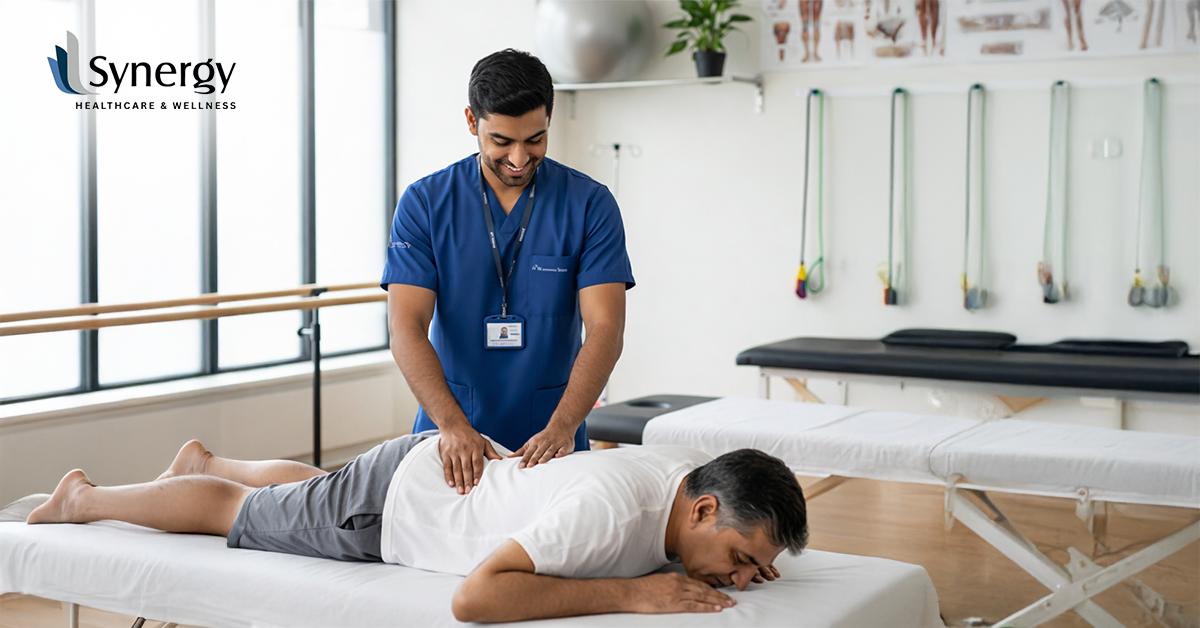
- Manual therapy is used to free up the “tunnels” (muscles and joints) that the nerve has to go through. Learn more about our Manual Therapy services.
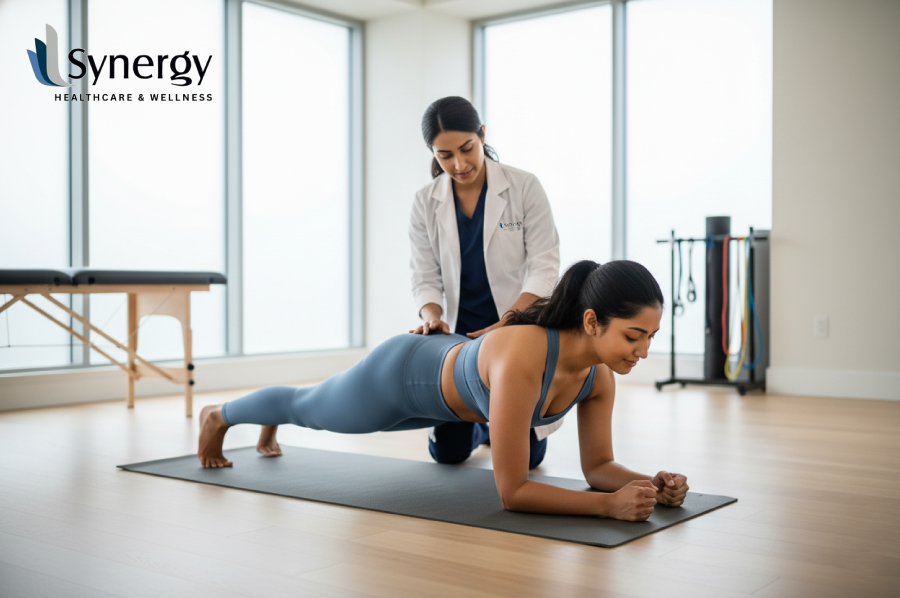
- Fixing your posture: To make sure that your work environment isn’t constantly getting on your nerves. Read our tips on how to improve your posture and strengthen your core.
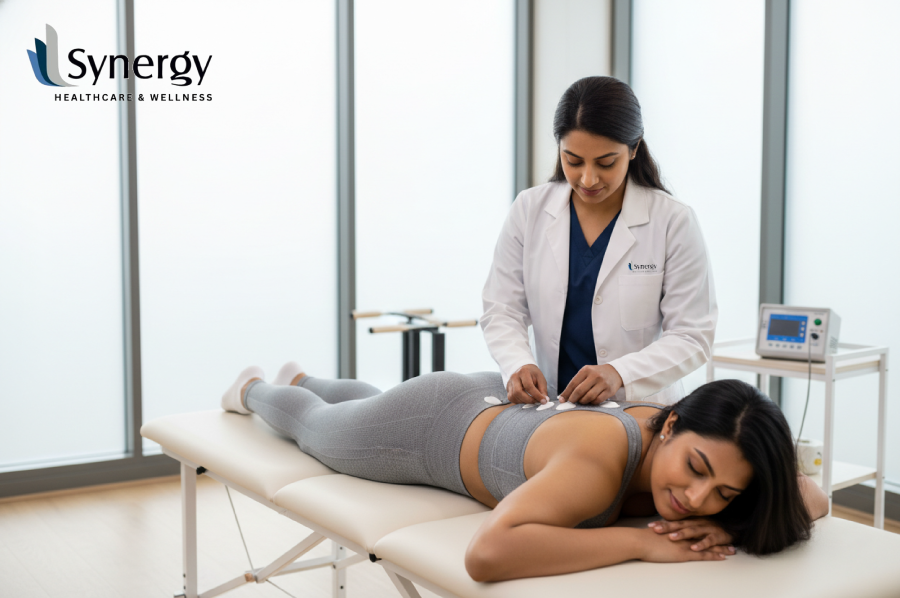
- Pain Modulation: Using the newest technology to calm the nerve before starting to work out. Learn more about therapy that changes how pain feels.
Synergy: Our Excellence in Clinical Physiotherapy and Rehabilitation
We have made a name for ourselves at Synergy as one of the best places to get all kinds of physiotherapy and rehabilitation services because we are dedicated to providing high-quality, patient-centered care. We believe strongly that “movement is medicine,” and our centers are staffed by senior medical professionals who have decades of experience in every diagnosis. We are proud to offer a full range of services, from highly advanced manual therapy to robotic-assisted rehabilitation. This way, we can make sure that our patients get the best and most advanced medical technology available in the field.
We don’t just treat symptoms; we also try to figure out what caused the mechanical and neurological problems in the first place so they don’t happen again. We make sure that every treatment plan is tailored to the person’s unique biological needs and lifestyle goals by giving our doctors and patients a place to work together. At Synergy, we want to help you get back to your best functional level with accuracy, kindness, and scientific proof.
A Movement-Based Solution for Nerve Pain
Nerve pain can feel overwhelming, but the solution often lies in the very thing the body fears most: movement. By using structured nerve mobilisation exercises, you can manually assist your nervous system in healing itself. These techniques offer a gateway to recovery that avoids heavy medication or invasive procedures.
At Synergy, we are dedicated to helping you understand your body’s unique mechanics. With our neurodynamic assessments, you can be sure that not only are you moving, but you’re moving in a way that is good for your nerves. Don’t let sciatica or neck pain stop you from moving. Get on the glide and start living your active life.
Are you ready to relax? Call Synergy today to set up a clinical neurodynamic assessment.
FAQs
1. When I do nerve mobilisation exercises, do I feel a “stretch”?
No, you should only feel a little bit of tension. If you feel a strong stretch or a “zing” of pain, you probably have too much tension on the nerve and should move it less.
2. How many times a day should I glide my nerves?
Most of the time, we suggest doing 10 to 15 reps two to three times a day. Sometimes doing too much can irritate the nerve, so it’s better to be consistent than to do a lot at once.
3. Is it possible to use nerve mobilisation to help with Carpal Tunnel Syndrome?
Yes, the Median nerve glide is one of the most common ways that doctors treat Carpal Tunnel Syndrome. It helps the nerve feel better by moving it past the tight spot in the wrist.
4. Why does my pain feel a little different after I do these exercises?
When the pain moves or changes from sharp to dull, it usually means that the nerve is responding well to the exercise.
5. If I have a herniated disc, is it safe to do nerve glides?
Yes, but you should only do these exercises with the help of a professional to make sure they don’t put more stress on the area of the spine that is hurting.
6. Does Synergy have exercises that are good for different kinds of nerve pain?
Yes, we have exercises that are good for Sciatic, Femoral, Median, Ulnar, and Radial nerve pain.
7. Can nerve mobilisation exercises initially worsen symptoms?
There can be a mild temporary hypersensitivity, but the symptoms should soon calm down; if there are still flare-ups, it means the movement intensity should be lowered.
8. How soon can one expect to see improvements from nerve gliding?
Some individuals can notice the changes already after a few sessions, but long-standing nerve irritation might require a few weeks of regular practice.
9. Should nerve mobilisation be done before or after strengthening exercises?
Most of the time, it is recommended to argue the muscle strength first so as to reduce nerve hypersensitivity and therefore make exercises more comfortable.
10. Is it okay to do nerve glides when the pain is severe?
You can, but only within the range that is not painful, and it is preferable to have it guided by a practitioner in order not to increase the inflammation.