Short Summary:
Learn how physiotherapy for balance can help increase stability, reduce falls, and coordinate better. Synergy blends targeted exercises in the aspects of balance exercises and coordination exercises with expert balance training tips to help one regain the ability to move with confidence. Personalised services that build core strength, enhance your posture, improve body awareness, and support daily activities for long-term functional independence, safer mobility, and overall control of movement at any age.
Physiotherapy for Balance: The First Step to Building Strength
Gross motor skills involving balance and coordination have to be established, enabling one to perform the basic functions of walking, climbing stairs, and participating in various physically active pursuits such as sports. Loss of balance raises the prospect of falling, and this problem is of particular significance to older members of society or to patients who have suffered some form of injury. Research reveals that one in every three people within the 65- plus age group suffers a fall every year.
There are also indications that balance-reactive training can effectively reduce the incidence of falls in high-risk groups, and therefore, balance physiotherapy can be considered an efficacious means for enhancing balance and mobility confidence.
Balance physiotherapy provides structured and evidence-supported treatment to enhance balance stimuli within the human body. On our blog, we shall explore evidence-supported methods and exercises related to physiotherapy for balance that would help in ensuring increased mobility and independence.
The Science Behind Balance & Coordination
To fully benefit from balance exercises and coordination exercises, it is important to have an understanding of how such balance is established. The concept of moving in a smooth and confident manner through the control of senses and muscles is addressed by physiotherapy.
- Balance: The capacity to keep the centre of gravity of the body above its base of support.
- Coordination: This is the smooth and precise movement of different muscle groups.
Primary systems affected:
- Visual system – enables sense of space.
- Vestibular system – It is responsible for sensing the movement and position of the
- Proprioceptive system – Senses the position of joints and muscles.
Common Balance and Coordination Problems and Their Causes
However, some of the factors that could be working against your balance are directly related to ageing. In fact, there are some underlying conditions that can further impair your balance. Knowing the “why” for your imbalance is an important part of physiotherapy for balance.
- Neurological Disorders: Neurological disorders like Parkinson’s, Multiple Sclerosis (MS), or stroke rehabilitation can affect the signals from the brain to muscles.
- Inner ear problems (vestibular problems): The inner ear is essentially the “balance centre” of the body. As such, problems like vertigo and BPPV can cause dizziness and make it hard for a person to balance.
- Peripheral Neuropathy: This is where the loss of sensation in the feet prevents the brain from knowing exactly where the body is positioned on the earth’s surface. This is normally a result of diabetes.
- Musculoskeletal Weakness: When there is weakness in the musculoskeletal system, such as an unstable centre or wobbly ankles, there are always “micro-falls’’.
Strengthening Core and Lower Limbs
| Symptom / Finding | Potential System Involved | Priority Focus |
| Dizziness when turning the head | Vestibular system | Gaze stabilisation exercises |
| Stumbling in the dark | Visual/sensory system | Sensory integration training |
| Spinal cord weakness affecting stability | Musculoskeletal system | Strengthening core and lower limbs |
Benefits of Physiotherapy for Balance
Physio for balance rehabilitation provides more to the client than mere physical support – it gives the client the ability to move about on their own. Through the sensory and muscular systems of the body, great benefits are achieved.
- Fall Prevention: Reduces the chances of patients falling, particularly in the elderly and post-surgical patients.
- Improved Mobility: It helps in improving the ability to walk, climb stairs, and perform various
- Athletic performance: Improves agility and reaction time.
- Rehabilitation Support: Helps restore normal functions in case of neurological or musculoskeletal damage.
Well-Structured Balance Exercises
In implementing balance improvement, stability training begins with practice. These balance trainings advance from easy exercises to complex methods to ensure that one gains confidence in daily physical locomotion.
1. Static Balance Exercise
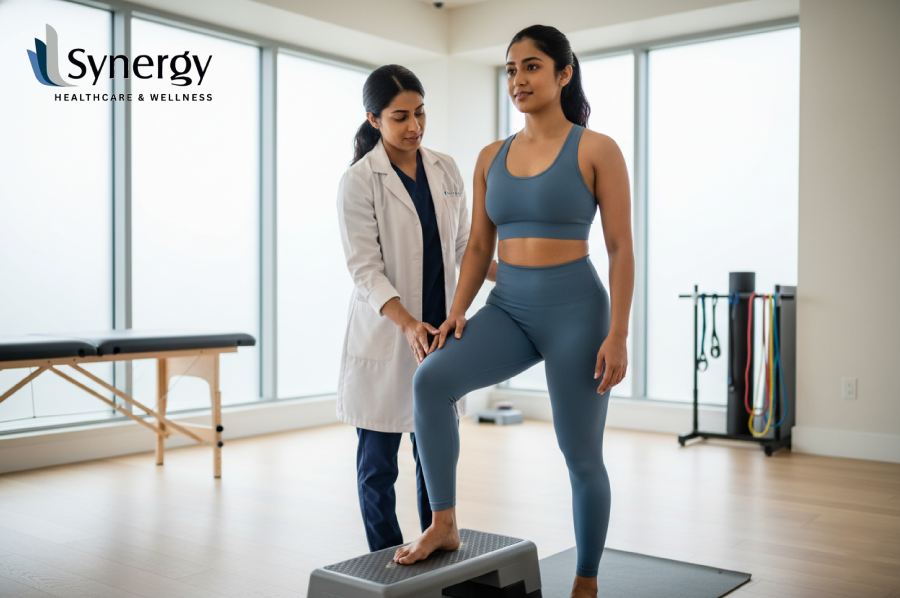
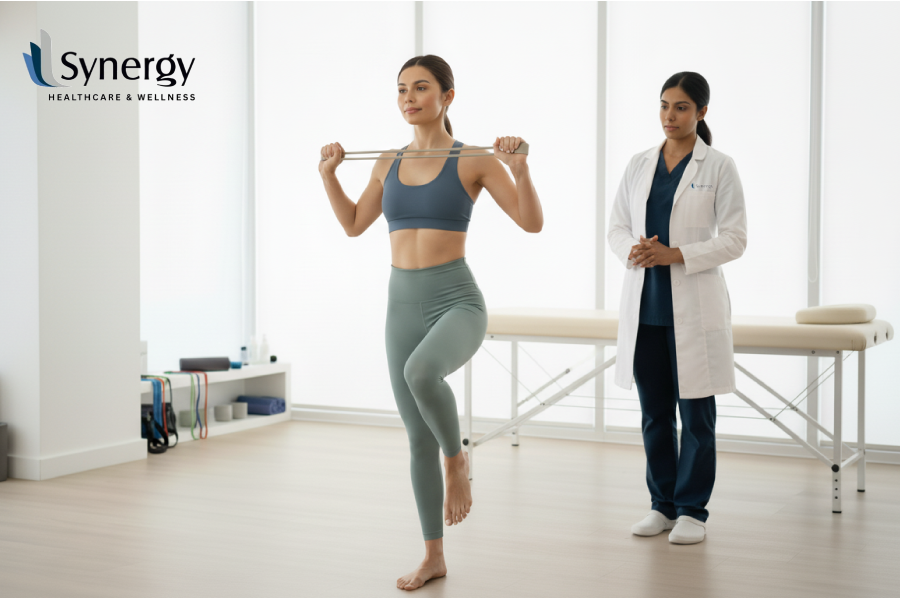
- Single-leg stance: This is done by lifting one foot off the ground and balancing steadily on the other leg, approximately for 30 seconds.
- Tandem stance: Put one foot directly in front of the other, heel to toe, and maintain balance with controlled posture.
2. Dynamic Balance Training
- Heel-to-toe walking: Walk in a straight line from heel to toe.
- Step-ups: Step-ups are controlled movements in and out of a platform.
3. Advanced Balance Training
- Bosu ball exercises: Engage core muscles.
- Tai Chi movements: Soothing movements to increase balance.
Coordination Exercises
PhysioPedia defines it
- Finger to nose test: Enhances coordination of upper limbs.
- Alternating foot taps: Helps refine lower extremity movements.
- Ball catching drills: Increase hand‑eye coordination.
- Cross-crawl patterns: Improves bilateral coordination.
Designing the Fall-Proof Environment: Home Safety & Physio Therapy
Although balance physiotherapy continues outside of the practice’s doors, to fully achieve functional independence, your physical therapy needs to be coupled with a safe environment in which to live. Our therapists will often recommend a “Home Audit” in concert with your coordination exercises.
- Lightning is Key: Hallways and stairwells should be very well-lit to assist your visual system in understanding the spatial environment.
- Remove Trip Hazards: Secure loose rugs with non-slip backing and remove clutter or electrical cords from walking paths.
- Install support rails: Grab bars can be installed in areas that are wet, such as baths, to provide additional support and help prevent loss-of-control movements that can cause slips.
- Footwear matters: wear supportive, thin-soled shoes indoors rather than walking in socks or slippers, which will reduce your proprioceptive feedback.
You combine a safe environment with expert balance training tips for a 360-degree approach toward the prevention of injuries.
Balance Training Tips
The process of stabilising a structure is an exercise that requires practice. These balance training tips are an effective way to move from simple to advanced balancing techniques.
- Start simple: They begin with static exercises, and then they progress.
- Use support: Support yourself on a chair and/or the wall for the first part of this exercise.
- Consistency is a virtue: Practice every day.
- Gradually make progress: Gradually raise difficulty levels based on increasing confidence.
- Practice with strength training: Having strong muscles is related to good balance.
Balance vs Coordination Exercises
| Focus Area | Balance Exercises | Coordination Exercises |
| Lower body | Single‑leg stance | Alternating foot taps |
| Upper body | Bosu ball push‑ups | Finger‑to‑nose test |
| Whole body | Tai Chi routines | Cross‑crawl drills |
Technology in Balancing Rehabilitation
Contemporary physiotherapy has evolved from simple wooden tilt boards. At Synergy, we leverage evidence-based technology to facilitate faster healing and make balance exercises a fun experience for the clients.
- Biofeedback Systems: By using sensors that offer real-time information, patients are able to visualise on a screen what their centre of gravity is. This, in turn, allows them to “re-wire” their brains to understand when they are tipping too far towards one side.
- Virtual Reality Training: “Busy” conditions, like a busy street or a moving bus, can be simulated in a clinic, and it becomes possible with virtual reality. Thus, the patient becomes ready for real conditions.
- Force Plate Analysis: We use digital force plates that measure exactly how much weight is placed on each foot. Such precision enables us to find even the slightest imbalances that might not be visible to the naked human eye.
Pro Tip: Adding tech-based feedback to your routine can speed up your timeline of rehabilitation by allowing you to reach “neuromuscular re-education” faster than you may be able to with a manual approach.
Roles of Physiotherapists in Synergy
Our customised programs at Synergy include a mix of balance exercises, coordination exercises, and strength exercises. We are aware of personal requirements and monitor progress. Balanced Training Tips are offered.
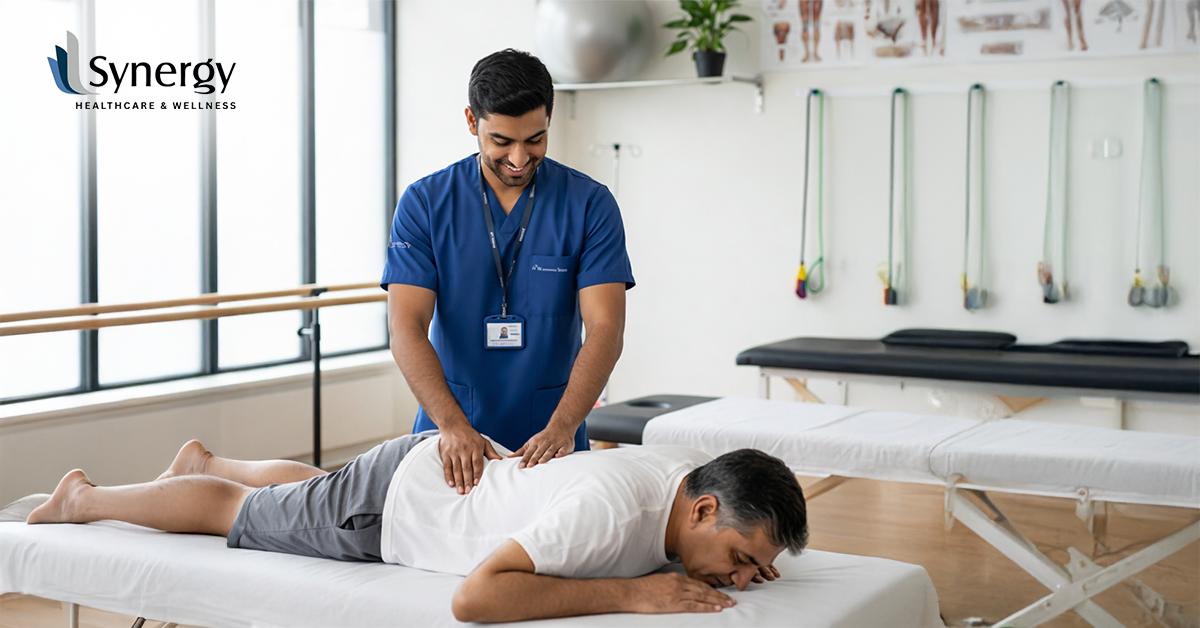
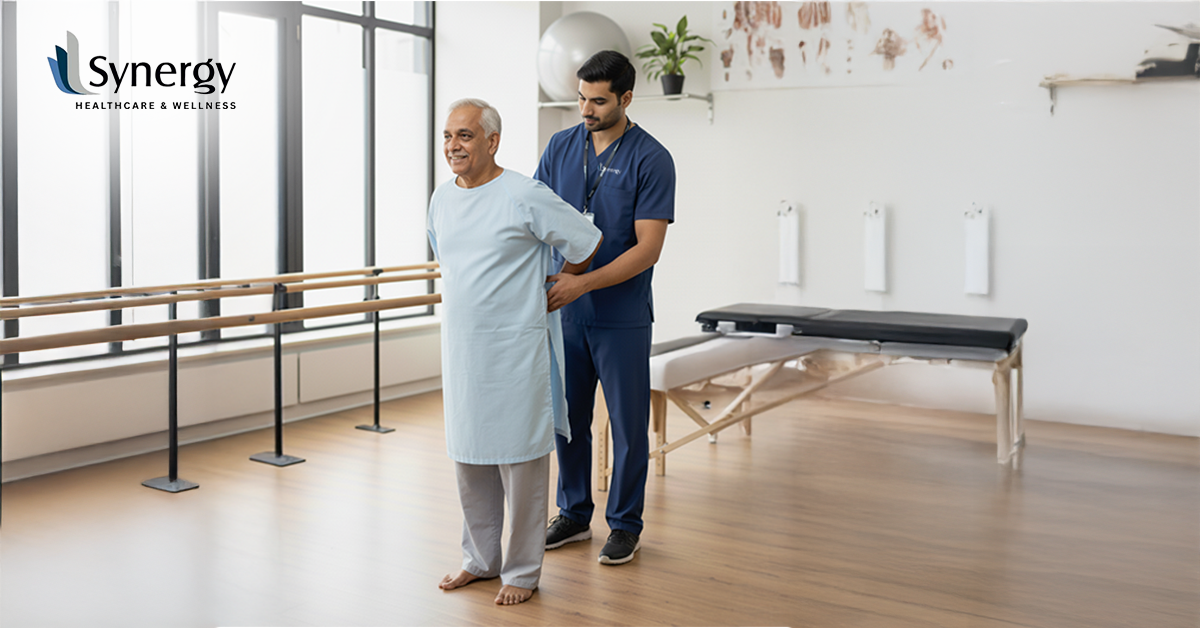
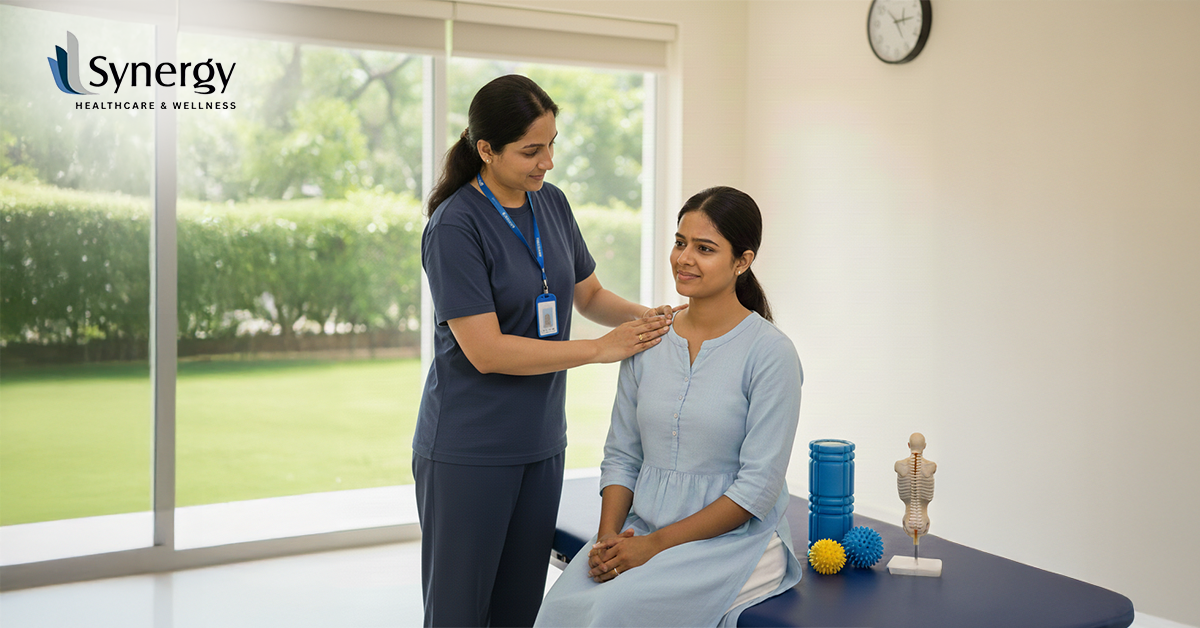
Along with exercise programs, our clinics are involved in evidence-based practice and patient-centred care. Our team will do its best in cooperating with each of the patients in regaining functions, relieving pain, and developing confidence in movement patterns. Our concern in Synergy is the helping and support role we provide our patients in regaining stability and independence through physiotherapy.
Steady Steps Ahead-Synergy
Physical therapy for balance: This is an established method used to develop balance and coordination. Synergy enhances the capacity of an individual to live a safe and active life through balance exercises, coordination exercises, and balance training tips. Balance exercises, based on physiotherapy and advances in physiotherapy practices, are the key pillars in practising rehabilitation, ageing, and sporting activities among individuals.
Take that first step towards achieving balance in your life today. Call Synergy to book an appointment for your private physiotherapy session and conquer each move.
FAQs
1. What does balance physiotherapy do for me?
Physiotherapy for balance provides you with specific exercises to help you improve your stability. In addition to this, it will help prevent falls and allow you to move confidently.
2. How often should I practice balance exercises?
You want to try to do this every day for 10–15 minutes. Consistency will allow you to notice your strength and stability improving.
3. Would coordination exercises actually help as an athlete?
Yes, coordination exercises sharpen your agility and reaction time. They help you to perform better in sports and training.
4. Can I benefit from balance training advice as a senior?
Of course, all of these tips will help prevent falls. They increase independence and mobility.
5. Do I need equipment for physiotherapy balance training?
No, many will engage your body weight. You can always add Bosu balls if you want.
6. How long before I see results?
After regular practice, you should begin to feel the effects in 4 to 6 weeks. Your ability to balance and coordinate will begin to improve.