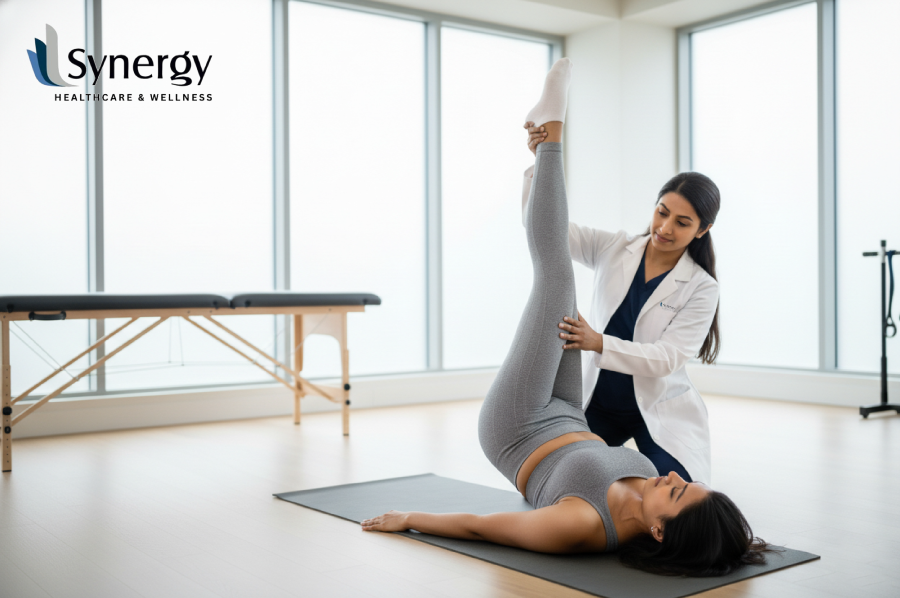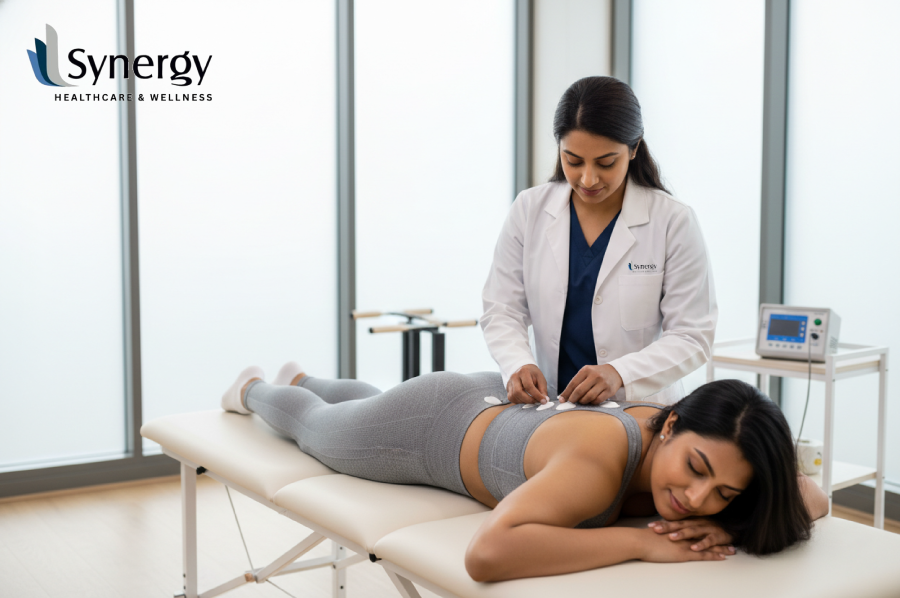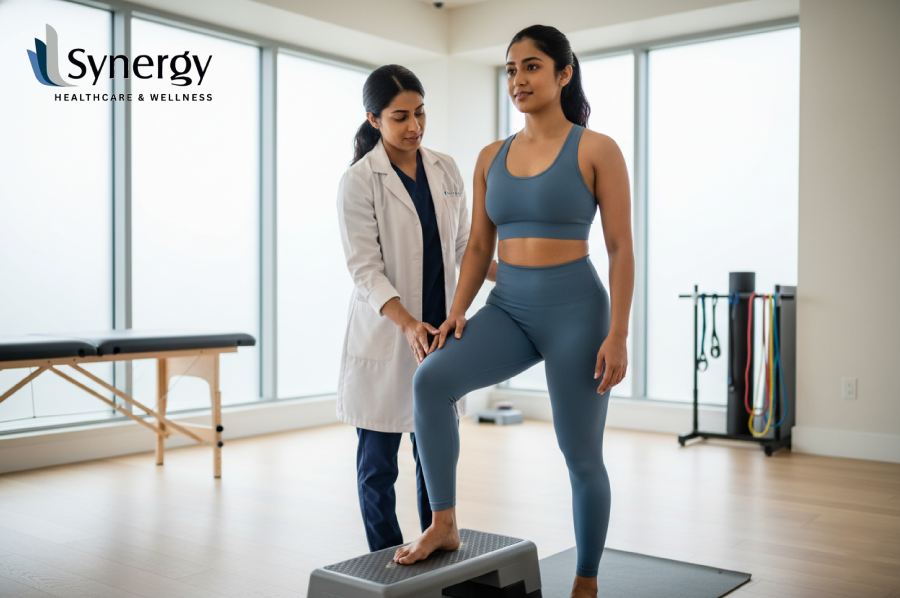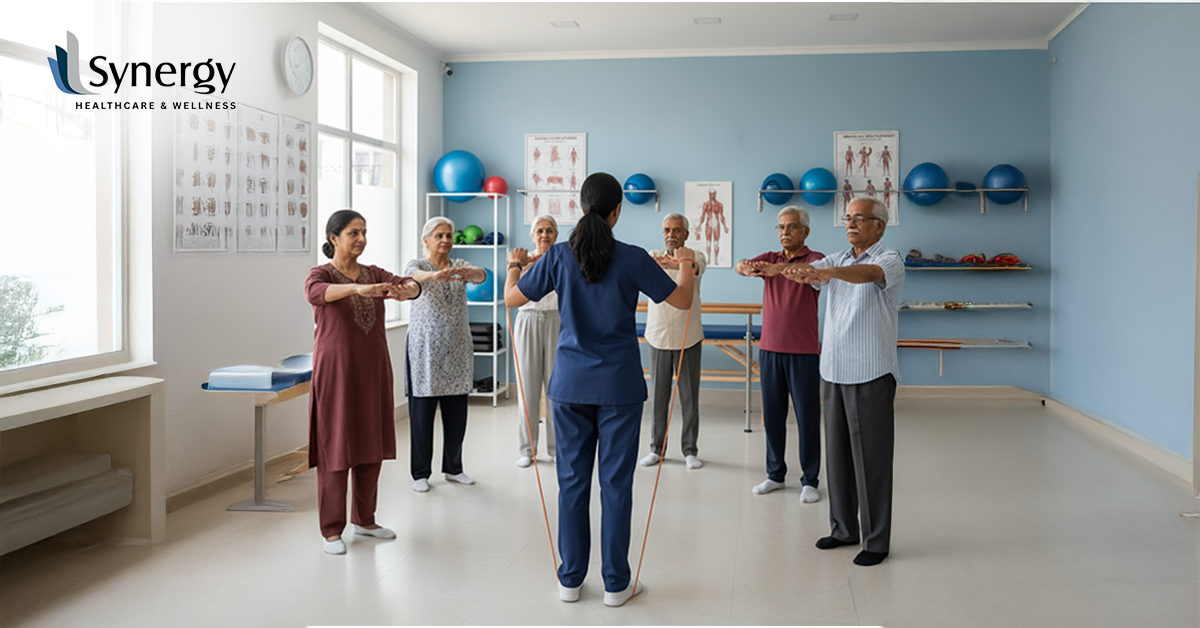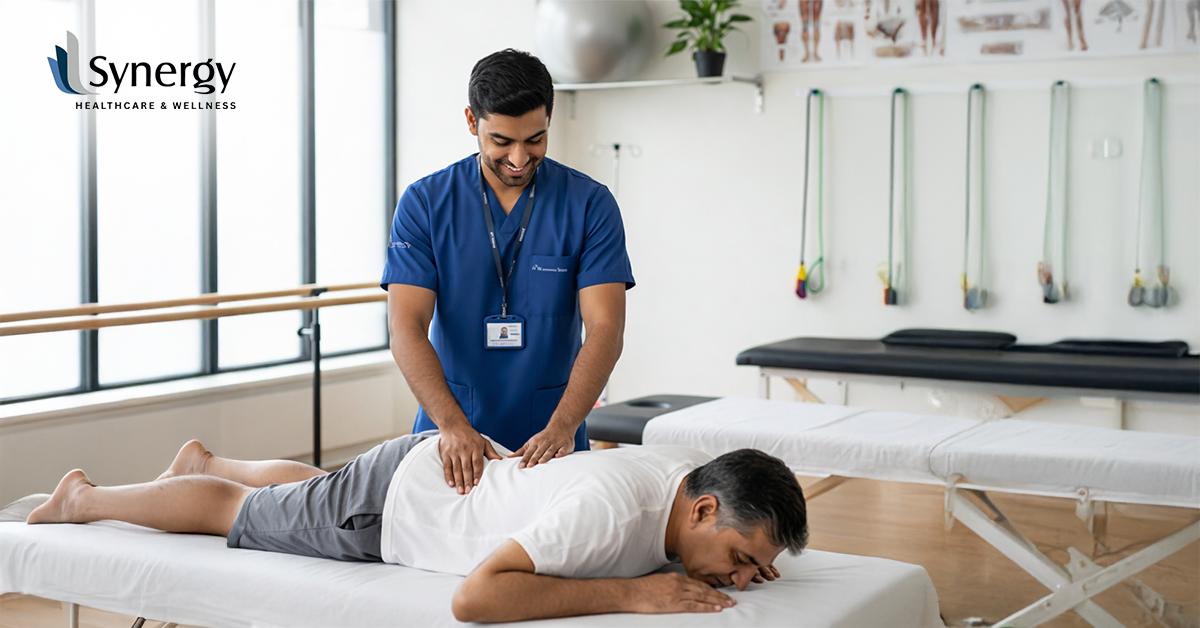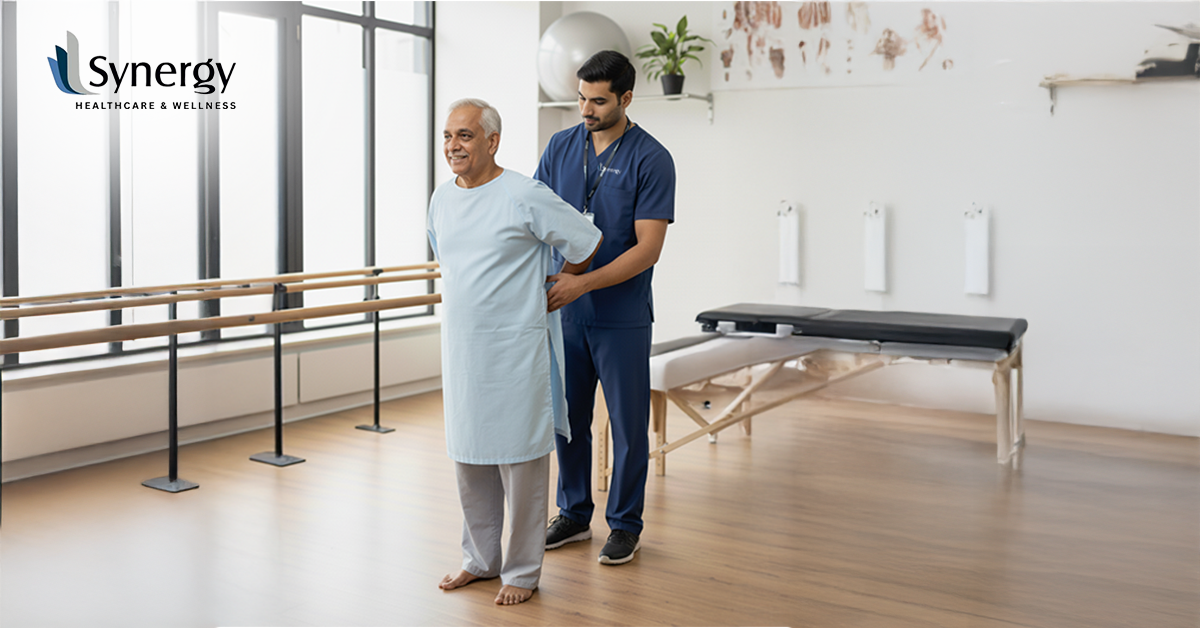

The answer to the problems caused by reduced joint stiffness and improvement in general mobility can be found in physiotherapy, as it gives safe and efficient answers. The purpose of physiotherapy for joint stiffness, which includes exercises in guidance, manual methods, and stretching of the target area, is to restore flexibility, relieve tension, and enhance the functionality of the joint.
Introduction
Stiff joints are a great hindrance and make even the routine activities of daily living a painful chore. However, instead of viewing this as an unavoidable constraint, at Synergy, there’s a systematic and evidence-based practice. A stiff joint means that you are less autonomous, and a loss of movement will make it even stiffer, getting more and more stuck.
There are more than 20 million people living with a musculoskeletal (MSK) condition, including arthritis, within the UK alone, and it’s a big reason for your stiff joints. It is here that physiotherapy for joint stiffness begins. Synergy’s dynamic strategy focuses on the fundamental biomechanical issue that leads to restricted movement, providing a clear solution for reversing this crippling problem. In this way, you will see just how your tailor-made program for relieving stiff joints might read and what components it might entail:
- Notable biological aspects make it difficult to move joints.
- Techniques employed to loosen the restrictions and aid in healing joints that are stiff.
The Reasons: Why the Movement Gets Limited
To eliminate the stiffness, one needs to understand the cause of this condition within the body. That is, it can be said that it occurs because of an internal resistance created within a joint.
- Capsular Tightness: The joint capsule becomes shorter or contracts, normally after immobilising the joint for a period due to injury or surgery.
- Articular Damage: Arthritis conditions like Osteoarthritis lead to cartilage deterioration. As a result, friction and bony growths occur, causing restricted movement.
- Soft Tissue Adhesions: Non-active or irritated ligaments and muscles can form scar tissue, which can physically limit movement.
- Impaired Joint Fluid: The synovial fluid, which will lubricate the joint, may thicken and decrease due to a lack of motion, making it ‘gel-like’.
By understanding this, we can then formulate an exact plan with regard to joint stiffness treatment that will focus on exactly what tissues are causing your limitations.
The Phased Approach to Recovering from Stiff Joints
A successful rehabilitation program for a stiff joint has a complicated process with carefully planned steps that lead to the best and most long-lasting joint stiffness recovery. As a medical facility, our focus is on safety and recovery when it comes to treatment.
| Steps | Main Goal | Primary Core Physiotherapy Intervention |
| I: Initial Management | Get rid of a lot of pain and swelling. | Gentle manual therapies, cryotherapy (using ice), and TENS (transcutaneous electrical nerve stimulation) are all pain relievers. |
| II. Test of Mobility | Get your full range of motion (ROM) back in a safe way. | Joint mobilisations and Range of Motion Exercise (LSI) are two types of exercises that focus on moving slowly and carefully. |
| III. Strength and Stability | To keep the new ROM, build up muscle support. | Progressive Resistance Training (PRT) works the muscles around the joint to keep it from moving. |
| IV. Integration of Functions | Add motion that happens in the real world. | Proprioception exercises and retraining of everyday functions such as walking, squatting, and heavy lifting. |
Manual Therapy Methods Targeting Stiffness and Adhesions
Specialised Manual Therapy represents an extremely useful tool we employ at physiotherapeutic practices for Joint Stiffness treatment. Specialised Manual Therapy aims at disrupting Joint Stiffness and then rebalancing joints.
- Joint Mobilisations: Our physios use specific glides and oscillations on the joint surfaces. These actions, graded in amplitude and velocity, play an essential role in stretching the tight joint capsule and promoting healthy movement of synovial fluid. According to the NHS, manual therapy is recommended because it keeps joints supple and flexible, and it works well with exercise as a treatment for someone with osteoarthritis.
- Soft Tissue Release: Stiffness will often be exacerbated by tension from surrounding muscles and myofascial tension. Manual therapy for stiffness (LSI) will employ soft tissue and pressure techniques to resolve tension so that more movement can occur around the joint.
- Fascial Manipulation: We also pay attention to your connective tissues, or fascia, which can sometimes cause you restriction, and address these tissues.
It directly addresses the physical limitations and aims at a quicker return to normal joint stiffness treatment progression.
The Vital Role of Exercise in Recovery from Stiff Joints
Although there is an opportunity for movement with manual therapy, it is essential to maintain it and achieve a successful stiff joints recovery with therapeutic exercises. Our programmes will be specially designed for your injury as well as your activity level.
Muscle Imbalances and Weakness Correction
Weak muscles surrounding a stiff joint can place an excessive burden on the joint itself. Specialised strength training becomes vital for:
- Stabilisation: The stronger muscles serve as dynamic support for maintaining the joint position.
- Load Distribution: Shock absorption properties are also very good, as muscles can reduce shock effects on cartilage.
Recovery of Full Range of Motion
Performing exercises with a range of motion on a consistent basis is an essential step towards recovery. We walk you through some exercises as follows:
- Active-Assisted ROM: Using your opposite extremity or an assistive device to assist in taking the joint beyond its active range.
- Stretching: Specialised stretches targeted at stretching specific muscles and tissues that have been identified as limited based on your examination.
Regular and monitored physiotherapy for Joint Stiffness will help reduce inflammation and improve circulation, as it works as an excellent, non-drug component for your recovery. A systematic review published on BMJ Open suggested a 63.7% success rate for exercise therapy for patients with knee osteoarthritis. Exercise therapy can be recommended as an initial treatment.
Synergy: Your Health and Mobility Partner
At Synergy, we focus on offering expert and structured care so that every client who visits us gets a comprehensive plan for joint stiffness treatment. We are defined by our expertise and client-centric approach. At Synergy, all our patients undergo an initial consultation with senior doctors so that there are no chances of misdiagnosis before we start any rehabilitation program conducted by our physiotherapists.
We’re pleased with the level of feedback we get:
“Prior to attending Synergy, I believed that I would have to undergo a knee replacement. The physio for Joint Stiffness I have received at Synergy—namely personalised strengthening physio—allowed me to climb stairs without any issues for the first time, and I have retrieved my independence.”
We integrate modern methods with a focus on patient education so as to enable you to walk with ease as you recover. We are dedicated to getting the best results in physiotherapy for Joint Stiffness.
Conclusion
Joint stiffness doesn’t have to last forever. With a structured and thorough physiotherapy for Joint Stiffness treatment, we can confidently and effectively get rid of your limitations and restore your full range of motion while greatly reducing your pain.
We don’t just treat the symptom; we also fix the real problem with the machine. This makes the joint stiffness treatment more complete and useful. Don’t let your stiff joints keep you from living an active life.
Are you ready to move without pain? Schedule your first consultation and begin your personalised plan to relieve joint stiffness right away. Visit the official Synergy website to learn more about this or explore our other health blogs on effective pain management.
FAQ’s
1. To what extent will it take to regain mobility from joint stiffness with physiotherapy?
The period required for recovery can vary widely based on the reason for the stiffness. However, most patients note some degree of relief within 4–8 visits for pain and range of motion, and stiff joints recovery involving complete restoration of severely restricted joints can take several weeks to months.
2. Do I have to get a referral from my family doctor before commencing treatment at Synergy?
Applying for treatment for joint stiffness through a referral from your doctor isn’t required. You can consult us directly, and senior doctors will first examine your condition before carrying out your treatment.
3. Is physiotherapy really capable of curing joint stiffness due to arthritis?
That still depends on several conditions, such as severe arthritis cannot be ‘cured’, but physiotherapies for Joint Stiffness are the best methods to control and deal with these problems. The treatment aims at lessening the pain and strengthening the muscles surrounding your joints.
4. What should be brought with me on my first visit to a physiotherapist?
Please bring any existing medical records, X-rays, or reports from any scans that are relevant to your stiff joint/condition. It will enable our senior doctors to properly identify your condition and develop a highly accurate treatment plan.
5. May I continue exercising on my own when the physiotherapy sessions are completed?
Yes, it is vital that you continue with your home exercise programme set out by your physiotherapist. Your home exercise programme will allow you to maintain your mobility and improve your resilience, ensuring that your joints do not suffer from stiffness again.
6. Does weight management play a role in reducing joint stiffness?
Yes, absolutely. According to the NHS, weight loss of just one pound will enable an overweight person to reduce pressure on the knee joints by as much as four pounds while walking. It greatly relieves pain and joint stiffness. Weight control, therefore, can be an excellent supplement to your physiotherapeutic treatment.