Quick Summary
The modern secret to peak performance and injury-free athleticism is functional movement training. Realise your maximum potential with its assistance. At Synergy, we bring together first-rate healthcare with first-rate exercise. This comprehensive guide examines the many ways in which movement-based training can enhance your agility, fortify your joints, and ensure that you remain at the peak of your fitness level.
Introduction: Why Functional Fitness Can Make All the Difference
Everyone has been there: they’re feeling powerful as they power through a challenging set of bicep curls or leg presses at the gym. However, your knees or back give out when you rapidly turn during a weekend football game or when you lift a large bag of shopping. It annoys a lot of people. For what reason does lifting weights in a gym not necessarily translate to greater strength in the real world or on the pitch?
A common clue is to look at the distinction between “functional” movement and “isolated” strength. Conventional weight training, when done in a controlled environment, typically targets a single muscle group at a time. Sports, like life, can be a real slobberball. Your muscles, nerves, and joints must coordinate flawlessly in a myriad of ways for them to work.
True functional movement training, not a passing trend, is a method of exercise that aims to restore and enhance the way our bodies move in everyday life. Retraining your brain and body to move efficiently is the key to living a long life and performing at your best, regardless of whether you’re a professional athlete or a dedicated “weekend warrior.”
What Is Functional Movement Training?
By definition, functional training focuses on “movements, not muscles.” Rather than following a predetermined program on a machine, you work on your core stability, coordination, and balance.
Of all the ways that people travel around, the “Big Five” include:
- Some exercises that include pushing are push-ups and overhead presses.
- Pulling (as in pull-ups or rows)
- Gimbaled (as in deadlifting or bending over to pull something up)
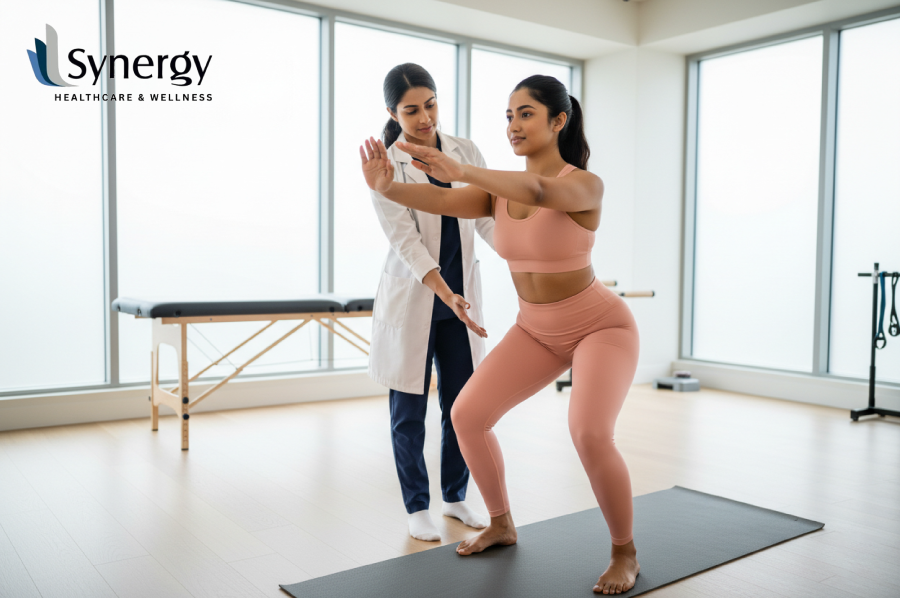
- To squat is to sit down and then stand up again.
- Moving in a circular motion, as when hitting a tennis ball or a jackhammer
Developing your “biomotor” abilities—your strength, power, endurance, flexibility, and coordination—will serve you well in your sport and beyond.
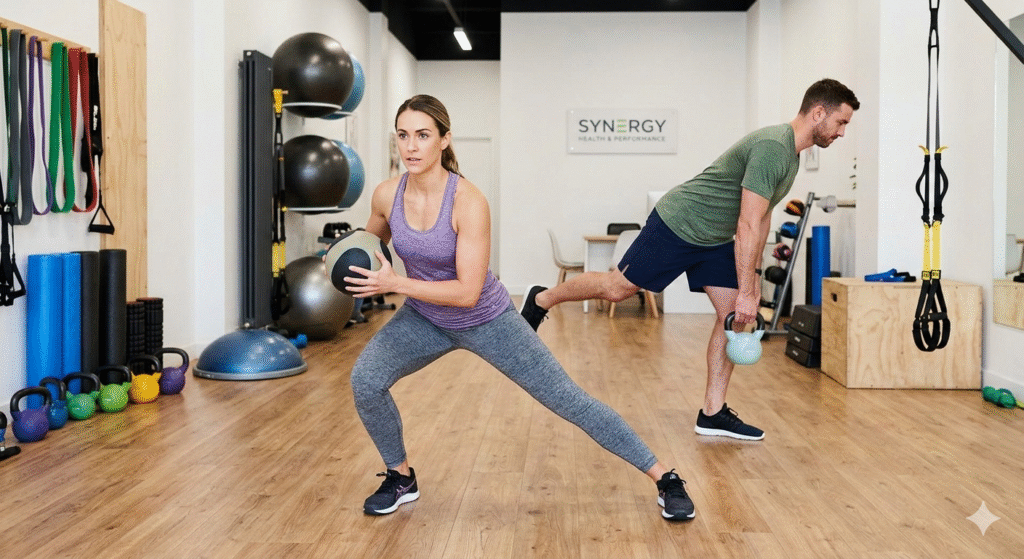
Function Mastery: A Four-Step Process
To get a functional physique, you can’t skip the light plyos and go on to the big stuff. Stick to the predetermined schedule.
Step 1. Building a Stable and Mobile Foundation
Before you increase weight, make sure you have enough mobility and control to complete an exercise safely.
Pay attention:
- Core workouts
- Joint health activities
- Problem-solving exercises
Medical insight:
Reducing strain on the lower back is possible through increasing flexibility in the hip and thoracic joints.
Step 2: Adding Contents
After you have cleaned up your patterns, we will add resistance. Maintaining proper body alignment while lifting a weight is more important than straining a machine to its breaking point.
Primary exercises:
- Standing planks
- Lunges
- Goblet squats
Gaining “functional hypertrophy,” whereby the muscle is both aesthetically pleasing and functionally enhanced, is an advantage.
Step 3: Adaptable Power and Agility
The athletes experience the magic here. Acceleration and bidirectional movement are incorporated.
Prioritise:
- Drills to decrease speed
- Medicine ball throws
- Lateral bounds
The main point is that learning to absorb force is equally vital as learning to generate it.
Step 4: Sport-specific fine-tuning
The final stage involves tailoring the motions to your chosen sport, be it swimming, cricket, or marathon running.
Staying focused:
When you’re exhausted, mimic the movements that your sport demands the most.
A Functional Exercise Program for Fitness Enthusiasts: A Weekly Sample
| Day | Focus | Example Exercises |
| Monday | Total Body Integration | Squats to Overhead Press, Woodchoppers, Renegade Rows |
| Tuesday | Active Recovery | Yoga, Mobility Flow, or Swimming |
| Wednesday | Posterior Chain & Pull | Deadlifts (Hinge), Pull-ups, Single-leg RDLs |
| Thursday | Stability & Core | Bird-Dogs, Deadbugs, Side Planks, Farmer’s Carries |
| Friday | Agility & Plyometrics | Box Jumps, Lateral Lunges, Kettlebell Swings |
| Weekend | Outdoor Activity | Hiking, Cycling, or Recreational Sports |
Practical Guidance for Daily Living
Functional movement training doesn’t require a gym membership.
- The “Hinge” Habit: When picking up an object from the floor, hinge at the hips rather than rounding your back.
- Try standing on one leg as you brush your teeth; it will help stabilise your ankles.
- Postural Adjustments: To alleviate “tech-neck,” perform five shoulder rolls and a “chin tuck” for every hour spent seated at a desk.
Knowing When to Seek Expertise
“Good” pain, like aching muscles, can be ignored, but “bad” pain should be taken seriously. Consult a Synergy specialist if you’re experiencing any of the following symptoms:
- A sharp stabbing pain that comes and goes with specific motions.
- Oedema that remains elevated for more than 48 hours.
- A “giving way” sensation in the lower extremities.
- Hands and feet that are numb or tingly.
If physiotherapy is started early enough, even a small strain can be prevented from becoming a major issue down the road.
Preventing it is better than treating it
For optimal physical fitness:
- Before you begin, make sure you’re warmed up: dynamic stretching is a great way to “wake up” your neurological system.
- Maintain Tendon and Ligament Flexibility with Proper Hydration and Nutrient Support.
- Overuse injuries might occur if you disregard your body’s signals before they escalate.
Why Shifting Is Crucial: The Synergy Approach
Although each athlete is unique, according to Synergy, biomechanical principles are universal. We design our functional movement guidance using principles derived from physiotherapy. If you’re going to move, we want you to move better, not simply more.
Aligning your body’s mechanics reduces fatigue-inducing “energy leaks” and injury-prone movement patterns. The scientific foundation and long-term viability of your fitness journey are guaranteed by this medical-grade emphasis on form.
To put it all together
Functional movement training is more than just a way to get to an end (an exercise session); it’s an investment in your future success. Focusing on how your body moves naturally can help you become more athletic and avoid injuries. Synergy will help you walk tall, with confidence, and with grace.
Functional fitness is the first step on your path to a better life. Your goals could be to play with your grandkids without pain or to step onto a football pitch. Is it time for you to change how you walk? Are you ready to start right away?
FAQ’S
1. What makes functional movement training so crucial?
It improves your performance in sports and daily life by teaching your muscles to coordinate their movements, which in turn reduces the likelihood of injury and maximises efficiency.
2. Can individuals who are unfamiliar with functional training begin?
Because it begins with simple bodyweight motions and can be easily increased in difficulty, it is a safer option for beginners compared to many conventional gym routines.
3. Are customised functional evaluations conducted by Synergy?
If you want to know what’s wrong with your body and how to achieve your goals, Synergy can help with thorough movement exams.
4. Is weight training more effective than functional training?
Maybe it’s not “better,” but it’s definitely more “transferable.” While strength training with weights increases muscle mass, functional training ensures that this muscle mass has practical application.
5. What frequency is recommended for performing beneficial exercises?
Most exercise enthusiasts can benefit from including functional movements in their routine three to four times per week for optimal stimulation and recovery.
6. Is it necessary to invest in costly gear in order to practise functional movement?
Indeed, many of the most effective workouts involve little more than your own body weight or basic equipment such as medicine balls, bands, or kettlebells.
7. Does functional exercise have any effect on chronic back pain?
Yes, it strengthens the core and increases hip flexibility, which addresses the underlying reasons of many back problems caused by poor posture.
8. Can elderly athletes benefit from this type of training?
This program helps seniors stay independent and avoid falls by improving their bone density, coordination, and balance.
9. What sets functional training apart from CrossFit?
CrossFit is mostly known for its competitive events, even though it is based on functional movement. Functional training is based on the idea that movement has power, which is a more well-rounded way of thinking.
10. Where can I get professional help with functional movement?
You can visit Synergy Physio for professional guidance from experts who understand the medical science behind movement.

Dr. Suresh Franklin, MPT
✓ 15+ Years of ExperienceMeet Dr. Suresh Franklin, MPT – the expert behind Synergy Physio Care's clinical approach. With extensive experience in sports rehabilitation, athlete recovery, and performance care, he brings trusted expertise to every piece of content we publish. From injury management to movement-based recovery, his review helps ensure our blogs are practical, accurate, and patient-focused. At Synergy, we combine clinical knowledge with real-world physiotherapy experience to guide every recovery journey.