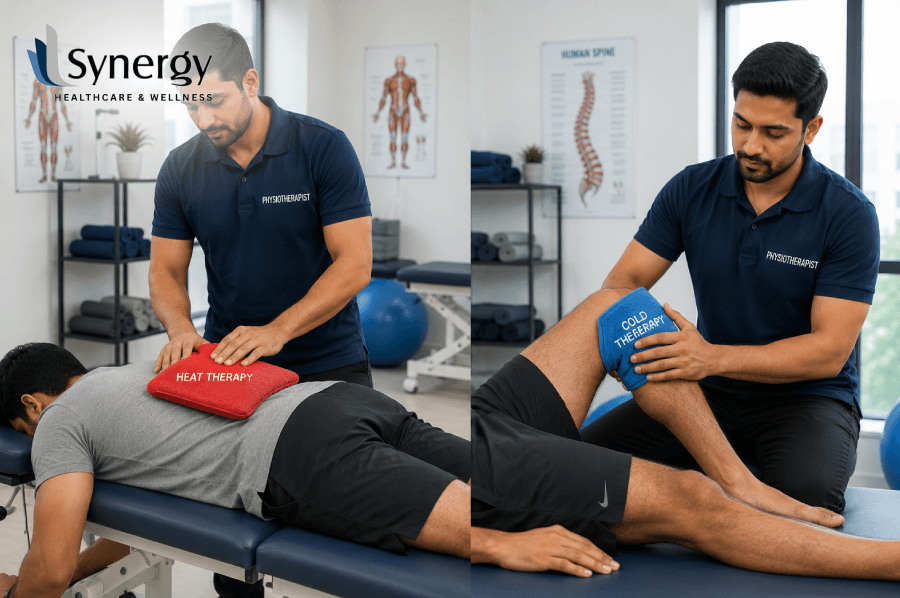

Strength and conditioning rehab forms a bridge between regular physiotherapy treatment and fitness exercises. Although passive treatment may ease the patient’s pain but does not help in regaining the strength of tissues, on the other hand, strength exercise helps the individual to completely recover, regain tissue strength and avoid injuries in the future.
Introduction: Beyond the Traditional Approach to Recovery
It is natural for the body to react to injury by resting. Traditionally, treatments involved icing, taking pain killers and staying away from any activity. But beyond the traditional approach to healing, it is not pleasant to know that inactivity leads to muscle loss and changes in movement.
And here is where strength and conditioning rehab comes in. Different from regular physiotherapy, which may only be about alleviating pain and improving range of movement, this evidence-based practice utilises the very same concepts of progressive overload, periodisation, and multi-joint exercises in a rehabilitative context. In addition to allowing the patient to recover from the existing condition, the practice creates a stronger body better prepared for the future.
This particular approach to rehabilitation is applied at Synergy. The clinic’s specialisation in musculoskeletal and orthopaedic rehabilitation allows the therapists to recognise the need for the active involvement of their patients in the process, as well as the concept of proper loading of the recovering parts of the body.
Understanding Strength and Conditioning Rehab
What Makes It Different?
Traditional rehabilitation often follows a linear, cautious path: rest, gentle stretching, basic strengthening, and eventual return to activity. Although effective during acute stages, it may fail to achieve complete functional recovery.
The strength and conditioning method, on the other hand, turns the tide. It adopts the same training principles employed by athletes in developing strength and endurance—but in an injured population context. Distinguishing features are presented below:
| Aspect | Conventional Rehabilitation | Strength and Conditioning Rehabilitation |
| Loading pattern | Minimal load and maximal repetitions | Incremental loading according to personal capabilities |
| Type of movement | Isolation and unijoint movements | Multi-joint and functional movements |
| Progressive advancement | Timed progression (Week 2, Week 4, etc.) | Criterion progression (Strength goals, pain tolerance, etc.) |
| Purpose | Functional restoration | Functional restoration plus injury prevention |
The Science of Progressive Overload
The fundamental principle driving this approach is progressive overload—gradually increasing the demands placed on the musculoskeletal system to stimulate adaptation. Research presented at the 2023 American College of Rehabilitation Medicine conference concluded that “progressive overload methods, utilisation of increase in volume, load, and rep scheme adjustments throughout the treatment period, and a strong emphasis on sustainability to avoid re-injury are critical factors in a rehabilitation program”.
This is not about pushing through pain. It is about identifying the precise threshold where tissue is challenged enough to adapt without being damaged. Skilled practitioners at Synergy assess your baseline capacity and design a programme that systematically expands your resilience window.
Medical Benefits of Strength-Based Recovery
1. Reverses Muscle Atrophy After Immobilisation
Within days of joint immobilisation or reduced activity, muscle fibres begin to shrink. This atrophy is not just cosmetic—it directly impairs joint stability and functional capacity. Strength rehab actively counters this decline through targeted resistance exercise.
Even more fascinating is the phenomenon of cross-education: training the healthy limb produces strength gains in the immobilised, injured limb through neural pathways . A 2025 review in Sports Medicine – Open confirmed that unilateral resistance training “minimises neuromuscular decline in the injured and immobilised limb” during early rehabilitation phases.
2. Restores Neuromuscular Control
Injury disrupts the communication between your brain and muscles. You may have a full range of motion but still feel “unstable” or “off.” This is a neuromuscular deficit—and it is a primary predictor of re-injury.
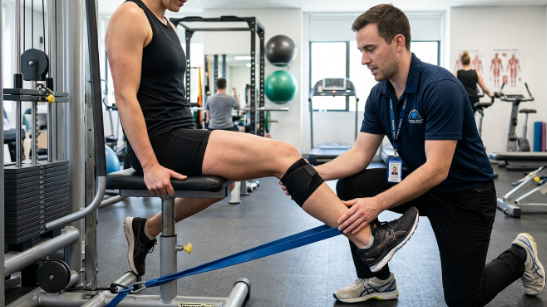
Strength-based rehab retrains these pathways through compound movements that require coordination, balance, and reactive control. Research following ACL reconstruction shows that residual deficits in lower limb performance persist long after standard discharge criteria are met, increasing reinjury risk.
3. Reduces Chronic Pain Through Tissue Capacity
Chronic pain often persists not because tissue damage remains, but because the affected area lacks the capacity to handle daily loads. A weak knee hurts when going down stairs. A deconditioned lower back aches after sitting.
4. Prevents Secondary Injuries
Compensatory movement patterns develop naturally after injury. You limp. You shift weight. You avoid certain ranges of motion. Such adaptations, though initially protective, soon become habituated and ultimately create other issues in the body, frequently in the opposite extremity or surrounding joints.
The re-establishment of symmetry through functional strength rehabilitation allows for breaking the vicious circle. It emphasises bilateral exercises and movement analysis to detect asymmetries prior to becoming new injuries.
Synergy’s Approach to Strength and Conditioning Concepts
Root Cause Philosophy
Synergy is based on an underlying philosophy: the road to recovery is one of faith, competence, and kindness. It means that in the clinic, we go beyond just the obvious symptoms. Every evaluation is comprehensive. Every programme is tailored. And every session is designed to restore not just function but confidence.
The Synergy team, led by senior physiotherapists with decades of combined experience, recognises that performance recovery training is not a one-size-fits-all protocol. Your programme might include:
- Blood flow restriction (BFR) training for early-stage rehabilitation when heavy loading is contraindicated. Research confirms BFR produces moderate-to-large effects on muscle hypertrophy (SMD: 0.37–0.82) and strength (SMD: 0.47–0.79) during post-surgical recovery.
- Periodisation programs that alternate between endurance, hypertrophy, and strength training to avoid plateaus and maximise the adaptation process.
- Sport- or task-specific retraining in order to create a transition between the treatment phase and the real world.
Beyond the Injury: Developing Resilience
The key difference that defines Synergy is its focus on long-term well-being. As highlighted in their professional profile, the clinic focuses on “long-term healing by addressing issues at the root rather than just managing surface-level symptoms”. This means your discharge plan includes a sustainable strength maintenance strategy—not just a “see you when it hurts again” handshake.
At Synergy, located across Anna Nagar, Adyar, T. Nagar, Mogappair, and Vepery in Chennai, that expertise is readily available.
For those interested in understanding how movement dysfunction develops in the first place, Synergy has published an insightful blog on Movement Dysfunction Correction Through Targeted Therapy — read this blog, and you’ll know how inefficient movement patterns and compensation can lead to chronic pain and injury, and how targeted correction can retrain your nervous system and improve performance.
Conclusion: Reclaiming Your Active Life
The days of passive recovery are ending—and for good reason. Evidence accumulated over the past decade consistently demonstrates that strength and conditioning rehab produces superior outcomes for pain management, functional restoration, and long-term injury prevention compared to traditional approaches alone.
Does this mean every injured person should immediately begin heavy lifting? No, of course not. The practice of rehabilitation involves accurate dosage: giving the appropriate dose of stimulation at the proper moment to the correct tissue. It takes skill and patience to move from our comfort zone.
| We do not have to let this injury limit us. By following the proper protocols and having faith in strength training rehabilitation, we will come out stronger for it. Move well. Heal smart. Live strong. Explore expert care at Synergy. |
FAQS
1. How soon can I start my functional strength rehabilitation after an injury?
It is recommended to wait until the inflammatory phase is over (usually within 48 to 72 hours), but it is possible to activate the non-injured side immediately by cross-education. Early guided movement also helps maintain circulation and prevents unnecessary stiffness.
2. Will my injury be made worse by weight training?
Not really, because strength training under a professional will give a protective effect against further injury by strengthening the tissues ability to withstand daily activities. Proper technique and gradual progression are key to keeping the exercise safe and effective.
3. How does physical reconditioning therapy differ from regular physiotherapy?
Physiotherapy is the management of pain and restoration of normal function, while Physical Reconditioning Therapy is a process where training methods are employed in order to build strength within tissues in a way that prevents injuries.
4. Is it ok to strength train at home?
You can, but you need a professional, like the ones at Synergy, to do an initial evaluation and make your program to make sure you’re safe and making progress at the right pace. Regular follow-ups ensure your exercises are adjusted as your recovery improves.
5. How long does a regular strength rehab program take?
The extent of your injury will dictate to some extent that you can take anywhere from 8 to 16 weeks of serious training to completely heal and notice actual changes in the tissue. During this time, sticking to a regular schedule of progressively challenging exercises can make a big difference in building up your function for good.
6. Is this approach limited to athletes only?
Absolutely not. Resistance training done at the right intensity level is actually very good for all kinds of people: people with chronic back problems, after surgery recovery, those suffering from arthritis, or people simply wanting to move freely.
7. How crucial is a proper diet when planning a strength training program?
The main thing is to make sure you are sufficiently hydrated and consume enough protein to enable muscle recovery and adaptation. But having a balanced diet will not only support maintaining your energy levels but will also prevent you from feeling exhausted during your workouts.
8. When can sports activities be considered safe?
Among other targets, you need to have limb symmetry at least 90%, strength no more than 10% different from the healthy limb, and mental readiness at 70% or above. Returning to sports gradually and under professional supervision will also help diminish the risk of getting injured again.
9. Are the rehab/therapy experts giving consultations through remote means?
All one needs to do is to communicate with the respective centre/facility and inquire if they provide telehealth services. Yes, they have different modes of care. Through remote consultations, you can get professional feedback and exercise corrections without having to leave your home.
10. Can weight training be useful in handling chronic conditions like arthritis?
Indeed, it can. People who weight train reduce their levels of pain and dependency on drugs, as well as they become capable of better controlling their joints because the muscles that support and protect the affected joints get stronger.

Dr. Suresh Franklin, MPT
✓ 15+ Years of ExperienceMeet Dr. Suresh Franklin, MPT – the expert behind Synergy Physio Care's clinical approach. With extensive experience in sports rehabilitation, athlete recovery, and performance care, he brings trusted expertise to every piece of content we publish. From injury management to movement-based recovery, his review helps ensure our blogs are practical, accurate, and patient-focused. At Synergy, we combine clinical knowledge with real-world physiotherapy experience to guide every recovery journey.