
It is quite common nowadays to have chronic pain in our bodies due to the sitting position, which is characterised by diseases such as “tech neck” and lower back problems. Movement therapy for office workers is a must-have tool for anyone who wants to decrease discomfort during working hours and increase workplace productivity.
Introduction: Why Your Working Hours Become a Struggle With Tightness
At the beginning of your workday at 9:00 AM, you feel quite good, but then around noon time, you start feeling stiffness in your shoulder blades. Then, at 3:00 PM, you begin to automatically massage your neck area, and by the end of the day, when closing your computer, you have an uncomfortable sensation in your lower back as if it were squeezed into one block.
This isn’t just “part of the job.” It is a physiological response to static loading—a state where your muscles are held in a fixed position for far too long. When your body remains stationary, blood flow slows down, and the fascia (the connective tissue surrounding your muscles) begins to stiffen. You aren’t just tired; your body is literally crying out for a change in state, which is where movement therapy for office workers becomes essential.
Why Movement is the Best Medicine for Your Spine?
Static postures, even if you have the most expensive ergonomic chair in the world, lead to what clinicians call “postural fatigue.” Your body was designed for locomotion, not long-term suspension. The inclusion of a movement routine into your life is accompanied by many advantages, clinically speaking:
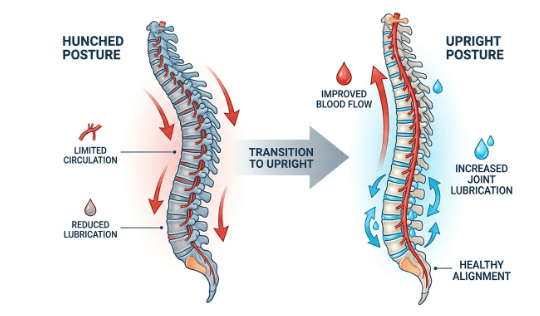
- Better Joint Lubrication: Through movement, you can stimulate lubrication of your joints, which will act like oil on your joints to avoid friction.
- Improved Oxygenation: Movement allows more oxygenated blood to get to muscles that would be starved due to being continuously compressed.
- Preventing Neuromuscular Shutdown: Brief periods of movement keep your brain from shutting down certain muscles, such as glute muscles that support your back.
- Reduced Cortisol: Physical activity helps metabolise the stress hormones that accumulate during a high-pressure workday.
The Core Components of an Office Movement Protocol
To truly address the root of the problem, we need to look at the body as a connected chain. Pain in the wrist often starts in the shoulder; pain in the lower back often starts in the hips.
1. Reversing the “C-Curve” of the Spine
When you type, your shoulders naturally roll forward and your chin tucks toward your chest. To counter this, you must engage in “extension” exercises. A simple thoracic opener—clasping your hands behind your head and gently leaning back over your chair—can immediately decompress the vertebrae.
2. Addressing “Gluteal Amnesia”
Prolonged sitting can lead to your glutes essentially forgetting how to fire, which forces your lower back to take all the strain of your weight. Taking a “standing break” every 30 minutes isn’t just about the legs; it’s about re-engaging the posterior chain. [Link to related blog on postural alignment by Synergy].
3. Eye and Neck Synchronisation
Your neck follows your eyes. If you are squinting at a screen, your head leans forward. Practising the “20-20-20 rule” (looking 20 feet away for 20 seconds every 20 minutes) helps relax the ocular muscles, which in turn reduces tension in the suboccipital muscles at the base of your skull.
4. Dynamic Hip Flexor Releases
The psoas muscle shortens when you sit. Over time, this pulls on your pelvis and creates that nagging ache in your lower lumbar region. A simple standing lunge at your desk can lengthen these muscles and take the pressure off your back.
How Movement Therapy for Office Workers Creates Lasting Relief?
Implementing a structured approach to movement isn’t about gym sessions; it’s about “greasing the groove” throughout the day. Clinical studies suggest that frequent, low-intensity movement is actually more beneficial for metabolic health than one hour of intense exercise followed by eight hours of sitting.
By adopting movement therapy, you are essentially training your nervous system to stay alert. This prevents the “slump” that leads to long-term issues like herniated discs or carpal tunnel syndrome. According to research published by the NHS on physical activity, adults should aim to minimise the amount of time spent sitting to reduce the risk of chronic health conditions.
Integrating Modern Support with Synergy
While movement is the primary tool for recovery, having the right environment to support that movement is equally important. This is where a brand like Synergy becomes a helpful resource for the professional community. It is precisely the expertise of developing a connection between clinical expertise and practical application in the work setting.
Synergy doesn’t intend to give a quick fix to people, but rather make some useful suggestions that would inform the users more about their bodies. It is either because of their expertise in ergonomics or perhaps their dedication to integrated well-being that one can look up to them as a mentor for making their health care a professional process.
Read about this blog — it tells how small daily habits can prevent long-term pain: Small Changes, Big Relief: Simple Habits for Long-Term Pain Prevention in Daily Life
A Healthier Way to Work: Final Thoughts
In conclusion, daily pain doesn’t have to be your professional baseline. With knowledge of how static positioning affects muscle fatigue, there is much you can do to regain comfort through movement therapy for office workers. These two benefits alone will make you see the value of this approach. Long-term protection of joints and maintaining a clear mind are the main benefits.
| Book your posture and movement assessment at Synergy Physiotherapy Clinic today and start working pain-free. Visit Synergy to take the first step toward a healthier workday. |
FAQS
1. How frequently should I take micro-breaks during my shift?
Try to take micro-breaks at least once every 30 to 45 minutes to get back into a normal position and improve blood flow. Even a 60-second posture reset can reduce muscle fatigue significantly.
2. Is movement therapy recommended if I had injuries in the past?
Yes, provided you keep movements soft and easy and stop if you have sharp pains. Gentle range-of-motion work can actually support healing when done mindfully.
3. Are there any specific tools needed to execute those stretching exercises?
No, as for the most part of the exercises, one needs neither more time nor any other special tools besides a chair. All that is needed is consistency rather than equipment.
4. What can make my neck hurt if I already use an ergonomic monitor?
Even when all equipment is perfect, it might be that your muscles are just too tight. You need some action to loosen up your muscles and make them relax a little.
5. Is it better to stand all day or sit all day?
Neither, as one should try to distribute sitting, standing, and walking during the day. Otherwise, your joints are not going to be nourished by blood.
6. How can I force myself to take breaks during the workday?
One could try setting an alarm to do breaks once an hour, as well as tie stretches to email writing and calls.
7. Will these movements make me look unprofessional in the office?
Most office stretches are subtle, and you will find that many colleagues will likely follow your healthy lead. Small shoulder rolls or neck resets can be done discreetly at your desk.
8. Could movement therapy assist me with my headaches during the day?
Yes, a lot of the so-called “tension headaches” stem from stiffness in the neck and shoulder region. Enhanced circulation and proper posture decrease the number of headaches.
9. How soon can one notice a difference with such changes?
You should experience relief regarding the immediate stiffness that may occur on the very same day, while the lasting results will begin to show up after a few weeks.
10. Should I start stretching if I already have acute pain?If your pain is intense, then you should definitely seek medical advice before beginning your exercise regimen.

Dr. Suresh Franklin, MPT
✓ 15+ Years of ExperienceMeet Dr. Suresh Franklin, MPT – the expert behind Synergy Physio Care's clinical approach. With extensive experience in sports rehabilitation, athlete recovery, and performance care, he brings trusted expertise to every piece of content we publish. From injury management to movement-based recovery, his review helps ensure our blogs are practical, accurate, and patient-focused. At Synergy, we combine clinical knowledge with real-world physiotherapy experience to guide every recovery journey.