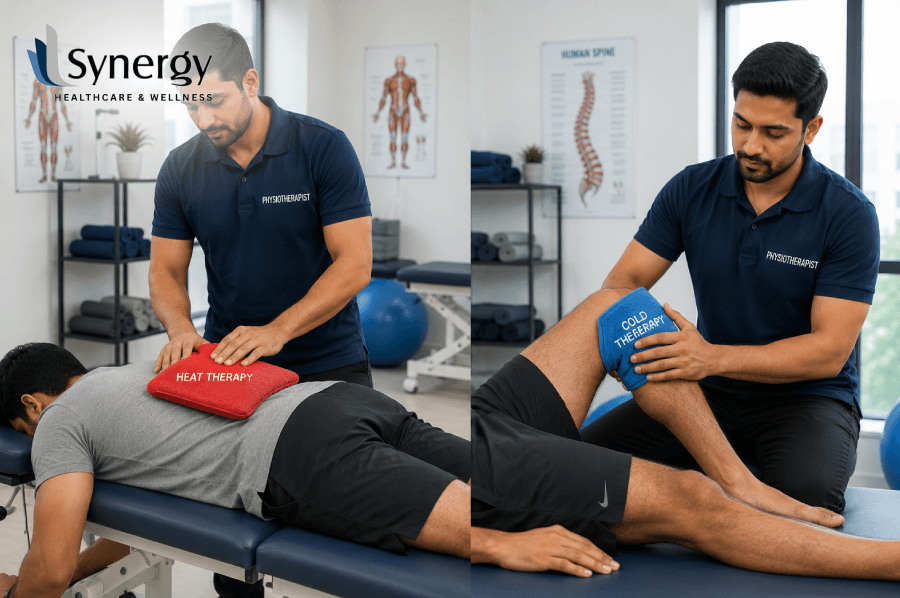

Tight muscles are rarely just a sign of sleeping funny or working hard. When it’s there day after day, meeting after meeting, it’s a sign of deeper dysfunction in your muscles, fascia and nervous system. Physiotherapy for muscle tightness offers a systematic, clinically based approach to identifying and treating the true sources of stiffness, restoring full, pain-free movement and preventing the cycle of tightness from recurring.
When Stretching Stops Working, And the Tightness Keeps Coming Back
You stretch in the morning. You do foam rolling before training. You drink enough water, you sleep reasonably well, and you try to keep active
And the tightness is still in there.
Same tight band across upper shoulders. Same pulling feeling in the hamstrings that never quite goes away. That nagging lower back stiffness that kicks in after just an hour of sitting, even though you spent time stretching the previous night.
It is one of the most frustrating physical experiences there is, persistent muscle tightness that does not seem to respond to anything you do to fix it. The reason it does not respond is almost always the same, the tightness is seen as a surface problem when its roots go much deeper.
Physiotherapy for muscle tightness deals with this differently. Rather than simply providing a short-term fix to a symptom, it explores the mechanical, neurological and fascial drivers which are maintaining particular muscles in a state of chronic tension and systematically addresses each of them.
To understand why physiotherapy works where stretching alone does not, we need to understand why muscles become chronically tight in the first place.
What’s Really Happening Inside a Tight Muscle?
The feeling of muscle tightness is familiar. But the physiology behind it is more complicated than most people would suppose.
Trigger Points and Taut Bands
Trigger points are hyperirritable spots in a taut band of skeletal muscle that inhibit full lengthening of the muscle, weaken it, and refer pain to surrounding or distant areas when compressed. They can develop from any type of muscle overuse or direct trauma (i.e. sustained low-level contractions, repetitive movements and eccentric loading).
The tightness sense is primarily due to a limited stretch range and increased stretch sensitivity of muscle fibres in a taut band. The muscle with a trigger point is often weak despite no visible atrophy.
This explains an important clinical observation, that chronically tight muscles are often weak at the same time. The tightness is not an over-strengthening of the tissue, but a protective response, an expression of muscular guarding that the nervous system maintains to protect an area of vulnerability.
Stretching a muscle without addressing the underlying trigger points or neural drivers of that guarding rarely yields lasting results. The tissue releases temporarily and then goes right back to the same state, because the signal causing the tightness has never been broken.
Fascial Restriction
Every muscle is encased in a continuous web of connective tissue (the fascia). This tissue, when compromised in its normal elasticity and glide via injury, sustained posture, dehydration or repetitive loading, creates restriction patterns that mimic and compound muscular tightness.
When overload, injury, surgery, immobility or chronic guarding cause the fascia to lose its normal glide, patients often experience stiffness, referred pain, reduced flexibility and a deep pulling sensation that ordinary stretching does not resolve.
Fascial restriction is often the reason a muscle feels tight, even though it has an objectively normal range of motion on passive testing, the tissue is moving but not freely.
Neurological Sensitivity
Chronic muscle tightness is even a direct involvement of the nervous system. Long-term overactivation of some muscle groups modulates the sensitivity of the motor control pathways involved in the regulation of muscle tone. In short, the nervous system learns to keep some muscles in a state of increased tension and without specific intervention, this can last forever.
Common Causes of Chronic Muscle Tightness
If you know what causes the muscle tightness, then physiotherapy for stiff muscles can be very targeted rather than generic.
| Reason | Commonly Involved Muscles | Factors That Contribute |
| Extended sitting | Lower back, hamstrings, hip flexors | Desk work, Driving, Sedentary lifestyle |
| Bad posture | Upper trapezius, cervical extensors, pecs | Screen time, hunched shoulders |
| Overuse of sports injuries | Calf, quads, rotator cuff | Repeated training without adequate recovery |
| Tension and stress | Upper trapezius, jaw, and scalenes | psychological stress, breathing pattern disorder |
| Post-Injury Protection | By site of injury | Protective neurologic response to previous injury |
| Position of sleep | Neck, shoulder, thorax | Overnight positions are held asymmetrically |
In the majority of clinical presentations, several of these factors are at play simultaneously – which is why treating one cause in isolation rarely resolves the problem.
How Physiotherapy for Muscle Tightness Helps Muscle Stiffness Relief?
Physiotherapy for stiff muscles isn’t one treatment. It is a clinical process, starting with a complete assessment to find out exactly which structures are affected and why, followed by a more structured treatment programme as we go.
Detailed Clinical Evaluation
When a physiotherapist assesses muscle tightness, they are looking at a lot more than just the tight muscle. They look at joint mobility, postural alignment, movement patterns, neurological tone, breathing mechanics and surrounding areas that may be contributing to the local problem.
For example, a patient presenting with ongoing upper trapezius tightness may find the primary driver to be thoracic stiffness, dysfunctional breathing mechanics, or cervical joint dysfunction — not the trapezius muscle itself. If the trapezius was treated directly without identifying this, it would result in only temporary relief, at best.
Trigger Point & Soft Tissue Release
Manual techniques applied to trigger points (sustained ischaemic compression, deep stroking massage, dry needling) break the contracted sarcomere activity in taut bands, leading to reduced muscle tone and restoring the length-tension relationship that has been disrupted by tightness.
One of the main recommended approaches to conditions involving trigger points is physical therapy to strengthen, stretch and relax the muscles. Treatment is often more successful if started before trigger points become fully established.
Myofascial Unlocking
In conditions with a significant fascial component and associated tightness, myofascial release involves the application of sustained, low-load pressure to restricted layers of connective tissue.
Contemporary myofascial physiotherapy involves sustained fascial release, trigger point pressure release, tissue rolling, scar mobilisation, down regulation, and movement retraining based on breathing, all targeted at the specific tissue line that is causing the restriction, not just applying general pressure.
Targeted Stretching: The Right Way
Stretching is not ineffective; it’s just not enough when used in isolation or applied non-specifically. Physiotherapy prescribes stretching, but correctly: the right technique for the right muscle, at the right intensity, for the right amount of time and in conjunction with the manual work that has already begun to release underlying tension.
A systematic review and network meta-analysis of physical therapy interventions for muscle tightness found that all interventions (stretching, electrotherapy with stretching, massage, dry needling and neurodynamic exercises) were better than no intervention, and combined approaches consistently resulted in the greatest improvements in flexibility and range of motion.
Progressive Enhancement
Perhaps the most clinically important and most commonly overlooked aspect of treating muscle tightness is strengthening the muscles that are neurologically inhibited by the tight ones.
For example, tight hip flexors are almost always related to weak gluteal muscles. Tight upper trapezius muscles are associated with weak deep cervical flexors and lower trapezius. By strengthening these inhibited muscles, you reduce the compensatory overload on the tight ones, treating the mechanical root of the problem and not just releasing the surface expression.
Ergonomic Advice and Postural Re-education
The most common cause of muscle tightness in working adults is sustained postures. Physiotherapy does not stop once you walk out of the clinic. It looks at the environment that is causing the problem, advising on workstation setup, movement habits, sitting patterns, and sleeping positions.
If you are looking for practical guidance on exercises that would support in clinic treatment and help maintain the gains made during physiotherapy sessions, check out the Synergy resource, a clinically founded guide to maintaining muscle health between appointments.
You can read our blog on Small Changes, Big Relief: Simple Habits for Long-Term Pain Prevention in Daily Life to understand how everyday routines can have a powerful effect on your physical health.
Synergy: Best Physiotherapy Centre for Muscle Tightness in Chennai
At Synergy, we will start by learning what is causing your muscle tightness, not just where it is hurting.
Synergy has clinics all over Chennai in Anna Nagar, T. Nagar, Adyar, Mogappair and Vepery. The clinical team at Synergy uses detailed assessment, skilled manual therapy, and personalised exercise prescription to address muscle tightness at source. The treatment for each patient is customised to address their particular presentation and the demands of their daily lives, whatever the root cause, postural, fascial, neurological, or from sports overuse or occupational strain.
In the clinic, patients receive not only hands on treatment, but also the knowledge, exercises, and movement strategies to sustain their progress on their own, making the relief they experience truly long lasting.
Conclusion: From Stubborn Rigidity to True Freedom of Movement
Stretched muscles that have been tight for weeks, months or years are not going to get better just by stretching. It requires clinical precision, an accurate understanding of what structures are involved, what is driving them, and what combination of treatment and exercise will effectively break the cycle.
Physiotherapy for muscle tightness is just that. It is structured, evidence-informed and individualised, and tackles not just the feeling of tightness but the full cascade of mechanical, fascial and neurological factors supporting it.
The result: restored range of motion, less pain, and the ability to move through daily life and physical activity free of the constant drag of chronic tension is both achievable and well-supported by clinical evidence.
If your tightness is not improving with self management, or if it keeps returning despite your best efforts, then the most productive step is a thorough clinical assessment.
| Book in for a physiotherapy assessment at Synergy to find out exactly what is causing your muscles to tighten and what will really release them. |
FAQS
1. I’ve had tight hamstrings for years. Will physio help when nothing else has?
Yes. Most often, chronic tightness that won’t resolve with stretching is related to trigger points, fascial restriction or neural tension that requires clinical evaluation and specific treatment — all of which you’ll get from structured physiotherapy.
2. Is Physiotherapy for stiff muscles painful?
Some techniques, especially trigger point release and myofascial work, may involve temporary discomfort while they are being applied. You will always be informed before any technique is used, and the intensity of the treatment will be dictated by your comfort level at all times.
3. I get stiff every morning when I wake up,p but it’s better during the day. Should I see a physio?
Sure. Morning stiffness that always improves with movement is often related to fascial restriction or changes in neurological tone that respond well to physiotherapy. It can be hugely helpful to get assessed early before the pattern becomes more entrenched.”
4. Can stress cause real muscle tightness, which requires physiotherapy?
For certain. Psychological stress activates the sympathetic nervous system and increases baseline muscle tone, particularly in the upper trapezius, neck and jaw. You might find it useful to combine approaches that deal with the physical tension and the breathing and relaxation strategies that reduce it.
5. How many physiotherapy sessions are required before my tightness improves?
Most patients are greatly improved within three to five sessions. Following your initial assessment, you will be given a clear outline of your expected treatment timeline and will be reviewed regularly to monitor your progress and tailor your programme accordingly.
6. I stretch daily, but the tightness always returns. What am I missing from my routine?
Stretching addresses flexibility but not the trigger points, fascial restrictions or muscular inhibition patterns that are causing the tightness. A clinical assessment is needed to determine which of these factors is dominant in your situation.
7. How is the difference between the normal post-exercise soreness and tightness treated?
Normal delayed-onset muscle soreness should last 48 to 72 hours. If the tightness continues past this, or is present without an obvious cause related to exercise, or is always in the same spot, you should seek assessment from a physiotherapist.
8. Are tight muscles that cause pain in other areas of the body?
Yeah. It is well known that trigger points can refer pain at a distance. For example, upper trapezius trigger points often refer pain to the head. Tightness of the hip flexors can cause pain in the lower back and knees. You will be asked to fill out a full assessment to see if there are any referral patterns relating to your symptoms.
9. I’ve been told I have poor flexibility. Is this the same as muscle tightness?
Not necessarily. Flexibility is reduced by muscular tightness, fascial restriction, joint stiffness or neurological tension, and different causes require different treatments. You will be clinically assessed to determine precisely which structures are limiting your range of motion.
10. I want to know if physiotherapy to help with muscle tightness is appropriate for my particular circumstances. What’s the first step?
You start with a good clinical assessment. Your physiotherapist will assess your posture, how you move, and any restricted areas to develop a treatment programme tailored to your condition and your daily activities.

Dr. Suresh Franklin, MPT
✓ 15+ Years of ExperienceMeet Dr. Suresh Franklin, MPT – the expert behind Synergy Physio Care's clinical approach. With extensive experience in sports rehabilitation, athlete recovery, and performance care, he brings trusted expertise to every piece of content we publish. From injury management to movement-based recovery, his review helps ensure our blogs are practical, accurate, and patient-focused. At Synergy, we combine clinical knowledge with real-world physiotherapy experience to guide every recovery journey.