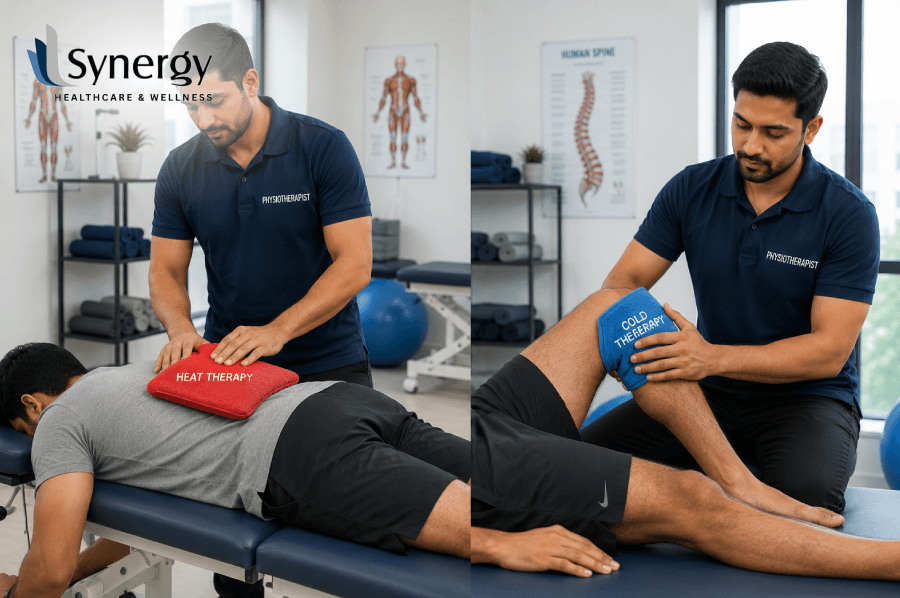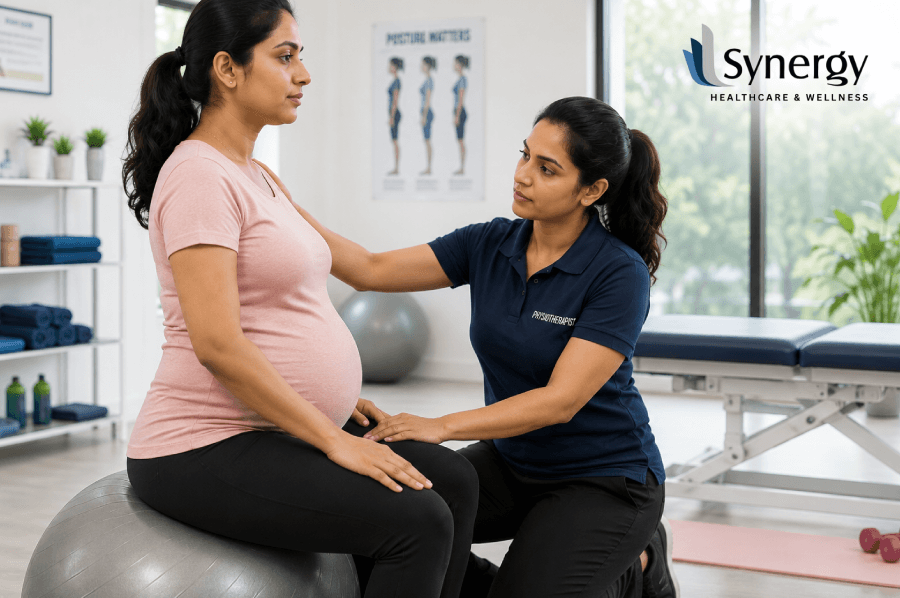

Pain that limits your movement, robs you of sleep, and affects your quality of life deserves more than just temporary relief. Manual therapy techniques are a clinically proven, hands-on approach to addressing the underlying causes of musculoskeletal pain, such as joint stiffness, soft tissue restriction, nerve irritation and postural dysfunction. This guide looks at the most successful techniques used in modern physiotherapy and why they always produce lasting results.
When Pain Becomes a Daily Routine, and Why That Should Not Be the Case
There’s a familiar pattern that emerges in people who have chronic pain. They rest and hope it gets better. When it does not, they reach for over-the-counter pain relief. They stretch it out a bit, maybe ice it and wait for the pain to go away on its own.
Sometimes, it does. Sometimes it does not. What tends to linger, in the shoulder that aches through every night, in the lower back that tightens within an hour of sitting, in the knee that clicks and swells after a short walk, is pain that has been masked rather than dealt with. The root cause is left completely unaddressed. It is precisely in this situation that manual therapy techniques modify the clinical picture.
Instead of numbing the pain signals, skilled manual therapy finds and treats the physical dysfunction that is sending the signals, whether it is a restricted joint, a pinched neural structure, a shortened fascial layer, or an overworked group of soft tissues compensating for a structural problem somewhere else.
There is no small difference between managing pain and treating the cause. It’s the difference between short-term relief and real, lasting recovery.
What Manual Therapy Really Is And Is Not?
Manual therapy is a special area of physiotherapy practice in which skilled, hands-on clinical techniques are applied to joints, muscles, nerves and connective tissue. It is delivered by trained physiotherapists who use detailed anatomical knowledge and refined tactile assessment skills to identify and treat dysfunction that is often invisible on imaging.
Soft tissue techniques have some superficial similarities, but it is not massage in the general sense. It’s not manipulation without clinical assessment. And it is not a single technique. It is a clinical framework comprising many different approaches, each with its own specific indications, mechanisms, and evidence base.
Manual therapy is a central clinical role in non-invasive treatment strategies for musculoskeletal pain, providing individualised interventions that target biomechanical dysfunction and pain, with individualised assessment remaining the cornerstone of safe and effective practice. nih
The Most Clinically Effective Manual Therapy Techniques
1. Joint Mobilisation
Joint mobilisation is the use of carefully graded, rhythmic movements to a specific joint to restore its normal range of motion, reduce pain and improve mechanical function.
Joint mobilisation is one of the most commonly used and best researched Joint mobilisation techniques in physiotherapy practice. This technique ranges in grade from gentle oscillatory movements (mainly for pain relief) to larger amplitude movements at end range (to restore mobility).
It is often employed to:
Studies have demonstrated that joint mobilisation can improve activation of deep stabilising muscles such as the lumbar multifidus and transverse abdominis, confirming that the benefits of this treatment extend beyond immediate pain relief, to include significant improvements in the underlying muscular support and spinal stability.
2. Release of Myofascia
Fascia is a network of connective tissue that surrounds and links the body’s muscles, bones, nerves, and organs together. When this tissue becomes restricted through injury, repetitive loading, or prolonged posture, it develops tension patterns that develop pain, movement restrictions, and changes in biomechanics in several areas at the same time.
Myofascial Release is a technique that involves applying sustained pressure to the restricted fascial layers to assist the tissue in lengthening and releasing.
Myofascial release involves the application of specifically directed, low load, long duration mechanical forces to the myofascial complex to bring about optimal tissue length, pain reduction, and improved function and, when used alongside conventional treatment, is effective in providing immediate pain relief and tissue tenderness. clinicaltrials.gov
A systematic review and meta analysis of randomised controlled trials also showed that the longer the myofascial release intervention, the significantly better the outcomes for joint range of motion, especially at the cervical spine, underlining the benefit of ongoing, progressive treatment over time.
3. High-Velocity Low-Amplitude (HVLA) Thrust Manipulation
HVLA manipulation is a high velocity, low amplitude thrust delivered in a specific direction to a specific spinal or peripheral joint. This is the procedure most commonly related to the audible “click” or “pop” reported by many patients.
This technique is particularly effective in:
- Acute and subacute low back pain with joint locking.
- Upper cervical spine cervicogenic headaches.
- Thoracic stiffness and dysfunction.
- Sacroiliac joint disorder.
HVLA is not appropriate for all patients and needs appropriate clinical screening before application. When properly indicated and skilfully done, it often results in rapid and marked improvement in pain and mobility.
4. Techniques for Soft Tissue
Soft tissue manual therapy includes a range of hands-on methods focused on treating muscles, tendons, ligaments, and the surrounding connective tissues.
- Deep transverse friction. Deep transverse friction is applied directly across a tendon or ligament to break down adhesions and stimulate tissue remodelling.
- Trigger point release involves sustained pressure applied to hyperirritable muscle nodules that refer pain to distant areas.
- Neural tissue mobilisation involves gentle techniques used to improve the normal mobility and flexibility of peripheral nerves.
- Instrument assisted soft tissue mobilisation IASTM is a specialist technique using clinical tools to enhance hands on soft tissue treatment.
Each of these techniques targets a different level of soft tissue dysfunction and is chosen according to the specific findings of the clinical assessment.
5. Mobilisation With Movement (MWM) – Mulligan Concept
The Mulligan Concept is the use of sustained joint accessory glides by the therapist with simultaneous active movement by the patient. The combined approach often provides immediate gains in pain free range of motion, often within a single session.
It is particularly useful for peripheral joint conditions such as ankle sprains, knee stiffness, shoulder dysfunction and lateral epicondylalgia.
How Do Manual Therapy Techniques Work In the Body?
Patients learn more about these techniques and how they work, and become more involved in their treatment.
| Mechanism | Efficacy |
| Cavitation | Transient decrease in intra articular pressure; suppression of pain through neurological pathways |
| Fascial lengthening | Decreased tissue tension, increased connective tissue layer sliding |
| Modulation neurologique | Decreased central sensitisation, enhanced proprioceptive signalling |
| Inhibition and facilitation of the muscle | Restored muscular balance, better activation patterns |
| Increased blood circulation | • Increased blood flow locally • Faster healing of tissues |
These mechanisms often work together, which is why the clinical effects of manual therapy often extend beyond the specific site being treated.
Active Rehabilitation & Manual Treatment
It is important to note that manual therapy methods work best when combined into a wider rehabilitation programme rather than as a passive treatment on its own.
Manual therapy is aimed at restoring the physical conditions for active recovery. Once joint mobility is improved, soft tissue restrictions are released, and pain is reduced to a manageable level, patients are in a much better place to engage with strengthening exercises, movement retraining and functional rehabilitation.
This combination of treatment, hands-on, then progressive active exercise, always produces better long-term results than either element alone.
Synergy Physio – Best Manual Therapy All Over Chennai
Synergy experienced physiotherapists deliver Manual therapy techniques. Continuous training and evidence based practice develop clinical reasoning and hands-on skills.
Synergy has clinics in Anna Nagar, T. Nagar, Adyar, Mogappair and Vepery offering comprehensive assessment-led treatment for a wide range of musculoskeletal conditions, from acute injuries and post-surgical rehabilitation to chronic pain and postural dysfunction.
Every treatment begins with a detailed clinical assessment to determine exactly what structures are involved, what techniques are most appropriate and how manual therapy fits into the larger rehabilitation plan. The aim is not just to temporarily reduce pain, but to correct the underlying dysfunction that is causing it.
This means care that is precise, intentional and truly focused on your long-term recovery, not just your next appointment.
For those patients who wish to know if manual therapy is appropriate for their particular condition, the Physiotherapy Evidence Database (PEDro) provides systematic reviews and clinical trial data on all major physiotherapy interventions.
Conclusion: From Pain Limitation to Movement Restoration
You do not have to live with pain forever. In most cases, it can be meaningfully reduced and in many cases resolved through expert clinical intervention.
Manual therapy techniques are some of the most advanced tools available in the practice of physiotherapy. The results obtained with the application of these methods by experienced hands, based on a complete assessment and coupled with an appropriate active rehabilitation program, are rarely achieved by passive rest, medication, and self management alone.
If you are living with pain that has not improved with conservative home treatment, or if your recovery from injury or surgery has stalled, a clinical assessment is the most productive step forward.
| Book an appointment at Synergy and see how expert manual therapy can progress your recovery in every way. |
FAQs
1. I have suffered from back pain for months. Can Orthopedic manual therapy still help at this stage?
Yes. Manual therapy is effective in acute and chronic conditions of the musculoskeletal system. You will have a detailed exam to find out the best methods for your specific presentation and how long your symptoms have been going on.
2. Will I feel pain during/after manual therapy treatment?
Some techniques can be mildly uncomfortable in application, but only for a short period of time, especially when working with restricted or sensitised tissue. You may also experience temporary soreness, lasting 24-48 hours post-treatment, which is a normal and expected response.
3. I was told I need surgery. Should I try manual therapy first?
Yes, many. Manual therapy often produces substantial improvement in conditions that have been referred for consideration of surgery. Discuss this with your physiotherapist and your surgeon before making any decision.
4. How many sessions of manual therapy will I need before I see results?
Most patients show significant improvement in two to four treatments. This initial assessment will give you a clear treatment plan to expect results based on your individual condition and the efficiency of the treatment.
5. Under what conditions can manual therapy be used?
Manual therapy is particularly suitable for conditions such as spinal pain, joint stiffness, sports injuries, post-operative care, headaches and neuralgia. Your physiotherapist will be able to tell if you fall into this category on examination.
6. I get a nervous feeling about spinal manipulation. Are there gentler options?
Sure. Manual treatment techniques include many techniques, such as high velocity thrust techniques. Your therapist will adjust the techniques according to your threshold and clinical indications. Manipulation can be performed only after you have signed an informed consent form for that.
7. Manual therapy vs nerve pain: Is there a connection?
Yes. Nerve mobilisation is a special form of manual therapy that aims at the normalisation of neural tissue motion and flexibility. This procedure will be useful when dealing with sciatica, carpal tunnel syndrome and cervical radiculopathy.
8. Is manual therapy safe for patients with osteoporosis?
Some manual techniques might require certain modifications when osteoporosis is present. Make sure that your therapist knows about all possible medical issues during your first assessment so that he or she could use appropriate and absolutely safe techniques for your case.
9. What distinguishes manual therapy from a common sports massage?
Manual therapy is a clinical intervention performed by a qualified physiotherapist following a structured assessment. It is aimed at and specific to certain musculoskeletal dysfunctions, unlike general sports massage, which is mainly aimed at releasing muscular tension and does not follow a diagnostic process.
10. Where do I begin? I’d like to know if manual therapy is right for my particular pain.
You start with a full clinical assessment. Your physiotherapist will observe your movement, identify the structures involved and develop a treatment plan with the most appropriate Manual treatment techniques for your condition and goals.

Dr. Suresh Franklin, MPT
✓ 15+ Years of ExperienceMeet Dr. Suresh Franklin, MPT – the expert behind Synergy Physio Care's clinical approach. With extensive experience in sports rehabilitation, athlete recovery, and performance care, he brings trusted expertise to every piece of content we publish. From injury management to movement-based recovery, his review helps ensure our blogs are practical, accurate, and patient-focused. At Synergy, we combine clinical knowledge with real-world physiotherapy experience to guide every recovery journey.