Spending hours at a desk each day does far more damage than most people realise. The toll of a sedentary lifestyle is cumulative and subtle, ranging from chronic back pain and weak muscles to bad posture and limited joint mobility. Physiotherapy for sedentary lifestyle rovides a structured, evidence based route to undoing this damage, restoring movement, reducing pain, and rebuilding the physical resilience that prolonged sitting steadily erodes.
When Sitting All Day Feels Like a Full-Body Problem
You end a long day at work and stand up only to feel stiffness shoot through your lower back, tightness grip your hips, and a dull ache settle across your shoulders. You stretch for a few seconds. It helps briefly. You sit back down. And tomorrow, the same thing happens again.
For millions of working adults, this cycle feels normal. It has been happening long enough that they have stopped questioning it. The back pain is just part of the job. The neck tension is just stress. The fatigue at the end of the day is just life.
But none of these things is simply part of life. They are consistent physical signals that the human body is responding poorly to the demands being placed on it.
Long hours of sitting, repeated across months and years, produce real and measurable changes in the body. Understanding what those changes are and why physiotherapy for sedentary lifestyle is one of the most effective ways to address them begins with understanding what sitting actually does to your physiology.
What Prolonged Sitting Actually Does to the Body?
The human body is not designed for extended stillness. Every system, muscular, skeletal, circulatory, neurological functions better with regular movement. When that movement is removed for hours at a time, day after day, the consequences accumulate across multiple areas simultaneously.
Musculoskeletal Effects of Long Sitting
These changes do not happen suddenly. They develop gradually so gradually that most people adapt to the discomfort without realising how significantly their movement patterns have changed.
Common musculoskeletal consequences of a sedentary lifestyle include:
- Chronic lower back pain caused by sustained spinal compression and weakened core muscles.
- Hip flexor tightness from the hip being held in a shortened position for hours.
- Weakened gluteal muscles, which reduce pelvic stability and affect walking biomechanics.
- Forward head posture produces neck and shoulder strain from screen based work.
- Reduced thoracic mobility, limiting breathing efficiency and upper back flexibility.
- Knee stiffness from reduced joint lubrication during long periods without movement.
Cardiovascular and Metabolic Consequences
The physical damage extends beyond muscles and joints. Physical inactivity is recognised as the fourth leading risk factor for global mortality, accounting for six per cent of deaths worldwide. Research indicates that individuals who engage in prolonged sedentary behaviour, particularly alongside low levels of physical activity, face significantly elevated risks of cardiovascular disease and metabolic dysfunction.
Evidence further suggests that persons who participate in long periods of sedentary behaviour, particularly in combination with low physical activity levels, are at high risk of reduced cardiorespiratory fitness and are therefore at greater risk for cardiovascular mortality.
Cognitive and Fatigue Related Effects
It is not only the body that suffers. Studies suggest that spending extended periods sitting is linked to increased general and physical fatigue, along with lower overall activity levels among the general population. Concentration dips. Decision making slows. Productivity, the very thing most desk workers are trying to protect, is quietly undermined by the environment built around maximising it.
How Physiotherapy for Sedentary Lifestyle Reverses the Damage?
| Area of Concern | Physiotherapy Approach | Expected Outcome |
| Lower back pain | Core strengthening, spinal mobilisation | Reduced pain, improved stability |
| Hip flexor tightness | Targeted stretching, muscle release | Restored hip mobility |
| Poor posture | Postural re-education, ergonomic advice | Corrected alignment |
| Weak gluteal muscles | Progressive resistance training | Better pelvic support |
| Neck and shoulder tension | Manual therapy, mobility exercises | Reduced tension headaches |
| Reduced cardiovascular fitness | Graded aerobic exercise programme | Improved endurance |
Sedentary lifestyle physiotherapy is not a single treatment. It is a structured, personalised programme that addresses the specific impairments each individual has developed based on their lifestyle, posture, and daily demands.
Assessment First and Treatment Second
A thorough physiotherapy assessment identifies which muscles have shortened, which have weakened, where movement has become restricted, and how posture has adapted over time. This assessment prevents generic treatment and ensures that every exercise and technique used targets the actual cause of discomfort rather than simply managing symptoms.
The Core Components of Effective Sedentary Lifestyle Physiotherapy
Postural Re-Education:
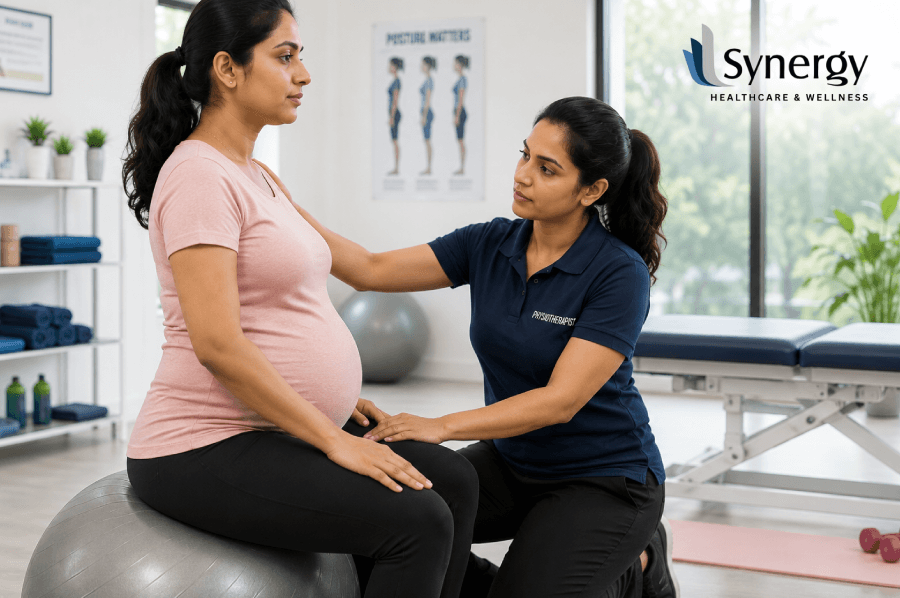
Most people with desk-based jobs do not know what neutral spinal alignment actually feels like in their bodies. Physiotherapy teaches this not as an abstract concept but as a felt, repeatable physical experience that can be applied during working hours.
Targeted Strengthening:
The muscles most affected by prolonged sitting, the deep core, the gluteals, the thoracic stabilisers, require progressive strengthening to restore their function. This is not general gym work. It is specific, clinically directed exercise that addresses precise muscular deficits identified during assessment.
Flexibility and Work Mobility:
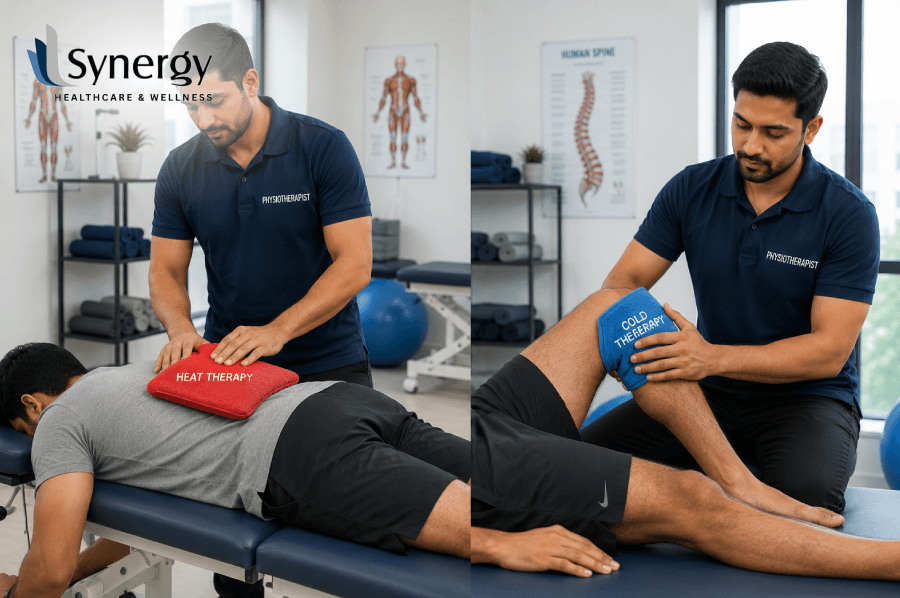
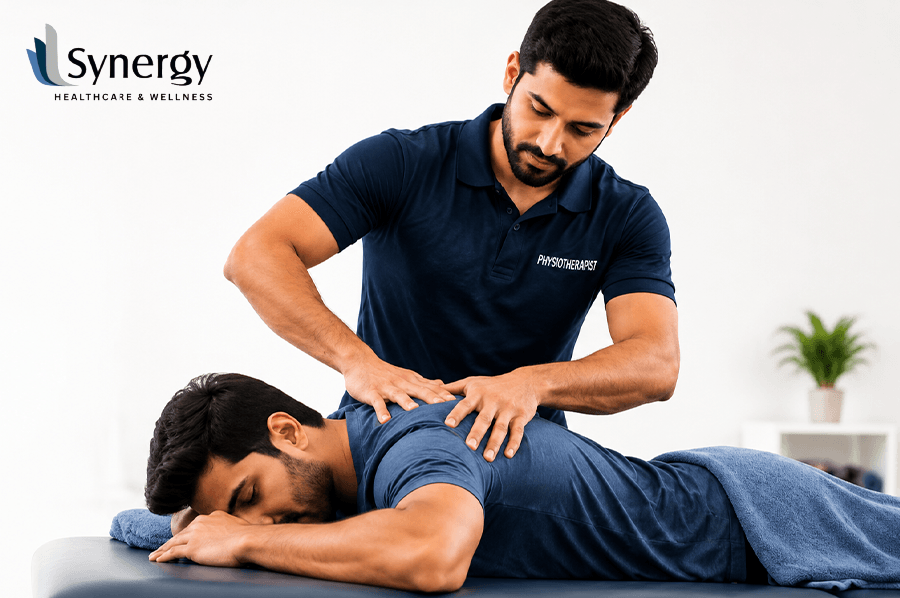
Tight hip flexors, stiff thoracic spines and restricted shoulder complexes all require specific flexibility work. Active stretching can be complemented with manual therapy techniques such as joint mobilisation and soft tissue release to restore range of motion more efficiently than stretching alone.
Ergonomic Guidance:
Sedentary lifestyle physiotherapy extends beyond the clinic. Advice on workstation setup, screen height, chair positioning, keyboard placement, and break frequency, ensures that the improvements made during treatment are not undone by the same environment that caused the problem in the first place.
Movement Habit Development:
Research suggests that an increase in daily walking steps is positively associated with improvements in fitness, making structured movement throughout the day a clinically relevant strategy for those reducing sedentary time. Physiotherapists provide specific guidance on how to integrate effective movement breaks into a working routine without disrupting productivity.
For further guidance on exercises that complement your in-clinic physiotherapy programme, explore Synergy Physio’s home exercise resource, a practical reference for building daily movement habits between sessions.
Practical Steps You Can Take Today
Whilst professional physiotherapy assessment provides the most accurate and personalised guidance, several evidence informed habits can support recovery and reduce ongoing damage:
- Break sitting every 30 minutes with a brief stand or short walk.
- Set up your workstation correctly: Screen at eye level, feet flat on the floor, elbows at 90 degrees.
- Strengthen your core progressively with guidance from a qualified physiotherapist.
- Stretch hip flexors daily: Particularly after long periods of sitting.
- Stay hydrated: Dehydration accelerates muscle fatigue and reduces joint lubrication.
Synergy: Specialist Sedentary Lifestyle Physiotherapy in Chennai
At Synergy, physiotherapy for sedentary lifestyle is approached as a clinical priority — because the team understands that the damage done by prolonged sitting does not resolve on its own.
With clinics across Chennai in Anna Nagar, T. Nagar, Adyar, Mogappair, and Vepery, Synergy offers comprehensive assessment and treatment programmes specifically designed for individuals whose work demands long hours at a desk.
Every treatment plan begins with a thorough evaluation of posture, movement patterns, and muscle function. From that foundation, a programme is built that addresses the individual’s specific needs, whether the primary concern is chronic back pain, reduced mobility, postural dysfunction, or generalised fatigue from years of sedentary work.
The approach is not reactive. It is corrective. And where possible, preventive, helping patients build the physical resilience needed to sustain a desk based career without accumulating damage that compounds over decades.
Conclusion: Movement Is the Medicine Your Desk Job Is Quietly Taking Away
The body adapts to what it is repeatedly asked to do. When it is asked to sit for eight to ten hours a day, five days a weover theross years of a working life, it adapts accordingly. Muscles shorten. Joints stiffen. Posture shifts. Pain becomes background noise.
Physiotherapy for sedentary lifestyle exists to interrupt that adaptation, to reassert what the body is actually capable of when given the right stimulus, the right treatment, and the right support.
If you recognise yourself in this, the stiffness, the back pain, the fatigue that no amount of evening stretching seems to fully resolve, the most useful thing you can do is begin with an accurate assessment rather than continuing to manage symptoms in isolation.
| Book a physiotherapy assessment at Synergy and take the first step towards moving, sitting, and living with significantly less pain. |
FAQS
1. I work at a desk 8 hours a day. Am I at risk if I exercise after work?
It has been proven by research that prolonged sitting without getting out of your chair can result in certain dangers to your health, regardless of whether you do physical exercises or not. In case you spend all your days working hard, even though you train in the evening, you would be better off interrupting your sitting sessions from time to time.
2. Can physiotherapy actually heal my sitting related backache?
In order to solve the problem of back pain resulting from your work at the desk, it is possible to undergo physiotherapy, which will focus on addressing the causes of the problem rather than alleviating the symptoms.
3. I wake up feeling stiff every morning. Could that possibly have something to do with my sedentary lifestyle?
Almost definitely. Often, reduced movement during the day is seen with morning stiffness. sedentary lifestyle physiotherapy specifically targets the progressive joint and muscle tightness that the sedentary lifestyle creates over time.
4. Is physiotherapy for postural correction effective in adults?
Yes, correction of posture works at any age. Your therapist will use postural re-education, targeted strengthening and manual therapy to gradually restore your spinal alignment and reduce associated discomfort.
5. What effect does working from home have on sedentary lifestyle issues?
Remote workers tend to have worse sedentary patterns than those who work in an office. Perhaps you have a more unstructured routine, a poor workstation set up, and less natural movement breaks, all of which physiotherapy can directly address.
6. I often get headaches and neck pain at work. Could it be my posture?
Very probably. A leading cause of cervicogenic headache is forward head posture due to extended screen time. Your physiotherapist will evaluate and treat the muscular and postural patterns responsible for this cycle.
7. Why do I feel tired at the end of the day when I haven’t done anything physical?
Static postures require a constant muscular effort to be maintained, even at apparent rest. You experience postural fatigue, a well-recognised sequelae of prolonged sitting, and are responsive to structured physiotherapy intervention.
8. I have tried to do regular stretching, but the stiffness always seems to return. Am I missing something?
Stretching helps flexibility, but not the underlying muscle weakness that lets bad posture return. You need a combined approach, strengthening, manual therapy, and movement retraining, which is what physiotherapy is all about.
9. I’m in my twenties. Should I see a physio for the effects of a sedentary lifestyle?
It’s never too early. If you work on your postural habits and muscle imbalances in your twenties, you avoid cumulative damage that’s much harder and time-consuming to fix in later decades.
10. How do I know if sedentary lifestyle physiotherapy is suitable for me?
First, you go for a complete evaluation at an authorised physiotherapy centre. The therapist will evaluate your posture, movement and other factors in order to devise a treatment plan that is right for you and your lifestyle.

Dr. Suresh Franklin, MPT
✓ 15+ Years of ExperienceMeet Dr. Suresh Franklin, MPT – the expert behind Synergy Physio Care's clinical approach. With extensive experience in sports rehabilitation, athlete recovery, and performance care, he brings trusted expertise to every piece of content we publish. From injury management to movement-based recovery, his review helps ensure our blogs are practical, accurate, and patient-focused. At Synergy, we combine clinical knowledge with real-world physiotherapy experience to guide every recovery journey.