Recovery from injury, surgery or neurological conditions is seldom a simple process. Evidence based physiotherapy removes the guesswork from treatment, with all decisions based on clinical research and measurable results. This approach delivers quicker, safer and more reliable results in recovery and is considered the gold standard in modern rehabilitation care, from post surgical rehabilitation to gait training physiotherapy.
What Happens When Recovery Stalls, and How You’re Treated
Your sessions are finished. You do the exercises. Weeks go by. But something still does not feel right. The pain is there, the movement does not return as hoped, or progress simply stalls for no apparent reason.
Most people don’t understand how common this experience is. In many cases, it’s not a matter of effort. It’s a question of method.
Physiotherapy is not a uniform practice. The techniques used, the course of treatment, and the instruments used all vary greatly depending on the practitioner or clinic. Often, the framework that guides clinical decisions is what separates a recovery that moves forward steadily from one that stalls. When done right, that framework is evidence based physiotherapy.
Understanding Evidence Based Physiotherapy and why it gets better outcomes
Clinical evidence shows physiotherapy is the systematic application of the best available clinical research, together with the therapist’s professional expertise and the individual needs of the patient, to guide all aspects of treatment.
It is not one technique. It’s a clinical philosophy. One that asks a specific question at every decision point: What does the research show works best for this condition, in this patient, at this stage of recovery?
The 3 Pillars of Evidence Based Practice
| Pilar | Description |
| Best Available Science | Evidence from peer-reviewed clinical trials, systematic reviews and meta-analyses |
| Clinical Expertise | The trained judgement, assessment skills and professional experience of the therapist |
| Patient Values and Goals | The individual’s interests, lifestyle and goals for recovery |
When all three pillars are working together, treatment is much more accurate. We don’t prescribe exercises because they are routine; we prescribe them because the evidence shows they are effective for a specific condition. No random event, but an evolution powered by clinical markers that can be measured.
This strategy reduces the chance of a prolonged recovery, prevents excessive stress on injured tissue, and ensures patients don’t get outdated treatments that have been replaced by better ones.
Evidence from peer-reviewed rehabilitation literature suggests that patients receiving evidence-informed physiotherapy programmes have significantly better functional outcomes than those receiving generic or protocol driven care.
How Physiotherapy for Gait Training Can Enhance Walking Recovery?
Gait training is one of the most compelling examples of clinical evidence physiotherapy in action. It is a structured, research led approach to restoring normal walking patterns in patients recovering from stroke, surgery, orthopaedic injury or neurological conditions.
What Gait Training Really Means?
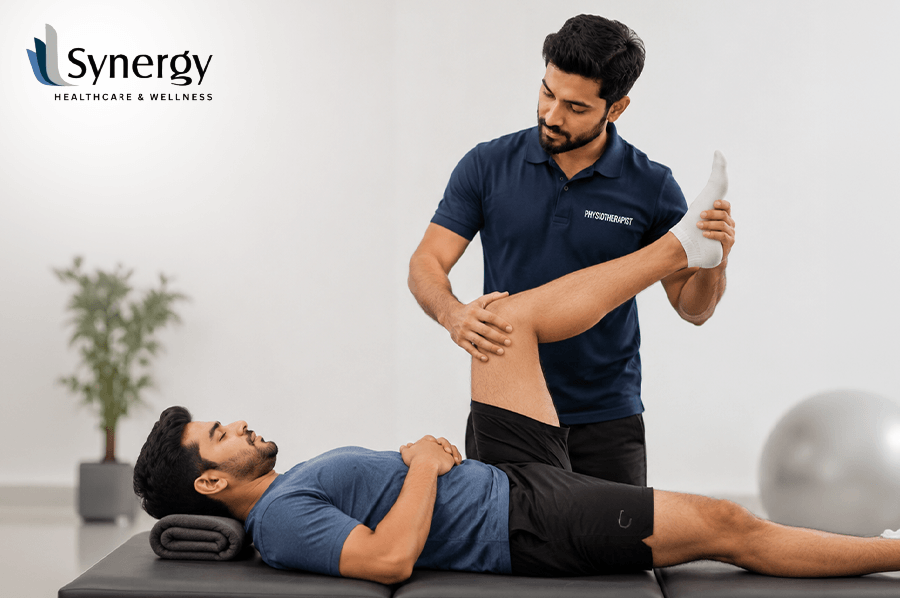
Gait training physiotherapy is much more than helping someone to walk again. It involves a detailed assessment of how you move, the sequence in which your muscles activate, how you maintain balance, and how effectively you can move around. This is followed by a progressive programme tailored to address the specific issues that are limiting your recovery.
Common techniques used in evidence based gait training are:
- Task specific walking practice, which uses repetitive and goal directed movement to form new motor pathways.
- Treadmill based training, which provides a controlled environment for gait analysis and cardiovascular fitness.
- Balance and proprioception exercises, which restore the body’s sense of position during movement.
- Strength and endurance training, which targets the muscle groups that support the mechanics of walking.
- Visual and auditory cues, which use external feedback tools to improve gait rhythm and symmetry.
The Evidence for High-Intensity Gait Training
Growing clinical evidence supports higher intensity gait training in structured physiotherapy programmes. Research published in 2025 confirms that high-intensity cardiovascular gait training with a focus on stepping practice improves gait function after stroke and appears to be superior to standard approaches at lower intensity.
This is also supported by studies that have found that intensive and accurate training supports neuronal plasticity and motor recovery, especially when combined with traditional physiotherapy approaches. This body of evidence contributes to a crucial point: recovery from walking is not a matter of time. It’s the right stimulus at the right intensity, coupled with clinical reasoning that is research-based.
Physiotherapy gait training is a structured, evidence-based pathway back to confident, independent movement for patients recovering from stroke, knee replacement, spinal injury or prolonged immobility.
The Dangers of Non Evidence Based Treatment
Knowing what happens when physiotherapy is untethered from evidence is useful. Without a research informed framework, treatment can become a matter of habit, not effectiveness. Exercises are prescribed based on tradition and not on clinical outcome data. Progressions can be too slow, which delays recovery unnecessarily, or they can be too aggressive, risking reinjury.
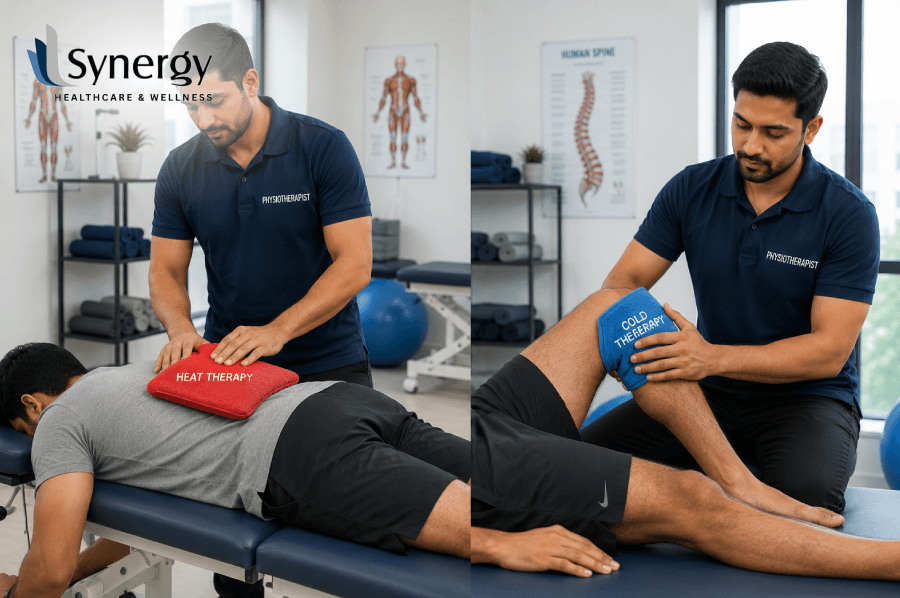
Furthermore, passive interventions, such as heat packs or basic massage, can be given as the main intervention when evidence clearly shows active rehabilitation to be the superior long-term strategy.
Sometimes, non evidence based care does not cause harm. But it is rarely that efficient. And rehab, there’s no time to lose. Every week of delay in recovery has a real physical, emotional and in many cases financial cost.
Why Choose Evidence-led rehabilitation: Key Benefits
- Faster, measurable recovery treatment is adjusted based on objective markers of progress.
- Reduced risk of re-injury: Loading and progression according to clinical guidelines
- Tailored care: Research is applied to your individual condition, not a one-size-fits-all approach.
- Clear results: You know the reason your treatments are being used.
- Clinical science, not assumption: confidence in your recovery.
Synergy Using Research driven physiotherapy to Guide Every Treatment Plan
At Synergy, the commitment to evidence based physiotherapy is not a marketing line. It is the clinical basis on which all assessment, diagnosis and treatment programmes are built.
Synergy has clinics across Chennai in Anna Nagar, T. Nagar, Adyar, Mogappair and Vepery. We integrate the latest clinical research and our deep knowledge of therapy to provide rehabilitation that is precise, measurable and most importantly, effective.
If you’re recovering from a sports injury, managing chronic pain or regaining your walking ability with gait training physiotherapy, Synergy’s team applies the same rigorous approach to your care: assess thoroughly, treat specifically, and progress systematically. This builds a process of recovery that is transparent, traceable, and evidence-based of what really works.
Discover the Synergy approach to physiotherapy exercises for home-based recovery, a practical extension of your in-clinic treatment plan.
Conclusion: Restoring Movement with Science, Skill, and Care
Recovery is seldom a straight line. There are good days, slow days and times when the progress seems invisible. The difference that keeps progress moving in the right direction is the quality of the clinical thinking behind your treatment.
Evidence based physiotherapy makes the process less uncertain. It means that all the decisions made in your rehabilitation are research-based, honed by experience, and tailored to your personal goals.
Gait training physiotherapy, delivered in an evidence based framework, does not just help people walk again. It restores the confidence, independence and quality of life that walking represents.
If your recovery has seemed shaky, slow, or erratic, it is worth taking a look at the approach behind your treatment. Look for care that is evidence based, performed by experienced professionals, and that truly puts your long-term results first.
| Book an assessment with Synergy and start your journey to recovery based on clinical precision and proven results. |
FAQs
1. I have been in physiotherapy for weeks. Why am I not getting better?
When your current clinical status is not being managed, treatment can fall behind. You may benefit from a reassessment to make sure your programme is well-matched to where you are now, not where you started.
2. What does research-driven physiotherapy really mean in everyday clinical practice?
This means that all of the exercises, techniques and progressions you’re given are chosen based on published clinical research that applies to your particular condition — not based on habit or a person’s preference.
3. I had a stroke 6 months ago. Can I still benefit from gait training physiotherapy at this stage?
Yes. Consistent research demonstrates that structured gait training produces significant improvements, even during the chronic phase of stroke recovery. Training is most useful when it is intense, consistent and goal-oriented.
4. Does clinical evidence physiotherapy apply to post surgical rehabilitation too?
You bet. Post surgical recovery is one of the fields where evidence-based physiotherapy is most clearly supported. You will be given a protocol that outlines the safe loading, progressive strengthening and functional return specific to your surgery.
5. My physiotherapist prescribes me exercises. How do I know if they are right for me? Is it fair to ask?
It’s a good question and one that you should always feel free to ask. A practitioner working within an evidence-based framework will be able to give clear clinical reasons for every part of your treatment plan.
6. Is physiotherapy gait training helpful for people who have not had a stroke?
Yes. Gait training is not only for stroke patients. It can benefit anyone who has difficulty walking due to injury, surgery, neurological conditions, ageing or prolonged immobility. You will be given a programme designed for your particular walking disability.
7. What about high-intensity training during my recovery. Is it okay?
Progressive intensity training, when supervised by a qualified physiotherapist and guided by evidence based protocols. It is not only safe but often more effective than low intensity alternatives for restoring walking ability and functional strength.
8. Sometimes different physiotherapists suggest completely different treatment plans for the same condition. Why?
Variation is because not all practitioners are equally adopting evidence based practice. You will have more consistent, research based care by a therapist who makes clinical decisions based on current published evidence rather than personal preference.
9. I have a long term chronic condition. Can clinical evidence physiotherapy still help?
Yeah. Evidence based practice is especially important for chronic conditions in that it helps to separate treatments with actual long-term benefit from those that only provide short term relief. You’ll get a programme for sustainable improvement, not just temporary symptom management.
10. Where can I get reliable advice on how to continue my recovery at home in the interval between clinic visits?
Your physiotherapist can recommend a structured home programme appropriate to your condition. You can also find evidence informed home exercise guidance from trusted clinical sources such as the Chartered Society of Physiotherapists.

Dr. Suresh Franklin, MPT
✓ 15+ Years of ExperienceMeet Dr. Suresh Franklin, MPT – the expert behind Synergy Physio Care's clinical approach. With extensive experience in sports rehabilitation, athlete recovery, and performance care, he brings trusted expertise to every piece of content we publish. From injury management to movement-based recovery, his review helps ensure our blogs are practical, accurate, and patient-focused. At Synergy, we combine clinical knowledge with real-world physiotherapy experience to guide every recovery journey.