Professional programs for the Flexibility and Mobility Program play a crucial role in your regimen if you desire ease and painlessness in your movements. Regimens that increase the range of motion in joints and increase muscular flexibility are aimed at enhancing posture, physical performance, and functional abilities. This book will introduce you to scientific knowledge concerning the benefits of movement training regimens and explain how to create an ideal body for yourself.
The Fears of Being Physically Inflexible
Imagine waking up and feeling like you’re walking through thick molasses. When you sit for a long time, and your shoulders hurt, or you feel a pinch in your lower back when you grab your shoes, these aren’t just signs of “getting older.” This normally occurs when the body loses the natural ability to go through its range of motion.
At times, flexibility is equivalent to mobility. For example, while you may easily perform hamstring stretches by sitting on the ground, are you able to do so when moving or lunging? At this stage, it is really crucial that you understand the difference between passive stretching and dynamic movement. When our joints get “stuck,” they can make any activity, from going to the gym to playing with your kids, painful and tiring because our muscles have to work harder to make up for it.
Learning How the Body Moves
To improve our movement, we need to look at the basic parts of physical freedom: mobility and flexibility. Even though they are often used interchangeably, the words mean different physiological processes.
What you need to be adaptable
If a person’s muscles or groups of muscles can passively lengthen over a range of motion, they are said to be flexible. For example, the “length” of a rubber band. Tendons, ligaments, and fascia are the connective tissues that allow the limb to move.
The Effect of Portability
The active range of motion of a joint is what makes it mobile. It’s not just how far a joint can go; it’s also how much strength and control you have in that area that matters. A person’s range of motion, strength, and motor control all affect how well they can move around. The goal of a full-body Flexibility and Mobility Program is to make sure your body is both “loose” and strong and stable.
How Moving Around Affects Your Health?
Moving around is important for all living things. Not only can structured mobility be considered a way to stretch muscles but also a means to reach your nervous system.
With the help of movement, we produce synovial fluid which acts as an oil lubricant that keeps our “hinges” from getting worn out and grinding into one another.
Consistent mobility drills train the brain to engage with the muscular system, which enhances the effectiveness of the neuromuscular system and reduces the phenomenon called braking, i.e., the inability to move further due to stiff muscles on the opposite side of your movement.
Advantages for the cardiovascular system:
- Enhanced circulation of blood within the upper and lower extremities will facilitate the supply of the cells with oxygen and the elimination of their waste products.
The secret of holistic health is being healthy both inside and out. Helping your body stay physically fit through consistent mobility exercises, hydration, balanced nutrition, and sufficient sleep plays a huge role.
What You Need to Make Your Mobility and Flexibility Program Work?
| Block of building | Main Subject Area | Main Benefit |
| Moving while working out | Activation of muscles | Prepares the heart and muscles for action |
| Reaction to Soap Media (SMR) | The release of myofascial | Breaks up adhesions in tissues |
| To finish, Isometric Vectors | Best performance | Makes joints more stable |
| Reduced Joint Movements | Health of the joints | Keeps the whole joint’s range of motion |
1. Flexion Release Techniques
To “smooth out” the fascia, or connective tissue that surrounds your muscles, you can use massage balls or foam rollers. This results in fewer “knots” and allows the layers of the tissue to slide over each other freely.
2. Extensive Coordination
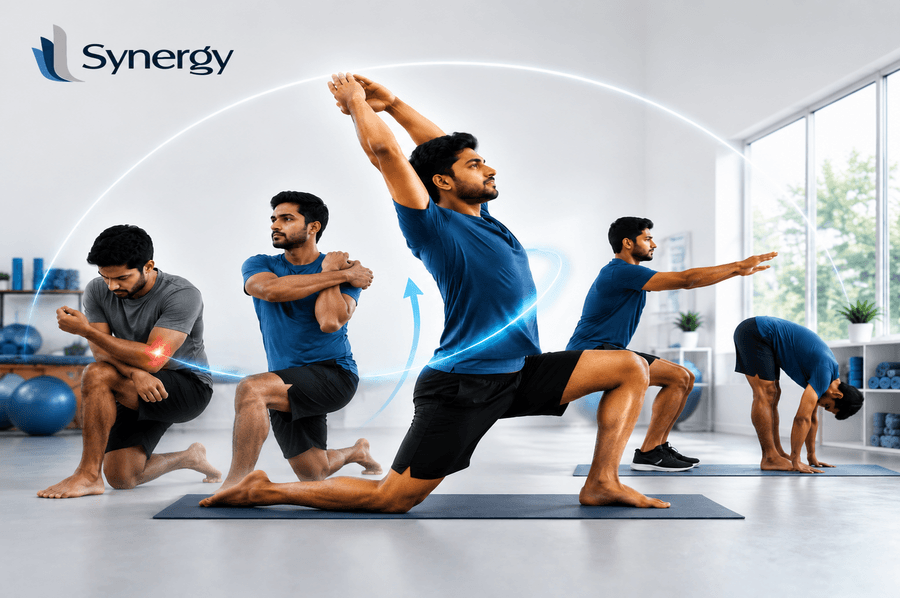
When doing many activities under pressure, they are considered the most recent techniques for movement training. In modern times, exercises involving dynamic activities that challenge the physical and mental states of an individual have gained popularity as opposed to traditional stretching practices lasting several minutes.
Preventing Contemporaneous Diseases
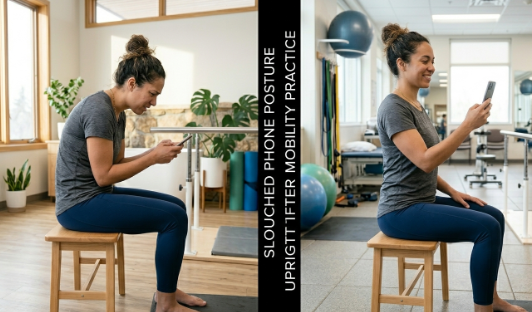
The modern way of life is a “flexion” scam. It affects the spine and hips when sitting in a particular posture, looking down at our mobile phones, and driving. When the body adjusts to a specific posture, “normal” motions become challenging.
The best cure for this inactive lifestyle is a program focusing on flexibility and mobility. With a strengthened upper back, the individual will reverse the “C-shape” form that leads to headaches and chronic neck pains. Furthermore, by improving the ankle joint range of motion, the knee and lower back complications due to poor foot structure will be solved.
Realistic Methods to Start Enhancing Instantly
- Training time does not matter in achieving your objectives. Consistency is always better than intensity.
- These five-minute exercises will help prepare your nervous system for the rest of your day: hip circles and Cat-Cow.
- Standing up and doing three gradual shoulder rolls and a standing quad stretch is a great desk break exercise.
- Pay Attention to Your Breath: When you breathe deeply and diaphragmatically, you tell your nervous system to relax, which makes it easier for your muscles to let go of tension while you work on your mobility and flexibility.
Expert Advice: The Importance of Living Longer
In assessing the quality of life when one is elderly, “functional independence” has often been used as a metric among doctors. Your joint flexibility now will tell whether you are capable of stooping down to lift your grandchild or reaching a high shelf. Through investing in these activities now, you are future-proofing yourself against the consequences of ageing.
The NHS has stressed the importance of exercising and how it is crucial to have flexibility and balance to avoid accidents and maintain coordination. Similarly, the Mayo Clinic suggests stretching on a consistent basis in order to achieve greater joint flexibility.
A Strategy That Will Lead to Overall Wellness: Synergy
When many people find themselves trying to balance their hectic life with proper exercise and movement, they often turn to professionals to ensure they move correctly. Since movement is vital in terms of health, the idea of synergy helps to organise this approach. Those who engage in a flexibility program that focuses on enhancing flexibility and mobility will not only begin to move but will also move differently because of the interaction of strength and flexibility.
Read this blog from Synergy to learn easy, daily mobility improvement exercises and how they support joint health: Easy Mobility Improvement Exercises for Daily Comfort and Pain Relief. It tells you practical steps for enhancing mobility and reducing discomfort in everyday life.
Conclusion: Stay Active, Stay Flexible, Stay Pain-Free
To be healthy is to be active. Adopt an active lifestyle where everything moves and take off any “rust” from your body through a flexibility and mobility program. Following the rules of mobility on a consistent basis will ensure that you attain your exercise targets, whether breaking personal records at the gym or simply freeing yourself from stiffness pains. It’s all about being active; with the right guidance and assistance, you can remain strong and nimble throughout your lifetime, and we can help you with this at Synergy.
| Start your journey toward pain-free movement with expert guidance from Synergy. |
FAQS
1. How often should you train during the planning of a flexibility and mobility exercise?
While doing three full workouts in a week can lead to some great long-term gains, it is advisable to aim at doing something active for about ten to fifteen minutes daily. It is more important to stay consistent than to go all out to achieve flexibility and mobility goals.
2. Can mobility be replaced with yoga?
They have similarities, but yoga incorporates dynamic poses and flows compared to mobility which is more joint-focused regarding range of motion. Both complement each other when included in an exercise program.
3. Is it okay to enroll in the program amid stiffness?
Yes, it is. In fact, stiffness should be the primary reason to embark on this journey as it helps restore your body’s inherent range of motion. The movements that will be performed will aid in relaxing your muscles without straining yourself.
4. Would the workout session that is focused on mobility and flexibility alleviate my back pain?
Absolutely. The problem of tight hips and upper backs is one of the causes of many people’s back pain. The right posture also contributes to spinal relief.
5. Do I need special equipment for mobility exercises?
You may get by without equipment, but a foam roller and resistance bands will make your workouts much more effective. Simple tools can enhance muscle activation and deepen your stretches safely.
6. Do stretching and mobility training exercises need to be performed before or after the workout?
For your joint preparation, perform mobility exercises first and then perform stretches on your static muscles so that they will have time to relax. This will ensure good performance and a low risk of getting injured.
7. How much time will it take before I notice the effects physically?
While you may feel some relief during the very first workout, it will usually take about four to six weeks of continuous training to notice any effect on your range of motion.
8. Can these workouts be recommended for children and elderly people?
Absolutely. Mobility training exercises can be used by people of any age group to remain functionally mobile. The exercises can be changed in intensity according to individual strength and ability.
9. What causes joint popping in such exercises?
Popping joints, if there is no pain, usually occur due to the gas bubbles in joint fluid or tendons rubbing against bones. Popping joints usually do not have any negative effect if painless.
10. Does the amount of hydration influence flexibility?
As muscles and fascia contain water, one must hydrate properly in order to maintain muscle and fascia pliability and flexibility.

Dr. Suresh Franklin, MPT
✓ 15+ Years of ExperienceMeet Dr. Suresh Franklin, MPT – the expert behind Synergy Physio Care's clinical approach. With extensive experience in sports rehabilitation, athlete recovery, and performance care, he brings trusted expertise to every piece of content we publish. From injury management to movement-based recovery, his review helps ensure our blogs are practical, accurate, and patient-focused. At Synergy, we combine clinical knowledge with real-world physiotherapy experience to guide every recovery journey.