Looking for ways to sit on the floor comfortably during pregnancy or correct the sitting position in pregnancy? Discover safe sitting and sleeping positions, posture tips, and pregnancy do’s and don’ts recommended by physiotherapists to help you stay comfortable.
Introduction: Support Your Body Through Every Stage of Pregnancy
Pregnancy changes just about everything about how your body moves, balances, and rests, and posture is often the first thing to go. Everyday habits such as crossing your legs or slumping on the sofa can subtly add strain to your back, hips and pelvis as your centre of gravity shifts forward with the growing uterus. One of the simplest ways to relieve discomfort and support a smoother pregnancy is to get the sitting position in pregnancy right as well as good sleeping posture during pregnancy.
This guide covers sitting posture during pregnancy, safe ways to sit on the floor during pregnancy, positions to avoid during pregnancy and how the position of the uterus during pregnancy affects the advice doctors give. We’ll also cover general dos and don’ts during pregnancy and how expert physio support, like that provided at Synergy, can help you move through pregnancy with greater comfort and confidence.
The Importance of Good Posture During Pregnancy
With each passing month of pregnancy, hormones such as relaxin soften the ligaments that hold your joints in place, and your enlarging belly forces your lower back into a deeper arch. These factors increase the vulnerability of the spine and pelvis to the strain of everyday positions that used to seem harmless. Good posture during pregnancy isn’t about looking a certain way. It’s about training your body to stand, sit and lie in positions that cause the least possible stress to your back, hips and pelvic joints.
When poor posture is maintained over weeks, it can lead to:
- Pain in the lower back and pelvic girdle
- Round ligament pain
- Poor circulation and swelling in the legs
- Increased pressure on the pregnant uterus and surrounding tissues
Getting the Sitting Position in Pregnancy Right
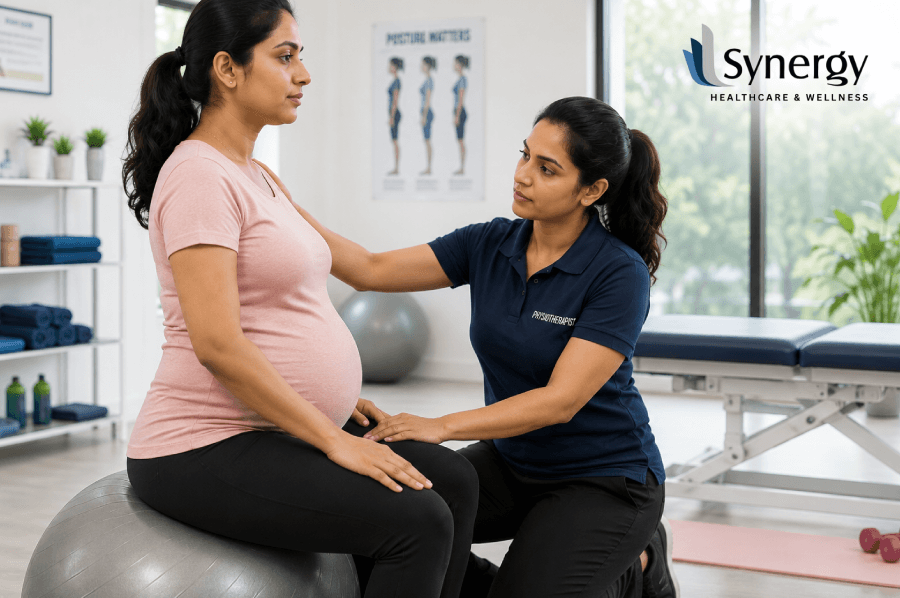
Correct sitting posture while pregnant is about supporting your spine and keeping your pelvis level, not tucked under or slumped. Physiotherapy recommendations typically recommend the following changes:
- Sit with your hips at the same level as your knees or a bit higher.
- Sit well back in the chair, with a small cushion or rolled towel supporting your back in the curve of your lower back.
- Keep your feet flat on the floor or on a low footstool if your chair is too high.
- Avoid crossing your legs, which can decrease blood flow to the heart and increase the possibility of swelling or varicose veins.
- Instead of sitting or standing still for long periods of time, change positions every 30 to 45 minutes.
Positions to Steer Clear of Sitting During Pregnancy
As part of a wider list of positions to avoid in pregnancy, there are some sitting habits that are best avoided, particularly from the second trimester onwards:
| Location | Why should it be limited |
| Sitting cross-legged for long periods | May decrease circulation and increase imbalance in the pelvic joint |
| Slouching or slumping over the bump | Causes more upper back strain and less room for a baby |
| Sitting on very low seats or unsupported seats | Encourages a tucked pelvis and a rounded spine |
| Sitting for long, unbroken periods | Causes stiffness and swelling in the legs |
| Later pregnancy (lying flat on your back for long periods) | May promote less favourable foetal position |
None of these positions are dangerous from time to time – the key is to avoid long, repeated exposure to any one posture.
Safe Ways to Sit on the Floor During Pregnancy
Sitting on the floor is an everyday part of life, religious activities, or relaxation, and many pregnant women ask how to sit during pregnancy on floor without straining. Floor sitting can still be comfortable well into later pregnancy with a couple of tweaks:
- Use a folded blanket or cushion for cushioning (not a hard, flat surface).
- Lift your hips: a yoga block or firm cushion under your sit bones keeps your hips slightly higher than your knees, making pelvic pressure easier.
- Back support: Sitting against a wall or sturdy piece of furniture relieves pressure on the lower back.
- Rise slowly. Roll onto your side and push up to a sitting position with your hands and knees for support, not from a flat position that strains the abdominal wall.
Options for Not Sitting Cross-Legged on the Floor
If your crossed legs are not comfortable, try the following:
- Knees supported on cushions, soles of the feet together, sitting cross-legged.
- Sitting on both sides with legs bent to one side.
- One leg straight, one bent, back and forth in a regular manner.
If you have symphysis pubis or pelvic girdle pain, it’s usually best to avoid sitting cross-legged on the floor for long periods, but a physiotherapist can suggest suitable alternatives.
Pregnancy Sleeping Position: What the Research Shows
Sleeping position in pregnancy is one of the most researched topics in prenatal care, and the rationale is more than comfort advice; it is physiological. By about the 20th week of pregnancy, lying flat on your back can cause the growing uterus to compress the large vein that carries blood back to the heart, the inferior vena cava, and sometimes the aorta as well. This can result in decreased cardiac output and uterine blood flow, termed aortocaval or supine hypotensive syndrome.
Several case-control studies from New Zealand, Australia and the UK have shown that sleeping on the back in later pregnancy is associated with increased risk of late stillbirth compared with side-sleeping, thought to be related to this reduced uterine perfusion. This evidence has led to the recommendation by national guideline bodies that pregnant women sleep on their side after 28 weeks of gestation.
Practical Sleep Positioning Tips
- Sleep on your left side where possible, as it’s thought to maximise blood flow to the placenta by keeping the uterus off the inferior vena cava.
- To align your hips and reduce pressure on your lower back, place a pillow between your knees.
- In later pregnancy, put a pillow under your bump for extra support.
- If you wake up on your back, just roll back onto your side – short periods are not a cause for alarm.
- Use a wedge or an extra pillow behind your back to help you stay on your side overnight.
Position of the Uterus in Pregnancy and Its Importance for Comfort
Understanding the position of the uterus during pregnancy helps explain why advice about posture changes as pregnancy progresses. During uterine enlargement, the uterus transforms from a small pelvic organ to a large abdominal organ that can, in the recumbent position, exert pressure on large blood vessels and, in the chair-slumped position, restrict the movement of the ribs and diaphragm. Keeping a well-supported, upright sitting position and side-lying sleeping posture can help to keep pressure off of these structures and may also help to maintain optimal positioning of the baby as term approaches, as a persistently slumped or reclined posture can reduce the space available for the baby to settle head-down.
Want to improve your posture and core stability? Read our blog, Daily Core Strengthening Routine for Better Posture and Balance, for simple exercises and expert physiotherapy tips.
Quick Guide: Do’s and Don’ts of Pregnancy
| Do | Don’t Do |
| Sit with your back against a support, with your feet flat | Sit or slump for prolonged periods without a break |
| 28 weeks sleeping on your side (preferably the left) | Sleep on your back for extended periods of time |
| Sit on the floor with the support of cushions | Sit cross-legged for long, unbroken periods |
| Change places every 30-45 minutes | Stand or sit in one position for hours |
| Bend your knees and hips to lift | Hinge forward at the hips with your knees straight |
| Wear a supportive shoe and maintain good standing posture | Wear high heels or shoes that are not supportive for long periods |
Synergy: Personalised Physiotherapy Care for Pregnant Women
Synergy Healthcare and Wellness tailors prenatal physiotherapy to each woman’s evolving body, not generic advice. The team looks at individual posture, pelvic alignment and movement patterns to inform practical changes – from the correct pregnancy sitting posture for desk-based work, to safe ways to sit on the floor during pregnancy for those with an active lifestyle or religious practice. Synergy physiotherapists can also help with sleeping posture in pregnancy, pelvic girdle discomfort and round ligament pain, helping expecting mothers navigate each trimester with more confidence and less discomfort.
Synergy has clinics in Chennai, including Anna Nagar, T. Nagar, Adyar, Mogappair and Vepery, and provides pregnant women access to doctor-led assessments, hands-on physiotherapy and posture coaching, all based on evidence and available throughout their pregnancy journey.
Conclusion: Healthy Posture Today, Greater Comfort Tomorrow
Small, consistent postural choices, the pregnancy sitting posture you adopt at your desk and how to sit on floor during pregnancy add up to meaningful differences in comfort and wellbeing. Knowing the importance of the position of the uterus during pregnancy, as well as which positions to avoid during pregnancy, allows you to make informed decisions rather than guesswork. Along with the pregnancy do’s and don’ts, professional advice from a prenatal physio team like Synergy can help you personalise this advice to your body and stage of pregnancy.
| Move through pregnancy with greater comfort and confidence with Synergy. Book your personalised prenatal physiotherapy assessment today and experience expert care designed around you. |
FAQs
1. What is the best sitting position during pregnancy?
Sit back against your backrest with your hip joints higher than or level with your knee joints and with your feet touching the ground, and keep changing positions frequently. Keeping good posture and avoiding the strain of remaining in one particular position for long periods of time will help reduce the strain put on your back.
2. Is it okay to sit on the floor while pregnant?
Yes, you can sit on the floor while pregnant if you have some padding under your hips, back support, and you use a gentle technique to get up. Sit in a comfortable position that is not too stressful to your hips or knees. Take your time if you feel any discomfort or dizziness and seek extra support.
3. What is the best way to sleep during pregnancy?
Usually, from about 28 weeks, you will be advised to sleep on your side, preferably your left side, to promote healthy blood flow to the placenta. To add to your comfort and proper spinal alignment, you might also want to put a pillow under your abdomen and between your knees. And you’re also perfectly okay with switching sides sometimes in the night.
4. Why can’t I lie flat on my back in late pregnancy?
When lying flat, the growing uterus can press on major blood vessels, decreasing blood flow to you and your baby. This position can also make some women feel dizzy, breathless or uncomfortable in the back. Side sleeping is generally a more supportive alternative in the later stages of pregnancy.
5. Will sitting cross-legged hurt my baby?
If you sit cross-legged for short periods of time, it should be fine, but a long period of sitting cross-legged may decrease circulation and contribute to pelvic discomfort. Switching up your sitting position during the day relieves pressure on the hips and low back. The best guide to any posture is to listen to your body’s comfort levels.
6. Which positions should be avoided during pregnancy?
As a general rule, avoid slumping for long periods of time, sitting cross-legged for long periods of time, deep unsupported squats and lying flat on your back for long periods of time. As your pregnancy progresses, changing positions and moving around a lot can help you be more comfortable.
7. What is the relationship between the position of the uterus in pregnancy and back pain?
With the growing uterus, your centre of gravity moves forward and your lower back arches more. Unless you change your sitting or standing position, this can be hard on your back. The surrounding muscles often work harder to maintain the balance, and this leads to increased fatigue over time. A mild increase in strength and awareness of posture can relieve unnecessary pressure on the spine.
8. Is it safe to sit on a cushion while being pregnant?
Certainly, some cushion or towel at the back can provide good support and help adopt a neutral spinal position. A chair that offers proper lumbar support can be quite comfortable. Make sure that your feet are well supported so that you can maintain good posture all day long.
9. Any simple do’s and don’ts for posture in pregnancy?
Keep changing your position and supporting your back. Don’t stay in one position for long, especially slumped or on your back. Wear supportive shoes, and try not to stand for long periods if you can help it. Small changes in posture each day can make a huge difference to the amount of strain you place on your body.
10. When should I see a physiotherapist for pregnancy posture?
If you are suffering from ongoing back, hip or pelvic pain, a physiotherapy assessment can help identify the cause and provide you with a tailored plan. If this is dealt with early on, the symptoms will not get worse as the pregnancy continues. A tailored exercise programme can also increase mobility, comfort and confidence in day-to-day activities.

Dr. Suresh Franklin, MPT
✓ 15+ Years of ExperienceMeet Dr. Suresh Franklin, MPT – the expert behind Synergy Physio Care's clinical approach. With extensive experience in sports rehabilitation, athlete recovery, and performance care, he brings trusted expertise to every piece of content we publish. From injury management to movement-based recovery, his review helps ensure our blogs are practical, accurate, and patient-focused. At Synergy, we combine clinical knowledge with real-world physiotherapy experience to guide every recovery journey.