
Chronic neck and shoulder pain can severely limit your daily life, making even small head movements painful. Supportive cervical collar devices provide immediate short-term relief through stabilisation of the cervical spine, but long-term recovery must be aimed at targeted rehabilitation. Knowing your options, postural corrections and when to see a specialist is important in order to achieve permanent pain-free, healthy mobility.
Introduction: When Neck Pain Starts Controlling Your Routine and Focus
You wake up in the morning, roll over to turn off your alarm and are immediately struck by a sharp, locking sensation that goes from the base of your skull straight down into your shoulder blade. Even simple daily activities, like checking your car’s blind spot while driving or looking down at your laptop screen, suddenly require a slow, guarded pivot of your entire upper body. That localised stiffness morphs into a heavy, burning ache by mid-afternoon, which sets off tension headaches and drains your focus. Instead of moving smoothly through your personal and professional routine, you are forever rubbing your neck, adjusting your desk chair, and frantically searching for a position that gives you a few moments of temporary physical relief.
This draining physical cycle is a super common issue for office workers, active people, and older adults managing modern, screen-heavy lifestyles. Quick hot patches or over-the-counter anti-inflammatories can mask structural imbalances or age-related changes that settle into the upper spine, but the deeper problem remains. You must understand the exact physiological causes of your discomfort, the place of modern supportive devices such as a cervical collar, and dedicate yourself to a structured approach to spinal rehabilitation if a permanent breakthrough is to be made.
Unravelling the Anatomical Root Causes of Sore Muscles
Your human cervical spine is a very complex structure that carries the weight of your head while allowing movement in several directions. The muscles, ligaments and nerves in this area are closely linked so that any damage or inflammation in one area quickly spreads out, creating overlapping neck and shoulder pain. The first step to mapping out an effective treatment pathway is identifying exactly what is driving your symptoms.
Ergonomic Stress and Chronic Postural Overload
This is the modern “forward head posture,” often called tech-neck, and it is the most common cause of upper back tension. For every inch your head protrudes past the natural alignment of your spine, the relative weight on your lower cervical vertebrae increases by nearly five kilograms. This constant mechanical overload keeps the trapezius and levator scapulae muscles in a constant state of contraction, resulting in painful myofascial trigger points, decreased blood flow and chronic muscle fatigue.
Structural Changes and Progressive Creep
As we age, our spines go through a regular ageing process that slowly alters the structural integrity of the intervertebral discs and facet joints. When one goes for a consultation with a specialist, it is very important to know the real meaning of cervical spondylosis. This medical term refers to the progressive, age-related wear and tear affecting the cervical spine, characterised by the thinning of spinal discs, the development of protective bone spurs, and the gradual narrowing of the spinal canal. It usually causes some local stiffness of the joint and can sometimes pinch nearby nerve roots, causing radiating pain, numbness or pins and needles radiating down your arm to your fingers.
The Role of Orthopaedic Supports for Acute Neck Trauma
In case of acute injury to the upper spine, for example, in whiplash deceleration in a vehicle accident or in case of a severe flare-up of progressive degeneration in the joints, it is important to keep the movement to a minimum at once. A specialised cervical brace is a crucial first-line intervention that temporarily offloads mechanical stress, protects delicate nerve pathways and allows inflamed soft tissue to rest and recover.
To guarantee a safe and effective recovery, it is important to become knowledgeable about the different types of cervical collars available in the medical market, as each design is engineered for a specific degree of structural restriction:
| Orthotic Type | Main Material | Degree of Mobility Impairment | Best Clinical Usefulness |
| Foam Collar Soft | Breathable fabric knitted with high-density polyurethane foam | Minimal restriction, mostly a tactile reminder to stay away from sudden rotations | Mild muscle strains, early postural fatigue, and nighttime boundary support |
| Semi-Rigid Neck Collar | Moulded plastic borders with soft, built-in foam padding borders | Moderate restriction. Restricts forces of flexion, extension and lateral bending. | Severe nerve root compression, stable structural fractures, and acute whiplash injury |
| Rigid Extrication Collar | Two-piece hard polyethene shell with dedicated chin support ledge | Maximum restriction: locks the upper cervical joints completely in the neutral position | Critical post-surgical recovery, acute emergency transport, high-impact spinal trauma |
While a cervical collar for neck pain can provide immediate physical comfort in the initial stages of an injury, medical research stresses that these orthotic devices should be used selectively. Using a neck collar for neck pain beyond a few days without professional guidance can result in muscle atrophy and increased joint stiffness, which can ultimately delay your long-term recovery.
Restoring Long-Term Mobility with Targeted Physical Rehabilitation
A supportive brace will help a lot to get through an acute flare-up, but to get rid of upper spinal discomfort permanently, one must transition from passive immobilisation to active, movement-based therapy. To get back to full, pain-free movement, you need to re-educate your postural muscles, increase your joint flexibility and build up your deep structural endurance.
The Power of Prescribed Exercise Therapy
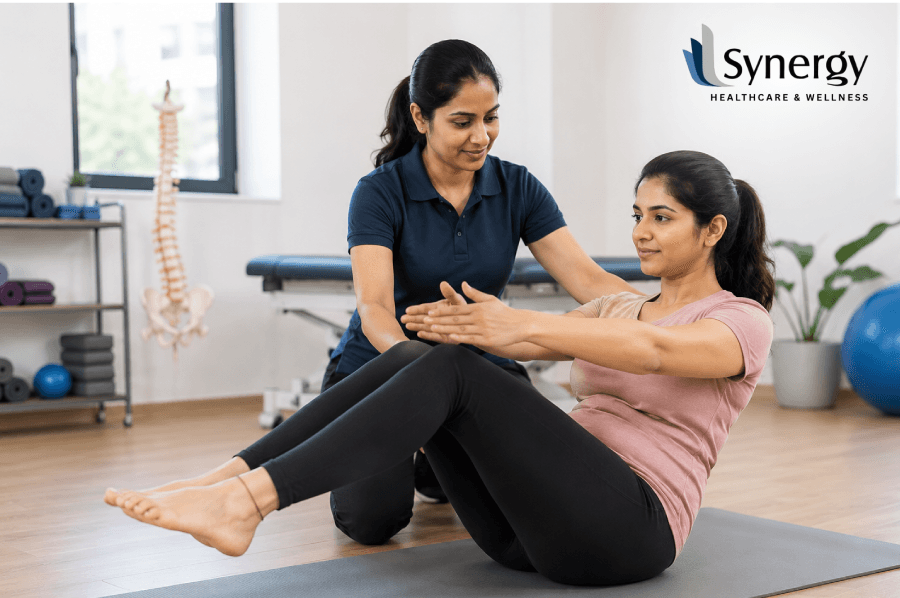
Customised physiotherapy exercises for neck pain are the best way to reverse chronic muscle tightness and protect degenerating spinal discs. These specialised routines are designed to activate the deep neck flexors, the internal core muscles of your neck, while stretching shortened chest muscles and strengthening the lower shoulder stabilisers. Balanced, they will allow your head to sit naturally over your shoulders, which will dramatically reduce everyday mechanical stress.
Basic Postural Drills
The Anatomical Chin Tuck: Sit up straight with relaxed shoulders. Roll your head gently straight back as if you were trying to make a very slight double chin, keeping your eyes facing straight ahead. Now hold this position for 5 seconds and then relax. Repeat 10 to 15 controlled repetitions to systematically strengthen your deep spinal support muscles.
The Scapular Squeeze: Pull your shoulder blades together and down, as if you’re cradling a small object between them. Hold this active contraction for 5 seconds, then relax. To actively reverse the slouched and rounded position that comes from long hours on the laptop, perform all 3 sets for 10 reps.
Synergy’s Advanced Clinical Pathways
Long-term recovery from serious or chronic upper spinal problems means leaving behind unsubstantiated home treatments and working with a committed, professional rehabilitation team. Every patient at Synergy starts with a comprehensive medical assessment conducted by senior specialists. They don’t do generic treatments; the clinical team will try to find the exact mechanical or structural source of your physical pain.
Full Assessment –> Targeted Manual Therapy –> Progressive Strengthening –> Prolonged Postural Management
The specialists at the clinic work hard to reduce localised inflammation, release deep myofascial knots and restore smooth joint mechanics, with an arsenal of advanced clinical manual therapy techniques and state-of-the-art electrotherapy systems. Their experienced therapists won’t leave you to figure out recovery on your own. They will guide you through the best ergonomic arrangements, safe lifestyle changes, and personalised strengthening routines that can be incorporated into your busy schedule. Outstanding recommendation for anyone who wants to move away from short-term fixes and build a stable foundation of healthy, pain-free health, using this evidence-based, patient-centred approach.
Conclusion: Building Resilience and Long-Term Musculoskeletal Health
Investing your time in professional spinal rehabilitation is very effective to restore your everyday comfort, increase your energy level and maintain your future physical independence. Orthotic supports are very helpful for short-term protection in acute injuries, but the key to a full and permanent recovery lies in improving your posture and maintaining your muscular system strong and supportive.
So be proactive in looking at your daily work environment and movement habits to keep your progress in check in the long run. Applying ergonomic principles to your workspace, such as positioning your monitor at eye level and ensuring your feet are flat on the floor, can greatly reduce the strain on your spine each day. A closer look at the guide on physiotherapy for office workers can offer very useful insights into practical workplace wellness and preventative spine care habits. When you opt for structured, doctor-led rehab instead of a quick cosmetic fix, you are safeguarding your physical health, ensuring your body stays strong, flexible and totally pain-free for years to come.
| For personalised recovery and expert-guided spinal care, connect with Synergy today and take the first step toward long-term musculoskeletal health and pain-free movement – Book An Appointment. |
FAQS
1. How long can I safely wear a neck collar for neck pain in an acute flare-up?
It is always advised to use a support brace for no longer than 48-72 hours unless specifically instructed by your doctor. Using a brace for too long can weaken and stiffen the neck muscles that support you, often delaying your long-term recovery.
2. What does a diagnosis of cervical spondylosis meaning for my general day-to-day mobility?
When a specialist explains this condition to you, it basically means that your spine is going through normal wear and tear with age. You can enjoy excellent daily mobility without pain by combining gentle manual therapy with regular structured physical therapy, and this can be successfully managed.
3. What are the most suitable cervical collar types for recovery from whiplash?
If you are recovering from mild to moderate whiplash, your practitioner will usually suggest starting with a semi-rigid collar to safely control sudden movements of your head. As your acute tissue inflammation settles, you will gradually move to a soft foam collar and then start your active rehabilitation exercises.
4. Are there any gentle neck pain physiotherapy exercises I can do at my office desk?
Yes, you can do easy, low-impact moves like the anatomical chin tuck or seated scapular squeezes right at your desk. These quick exercises help relieve muscle tension, improve blood flow and make it much easier to maintain healthy spinal alignment throughout a busy workday.
5. If I have chronic shoulder tension, why go to a speciality medical centre instead of just resting at home?
At a specialised clinic, you receive an accurate diagnostic evaluation and a highly personalised treatment plan. We use advanced manual therapies and targeted strengthening programs to get to the root of your strain and get you better faster than just resting it.
6. Can I have tingling in my hands from a pinched nerve root in the upper spine?
Yes, says clinical guidelines from the National Health Service, if a slipped disc or a bone spur pinches a nerve root in your upper spine, it can send radiating pain or a pins-and-needles sensation down your arm and into your fingers.
7. What if one of the prescribed stretching exercises is increasing my pain?
If any movement causes pain that is sharp or gets worse, I would highly recommend you stop the exercise immediately. Rest your neck in a neutral position and check with your therapist so that he or she can adjust your routine to fit your current tissue tolerance.
8. Why does a forward head posture add more stress to your upper back muscles?
When your head is leaning forward, your upper back muscles have to work a lot harder against gravity to keep your head up. This constant extra workload causes chronic muscle fatigue, tension knots and constant aching across your shoulders.
9. Is it safe for me to use a hot water bag for acute joint stiffness?
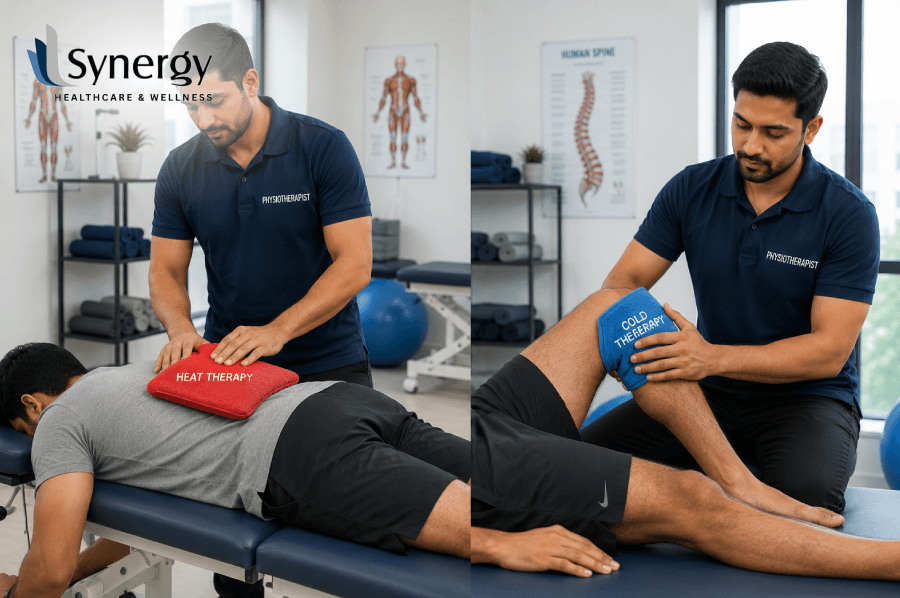
Yes, 15 to 20 minutes of gentle heat can help to loosen tight muscles and increase local circulation. But if you’ve just had an acute injury, I would advise using an ice pack for the first 48 hours to help control inflammation.
10. How often will I have to go to clinical therapy sessions to see lasting improvement?
Most people experience a dramatic reduction in stiffness within 2 to 4 weeks of beginning a regular program. The number of sessions you will need depends on your particular condition, but going 2 to 3 times a week at first helps guarantee the best results.

Dr. Suresh Franklin, MPT
✓ 15+ Years of ExperienceMeet Dr. Suresh Franklin, MPT – the expert behind Synergy Physio Care's clinical approach. With extensive experience in sports rehabilitation, athlete recovery, and performance care, he brings trusted expertise to every piece of content we publish. From injury management to movement-based recovery, his review helps ensure our blogs are practical, accurate, and patient-focused. At Synergy, we combine clinical knowledge with real-world physiotherapy experience to guide every recovery journey.