
Post-workout stiffness: What to do? Delayed onset muscle soreness (DOMS) is a normal response to exercise. Active stretching, proper recovery, and muscle strength testing can reduce discomfort, improve performance, and support a safe return to training. At Synergy, physiotherapist-led care helps you recover effectively.
Introduction: From Muscle Soreness to Stronger Performance
If you’ve ever tried a new workout, added extra weight to the barbell or gone on a longer run than usual, you’ll be familiar with that feeling: a dull, aching stiffness that comes on a day or two later. This is delayed-onset muscle soreness, and understanding the right delayed-onset muscle soreness treatment can be the difference between a smooth recovery and weeks of nagging discomfort.
Clinicians also use muscle testing and a muscular strength test to assess the progress of muscle healing and function, in addition to active stretching and other recovery strategies. These approaches, combined with structured muscle therapy, are the basis of safe, evidence-informed recovery. In this guide, we will break down the science that underlies DOMS, the real-world benefits of stretching, how strength assessments are conducted, and how a physiotherapy-led approach, such as the one offered at Synergy Healthcare & Wellness, promotes long-term muscle health.
What Is Delayed Onset Muscle Soreness (DOMS)?
Delayed onset muscle soreness is a transient phenomenon that usually manifests 24 to 72 hours following unfamiliar or intense physical activity, particularly exercise involving eccentric muscle contractions – movements in which a muscle lengthens while under tension, such as when lowering a weight or running downhill.
DOMS was blamed on lactic acid build-up for years. Current research has gone much further than that theory. Microscopic disruption of muscle fibres and the surrounding connective tissue is now seen, followed by a localised inflammatory response which sensitises pain receptors in the fascia. This inflammatory cascade involves signalling molecules such as interleukins and tumour necrosis factor, as well as a transient increase in blood markers such as creatine kinase, which reflects disturbance of muscle fibres.
Common DOMS Symptoms
- Pain or tenderness when the muscle is touched or moved
- Stiffness and loss of range of motion
- Transient loss of muscle power and strength
- Mild swelling of the involved muscle group
The discomfort is usually most noticeable around the 48-hour mark, and it will usually subside within a week or so. DOMS is usually harmless and self-limiting, but the accompanying strength loss and stiffness can increase the risk of injury through compensation if you get back into training too soon, which is why having a well-thought-out delayed-onset muscle soreness treatment plan is so valuable.
Delayed Onset Muscle Soreness Treatment: What Really Works
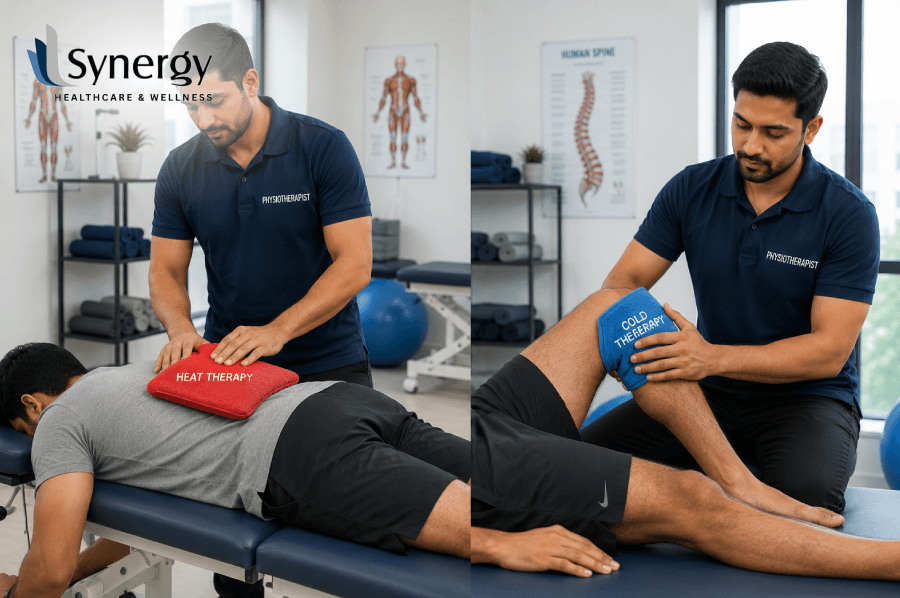
Various physiotherapy interventions have been investigated for the management of DOMS with mixed but increasingly clear results. A systematic review of physical therapy methods found measurable benefits in reducing soreness intensity from massage, cryotherapy, active recovery and some contrast methods, but these were inconsistent.
Treatment Strategy
| How It Helps | Strength of Evidence |
| Active Recovery (Light Activity) | Improves circulation, eases stiffness |
| Massage/hands-on therapy | Decreases perceived muscle soreness and tension |
| Cryotherapy (applying cold) | Limits secondary swelling (inflammatory) |
| Dynamic stretching | May relieve tightness in the preserved range of motion |
| Re-Loading Strength Gradually | Restores muscle function and confidence |
| Nutritional support (polyphenols, protein) | Facilitates tissue repair |
In practice, a DOMS treatment plan typically uses a combination of these strategies rather than one in isolation because no single intervention will completely eradicate DOMS. Importantly, while over-the-counter anti-inflammatories may help with short-term relief, they are not generally recommended as a first-line approach, as research suggests they might impede the muscle’s natural adaptive repair process if used repeatedly. A physiotherapist can help you find out which combination fits your training load, muscle group and recovery time.
How Functional Stretching May Aid Muscle Recovery?
The research on post-exercise stretching is really mixed. Several meta-analyses have found no significant effect of stretching over simple rest on DOMS reduction or speed of strength recovery; some other reviews report that stretching may be beneficial for tendon compliance, local blood flow and a slight reduction in stiffness, even if the soreness scores are not dramatically different. Recent literature generally agrees that stretching is low-risk, accessible and reasonable as part of a wider recovery programme rather than a stand-alone cure for DOMS.
Practical Tips on Active Stretching
- Perform active stretches gently, without forcing the end range.
- Hold functional stretches for 15–30 seconds, repeating 2–3 times per muscle group.
- Prioritise the muscles that were most heavily loaded during training.
- Pair stretching with light aerobic movement to warm tissue beforehand.
- Avoid aggressive stretching of acutely swollen or very tender muscles, and seek professional Musculoskeletal therapy guidance if pain is severe.
Muscle and Muscular Strength Test: Why It Matters
While soreness tells you how a muscle feels, strength testing tells a clinician how a muscle actually performs. A muscular strength test allows physiotherapists to objectively track whether strength has returned to baseline before a patient resumes full training or heavy lifting, a step often skipped in self-managed recovery.
The most widely used clinical method is Manual Muscle Testing (MMT), based on the Medical Research Council (MRC) or Oxford Scale, which grades a muscle’s ability to contract against resistance on a 0–5 scale.
MRC / Oxford Scale
| Grade | Description |
| 0 | No visible or palpable muscle contraction |
| 1 | Flicker of contraction, no movement produced |
| 2 | Movement possible with gravity eliminated |
| 3 | Movement against gravity, no added resistance |
| 4 | Movement against gravity and moderate resistance |
| 5 | Normal strength against full resistance |
Regular muscle testing throughout a recovery programme helps a physiotherapist decide:
- Whether it’s safe to progress load or intensity
- If one side of the body is compensating for the other
- Whether soreness is masking an underlying strain rather than typical DOMS
- When a patient is ready to return to sport or full activity
How Does Muscle Therapy Speed Up Recovery?
Structured muscle rehabilitation goes beyond simple rest. It typically combines hands-on techniques, such as soft tissue release and myofascial work, with guided active mobility exercises, progressive loading, and periodic muscular strength test check-ins. It’s a multi-layered approach to both the discomfort from DOMS and the tissue and neuromuscular changes that cause it.
A trained physiotherapist through muscle rehabilitation can also help distinguish ordinary post-exercise soreness from a true muscle strain that requires a different management pathway. DOMS and minor muscle strain can appear similar within the first 24-48 hours, so getting checked by a professional minimises the risk of mistaking an injury for ‘just soreness’.
If your soreness is concentrated in the calf or lower leg, or you’re unsure whether it’s typical post-workout discomfort or a muscle strain, read our blog, Calf & Leg Muscle Pain: Causes, Treatment & Exercises, to learn about common causes, warning signs, treatment options, and simple exercises that support recovery.
Synergy: Reliable Muscle Rehabilitation and Physical Therapy Assistance
At Synergy Healthcare and Wellness, we don’t take a chance on recovery. It’s a process. Every patient undergoes a comprehensive assessment – including a muscle test where appropriate – before a bespoke recovery plan is put in place, whether the aim is to manage DOMS following a tough training block, rebuild strength after an injury, or prevent recurrent muscle tightness.
The Synergy team consists of senior doctors and experienced physiotherapists who combine manual therapy, guided dynamic stretching and progressive strengthening to get patients back to movement safely.
Synergy has clinics in Anna Nagar, T. Nagar, Adyar, Mogappair and Vepery, Chennai. It offers accessible, evidence-based muscle rehabilitation for athletes, fitness enthusiasts and anyone in need of relief from everyday muscular strain.
Whether you need a one-off muscle strength assessment after an injury or an ongoing recovery programme, the emphasis remains on measurable, functional outcomes rather than temporary symptom relief.
Conclusion: The Path to Faster Recovery Starts with Expert Care
Delayed-onset muscle soreness is a normal, usually short-lived response to unfamiliar or intense exercise, but choosing the right delayed-onset muscle soreness treatment matters for comfort and for reducing injury risk. Active stretching, sensible load management, and objective muscle testing each play a role in a well-rounded recovery strategy, while a proper muscular strength test ensures you aren’t returning to activity before your muscles are genuinely ready.
Professional muscle therapy, of the kind offered at Synergy Healthcare and Wellness, brings these elements together under expert supervision, helping you recover fully and train with confidence.
| Take the next step towards stronger recovery with Synergy by booking a personalised physiotherapy assessment tailored to your fitness and rehabilitation goals. |
FAQs
1. What is the most efficient therapy for delayed-onset muscle soreness?
A combination of active recovery, soft tissue work, and progressive reloading will be much more efficient than the application of the mentioned techniques individually. Good hydration and adequate rest will be useful for your body’s recovery. Development of your individual recovery plan will allow you to recover from pain faster.
2. What is the time period of DOMS?
Two days are required for the development of symptoms, and up to five to seven days are needed for their resolution. Everything will depend on your training load and recovery programme. If the symptoms last longer than a week, you should visit a specialist.
3. Is dynamic stretching better than static stretching for recovery?
Evidence is mixed; dynamic stretching may support blood flow and mobility, but neither type reliably eliminates DOMS on its own. Including gentle mobility exercises alongside stretching may improve overall flexibility and comfort. Recovery strategies are most effective when combined with appropriate rest and gradual activity.
4. What does a muscle strength assessment measure?
It measures the amount of force that a muscle can exert against resistance in order to ensure that clinicians can determine actual recovery by measuring rather than just feeling the muscle. This information will be useful for determining muscle weaknesses and limitations. It can also assist with exercising for rehabilitation purposes.
5. Can I train through DOMS?
Low-intensity activities should be safe, but training heavily sore muscles would only be advisable when the strength and ROM of these muscles return to normal. Interventions such as walking, biking, or stretching can enhance blood flow without causing too much strain on the muscles that are still recovering.
6. How is a muscle test carried out in clinics?
Physiotherapists typically rate muscle contraction strength from 0 to 5 with manual resistance and even through the use of dynamometry. The test is non-painful and is useful in identifying which muscles require targeted rehabilitation. Clinicians can track improvement in the recovery process through repeated muscle tests.
7. Is it helpful to use ice for DOMS?
Cold therapy can alleviate secondary swelling and pain but does not appear to accelerate tissue healing. Slight ice therapy can help to reduce pain after vigorous exercises. Muscle should be gently loaded with increasing movements while the symptoms gradually fade.
8. When to see a physiotherapist for muscle soreness?
If the pain is intense and on one side, if it persists for more than a week, or if there is considerable swelling, it is advisable to seek professional musculoskeletal therapy evaluation. An early assessment can help to determine whether the symptoms are due to a muscle strain, tendon injury or other condition. Early treatment can shorten the length of recovery and prevent further complications.
9. Do supplements help with DOMS recovery?
There is some evidence for protein and some plant-based substances to aid muscle repair, but they work best in conjunction with good recovery habits, not instead of. But a well-rounded diet with the necessary nutrients is still the basis for muscle recovery. Consult your healthcare professional before you begin any new supplement routine.
10. How often should strength assessment be repeated during rehabilitation?
This is case-dependent, but periodic muscle strength assessment at key milestones helps to confirm safe progress through a recovery programme. Treatment regimens can be adjusted in light of your progress and functional goals through periodic reassessments. Monitoring strength over time also reduces the risk of returning to activity too soon.

Dr. Suresh Franklin, MPT
✓ 15+ Years of ExperienceMeet Dr. Suresh Franklin, MPT – the expert behind Synergy Physio Care's clinical approach. With extensive experience in sports rehabilitation, athlete recovery, and performance care, he brings trusted expertise to every piece of content we publish. From injury management to movement-based recovery, his review helps ensure our blogs are practical, accurate, and patient-focused. At Synergy, we combine clinical knowledge with real-world physiotherapy experience to guide every recovery journey.